Top 10 AI Trends in 2025
2025 AI Top 10 Trends: From Hype to Reality
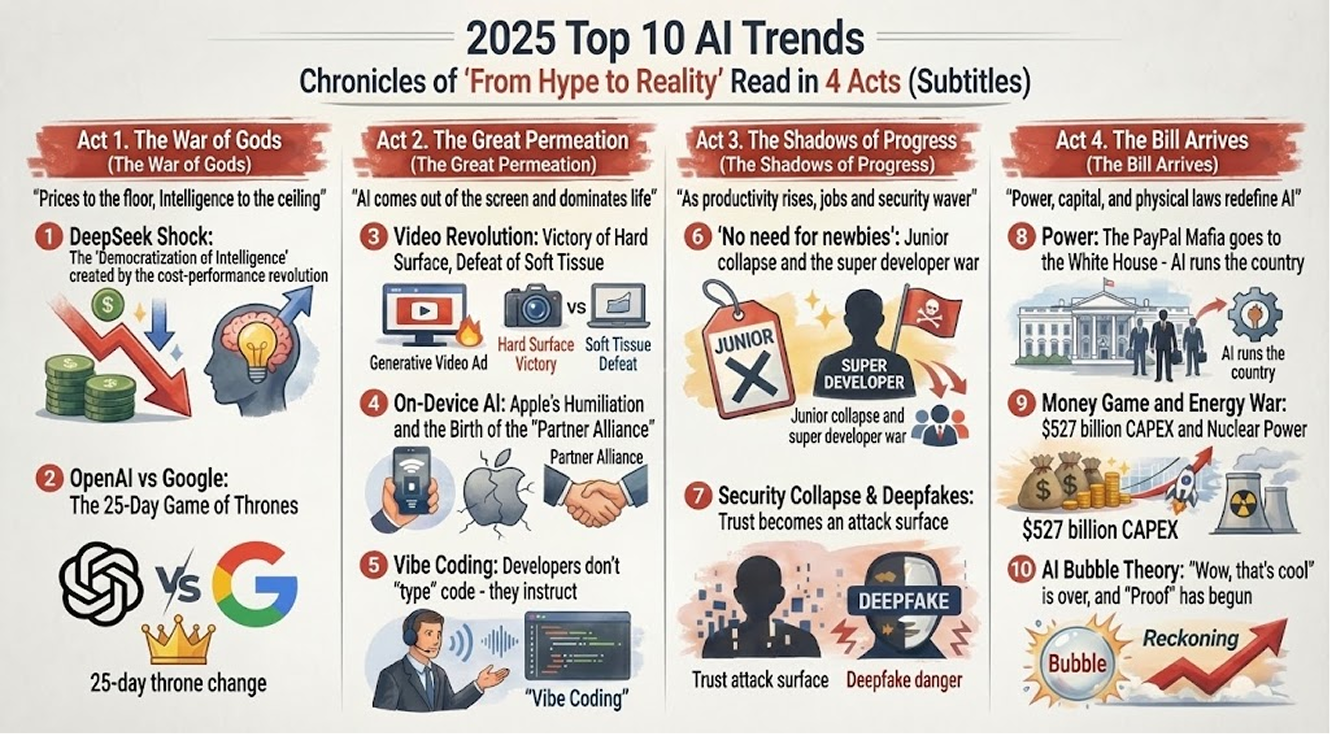
In 2025, AI was no longer about proving "possibilities."
The possibilities had already been sufficiently demonstrated in 2023-2024, and in 2025, the bill came due.
The year began with a David-like slingshot named 'DeepSeek' and ended with a pause in the face of the realities of 'profitability (ROI)' and 'power (infrastructure).' Technology evolved at the speed of light, but companies raised slower, weightier questions.
"How much cheaper are the models now?"
"But why are our costs increasing?"
"How should our workforce structure change?"
"Who pays for security and trust?"
This article chronicles theAI Top 10 Trendsof 2025, piecing together a narrative of the battlegrounds (market, organization, regulation, infrastructure) that companies actually faced.
Act 1: The War of Gods
"Prices to the floor, intelligence to the ceiling"
1) DeepSeek Shock: The Democratization of Intelligence Triggered by the 'Value-for-Money Revolution'
January 27, 2025. The market still largely believed that "AI is a game for the wealthy."
That belief was shattered on that very day.
DeepSeek,DeepSeeka startup founded by a former quant hedge fund professional from China, publicly released its open-source model (DeepSeek-V3) and inference model (R1), directly challenging the Silicon Valley formula. The core idea was simple:
"Equivalent performance is possible not with more expensive GPUs, but with smarter design."
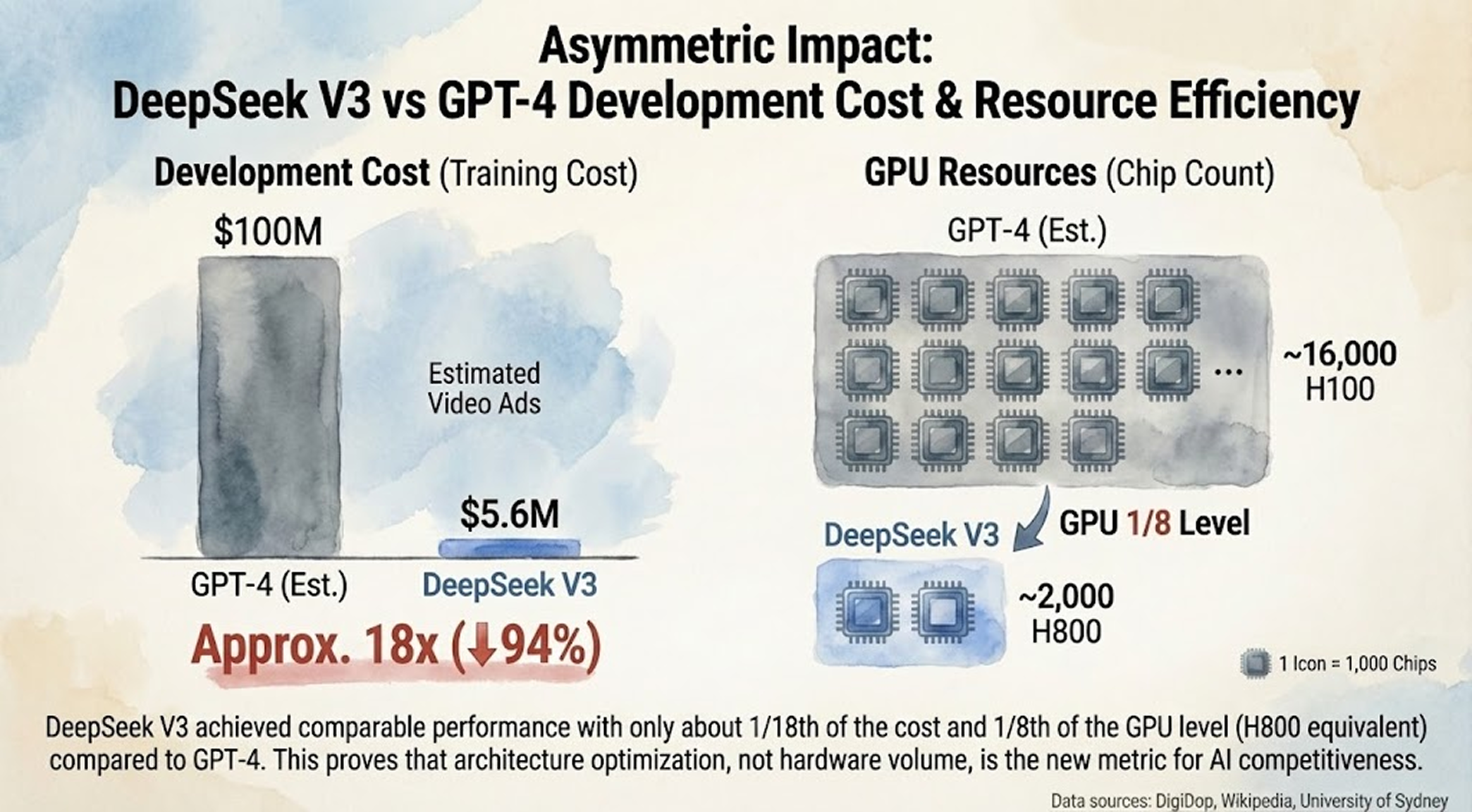
DeepSeek announced that it achieved comparable performance at a cost of$5.6 million,in contrast to market estimates that GPT-4 training cost approximately $100 million. The more shocking point was that it was based on the efficient parallel operation of2,000 H800s instead of H100s.This "miracle of cost" was immediately reflected in the financial markets, leading to events such as a sharp drop in NVIDIA's stock price.
But the real impact was not the stock price, but the
price structure.price structureDeepSeek presented its "inference model" API at:
DeepSeek presented its “inference model” API at1M tokens: Cache Hit $0.14 / Cache Miss $0.55 / Output $2.19Why are these numbers important? The meaning is clear from a business perspective.
Why are these numbers important? The meaning is clear from a business perspective.
The model itself is increasingly 'converging to cost.'The model itself is increasingly ‘converging to cost’
Differentiation shifts from the model to"on what workflow, with what data, and with what responsibility structure it is placed."Differentiation shifts from the model to “on what workflow, with what data, and with what responsibility structure it is placed.”
The company that wins is not 'a company that uses LLMs,' buta company that operates LLMs.The company that wins is not ‘a company that uses LLMs,’ but a company that operates LLMs.
In short, January 27, 2025, was the day AItransitioned from a luxury good to a utility.In short, January 27, 2025, was the day AI transitioned from a luxury good to a utility.
And this change immediately led to the next battle.
Not 'who is the smartest,' butthe war of 'who seizes the standard the fastest.'Not ‘who is the smartest,’ but the war of ‘who seizes the standard the fastest.’
2) OpenAI vs Google: 25 Days of Game of Thrones — "The Model War Is a Platform War"
The second major trend that ran through 2025 was that the 'AI hegemony competition' was no longer a research competition, but aplatform competition.The second major trend that ran through 2025 was that the ‘AI hegemony competition’ was no longer a research competition, but a platform competition.
In February, OpenAI's 'Ghibli style' craze swept the world, bringing AI into the heart of popular culture.
According to external reports, this trend was so explosive that130 million people generated over 700 million images in just one week.According to external reports, this trend was so explosive that 130 million people generated over 700 million images in just one week.
In August, Google started its counterattack of "hip AI" by creating memes with image models like 'Nano Banana (Gemini 2.5 Flash Image).'
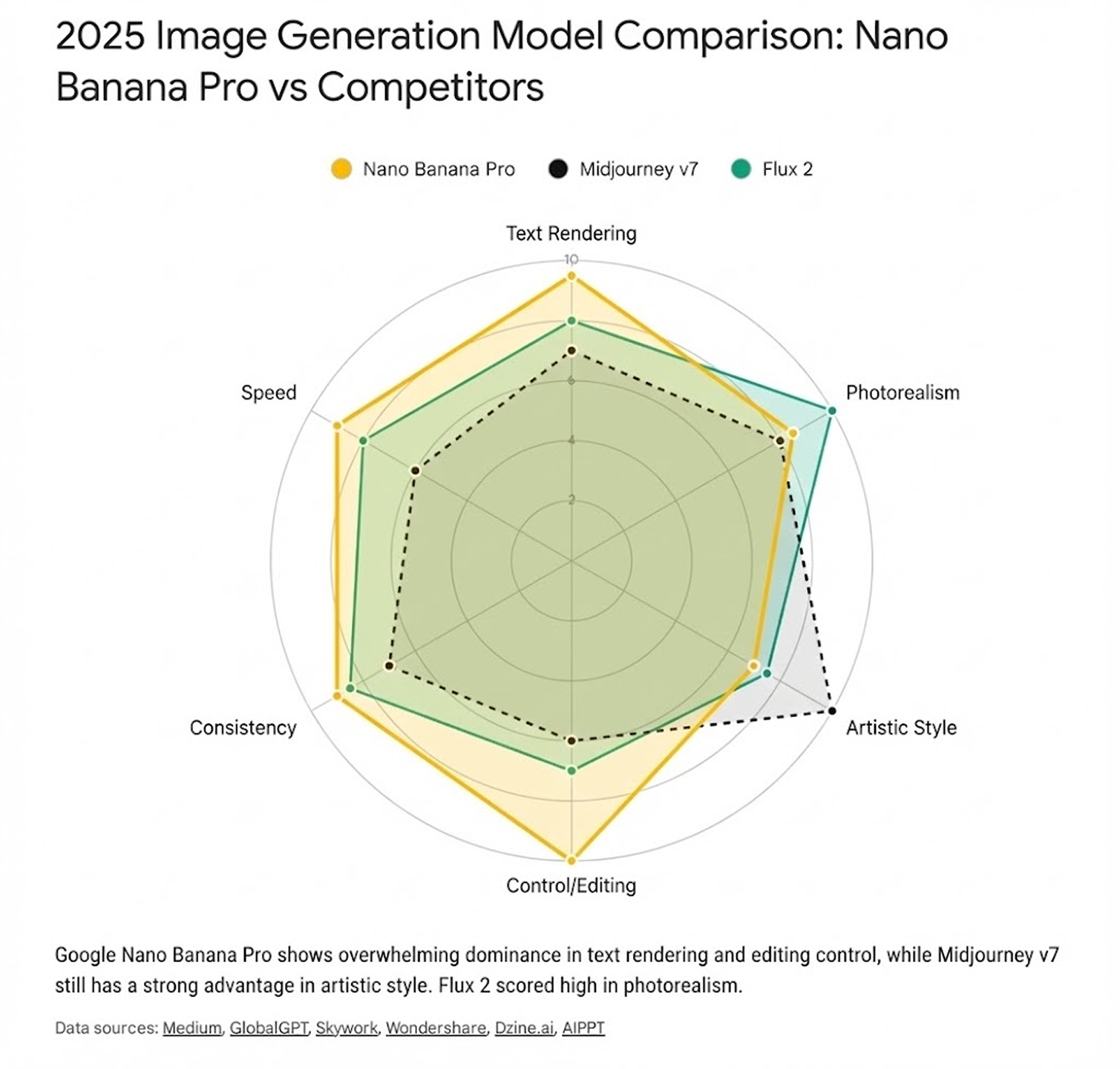
On November 18, Google releasedGemini 3 Pro(based on release notes), and in December, it expanded the Deep Think series.
Sensing the crisis, Sam Altman issued 'Code Red,' postponing monetization projects and focusing resources on improving model performance.
And on December 11, OpenAI countered by releasingGPT‑5.2.And on December 11, OpenAI countered by releasing GPT‑5.2.
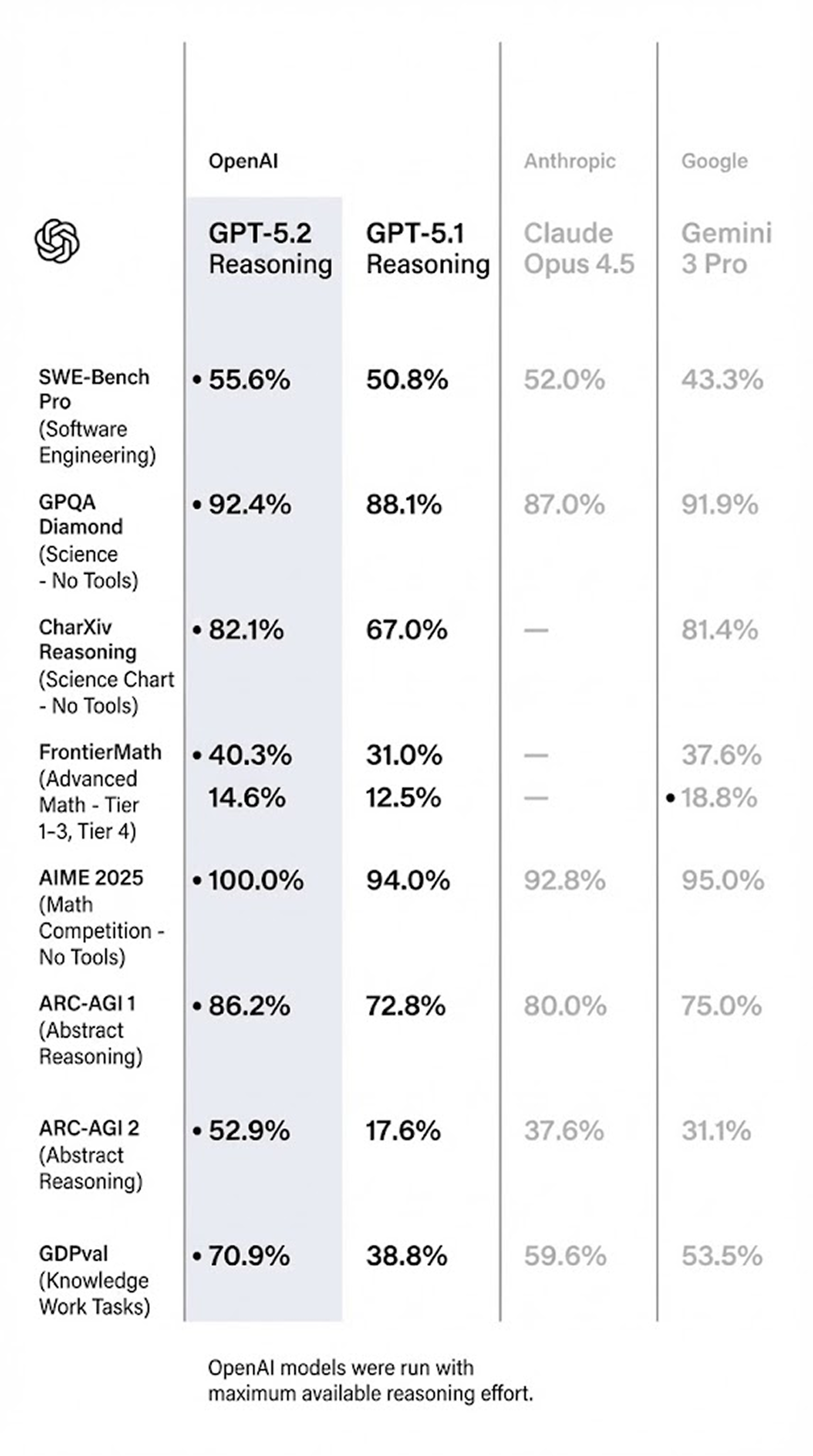
Here's the key point that companies can easily miss.
The outcome of this battle is not determined by "1-2 points on a benchmark," but by the'platform experience' that changes user behavior.The outcome of this battle is not determined by “1-2 points on a benchmark,” but by the ‘platform experience’ that changes user behavior.
Models that only excel at text →Expansion to image, video, audio, and tool usageModels that only excel at text → Expansion to image, video, audio, and tool usage
One-off answers →Evolution into agents that are integrated into workflowsOne-off answers → Evolution into agents that are integrated into workflows
Competition for the position of "search" → Competition for the "cockpit of work"
In other words, the Game of Thrones in 2025 is not simply a PR war between two companies.
It was an event that forced companies to make astrategic choiceof "which camp (platform) will I be tied to."
Act 2: The Great Permeation
"AI Comes Out of the Screen and Takes Over Life and Industry"
3) Video Revolution: Becoming the Standard for Commercial Advertising — However, Only for 'Hard Surfaces'
If the 'Sora shock' of 2024 ended with "Wow...", 2025 begins with "So I tried using it."
From advertisements, campaigns, short-form videos, to music videos,generative video has become a basic option for commercial media.From advertisements, campaigns, short-form videos, to music videos, generative video has become a basic option for commercial media.

Interestingly, however, the success or failure of AI video depended less on "model performance" and more onwhat the subject was.Interestingly, however, the success or failure of AI video depended less on “model performance” and more on what the subject was.
The data summarizes this as'The victory of hard surfaces, the defeat of soft tissues.'The data summarizes this as ‘The victory of hard surfaces, the defeat of soft tissues.’
Hard surfaces (metal, glass, plastic, automobiles, industrial materials): AI achieves almost perfect realism
Soft tissues (human expressions, animal movements, emotional exchanges): 'Uncanny valley' is revealed as is, causing backlash
The education companyYanaDoo's100% generative AI advertisement exceeded13 million viewson YouTube, and it is summarized as having proven the possibility of 'low-budget, high-quality.'
on YouTube, and it is summarized as having proven the possibility of ‘low-budget, high-quality.’
(YanaDoo AI video showing the possibilities of AI video)
On the other hand, advertisements that prominently featuredhuman/animal expressions,like those of Coca-Cola and McDonald's,
were recorded as failures, receiving reactions such as "soulless" and "grotesque."
(Coca-Cola AI video)
What's even more interesting is the spread of "internal production" within companies.
For example, LG Uplus created short-form advertisements using tools such as Sora and ChatGPT with an in-house TF, and it is summarized as a case of
95% reduction in production costs and 70% reduction in time.For example, LG Uplus created short-form advertisements using tools such as Sora and ChatGPT with an in-house TF, and it is summarized as a case of 95% reduction in production costs and 70% reduction in time.
The message this scene sends to companies is clear.
In marketing/branding,production capabilities are no longer just a game of 'budget.'
Instead, the competition shifts from "filming" to"concept (planning) + data (brand tone) + review (legal, ethical, factual accuracy)."Instead, the competition shifts from “filming” to “concept (planning) + data (brand tone) + review (legal, ethical, factual accuracy).”
And as AI videos become more common, "human-made" itself can become a premium again ('Human-only content' trend).
In 2025, advertising began to become not 'content creation' butcontent operations (Ops).In 2025, advertising began to become not ‘content creation’ but content operations (Ops).
4) On-Device AI: From Cloud to Edge — Cost and Privacy Pull AI Down
The days when simply attaching AI to a company's server seemed like the end of the story were short-lived.
In 2025, generative AI has shifted from "runs well" to a game of "howcheaply,howquickly,howsecurelydoes it run."
As a result, AI is no longer just for the cloud, buthas started to come inside devices.As a result, AI is no longer just for the cloud, but has started to come inside devices.
This is expressed as "cloud cost burden and privacy issues have pulled AI to the edge."
The symbolic scene of this change is the popularization of 'on-device functions.'
The data summarizes that the Galaxy S25 implemented features such ascomplete offline real-time interpretation.The data summarizes that the Galaxy S25 implemented features such as complete offline real-time interpretation.
And in the PC market, the trend of NPU adoption is accelerating, and the trend of AI PCs accounting for a large portion of the overall PC market is being summarized.
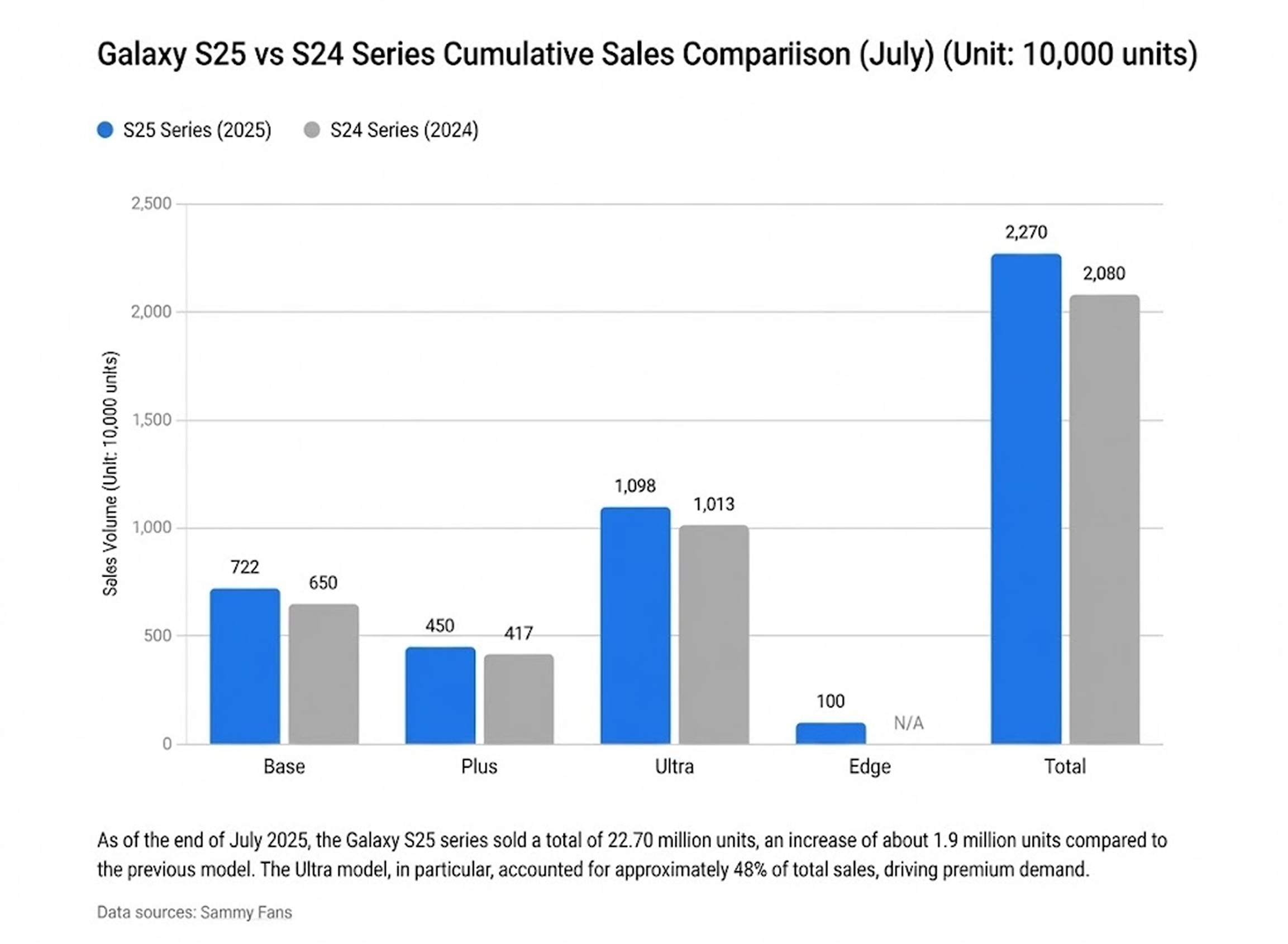
From a business perspective, on-device AI is not just a simple 'function.'
It redefines **where data is processed (boundary), where costs are incurred (accounting), and where responsibility remains (governance).**
It redefines **where data is processed (boundary), where costs are incurred (accounting), and where responsibility remains (governance).**
The auxiliary functions of call centers, sales, and field workers may be more stable ondevicesthan on the cloud, depending on the network environment.
On-device/private environments in regulated industries (finance, healthcare, public sector)can lower the cost of regulatory compliance.On-device/private environments in regulated industries (finance, healthcare, public sector) can lower the cost of regulatory compliance.
Product companies need to design the hardware, sensors, and data pipelines that run AI together, rather than just selling “AI features,” to gain a competitive edge.AI가 돌아가는 하드웨어·센서·데이터 파이프라인을 함께 설계해야 경쟁력이 생깁니다.
And the reason this shift was most interesting is because
even Apple, a symbol of ‘control,’ was no exception.
Apple pushed forward with Apple Intelligence, but faced delays and gaps in expectations,and seriously considered options like strategic alliances with Google (e.g., Gemini integration).It was a sign that a hybrid approach—

In Korea, this trend has led to an even bigger picture. Centered around NVIDIA,Samsung (memory) – Hyundai (mobility) – NVIDIA (AI infrastructure)are forming what's being called an 'AI Kkanbu alliance,' and on-device/edge is expanding beyond just smartphonesinto industrial ecosystems like AI factories and autonomous driving.로 확장됩니다.
The message for 2025 is clear:
AI is no longer ‘something smart in the cloud,’ but ‘a feature attached to the field.’
5) Vibe Coding and Coding Agents: Development Shifts from ‘Writing’ to ‘Supervising’
2025 was the year the definition of coding changed.
바로‘바이브 코딩(Vibe Coding)의 원년’It means that developers are no longer “people who write code directly,” but rather “supervisors who convey and manage intent and feeling to AI.”
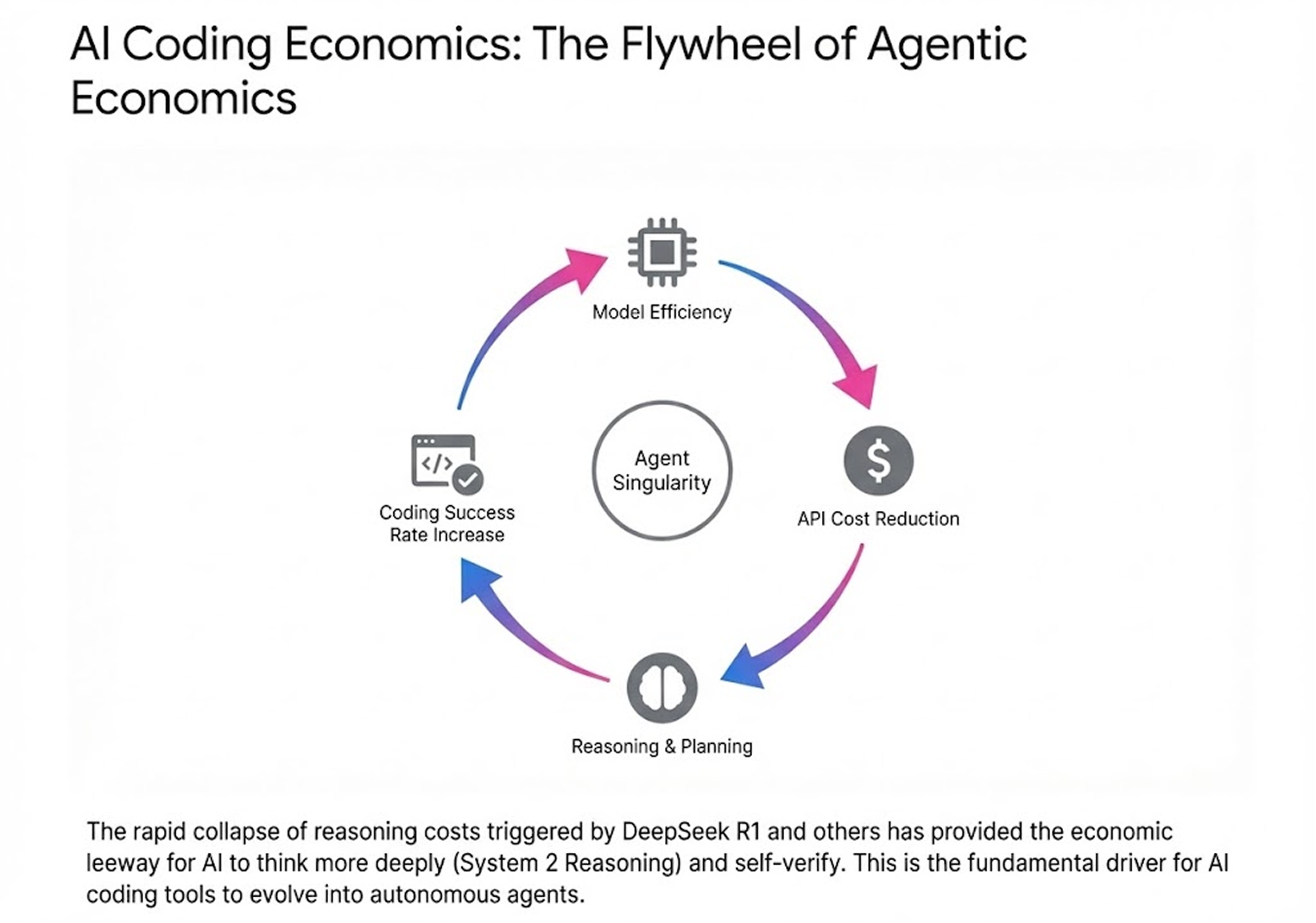
This trend is spreading in two directions simultaneously.
First, there'sbusiness automation/app generation,입니다.
Workflow automation tools like Zapier, Make, and n8n,
and app generation tools like Lovable and Replit are bringing the feeling of “if you say it, it becomes a system” into reality.
Second, there'sagent-type IDEs/platforms입니다.
AI IDEs like Cursor and Windsurf, coding engines like Claude Code and Codex,
and platforms like Google's 'Antigravity' are representative examples.
Here, the 'qualitative leap' in 2025 is not simply about code autocompletion.
Agents nowwrite plans, use tools, and even perform verification.
Multi-agent orchestration where multiple specialized agents collaborate,다중 에이전트 오케스트레이션
Visual Verification that directly manipulates terminals and browsers to check the UI and fix errors,시각적 검증(Visual Verification)
Planning Mode that creates a plan document before starting work and receives modifications/approvals during progressPlanning Mode
This change presents a rather uncomfortable truth for companies.
While development productivity increases,the ‘inspection costs’ of quality, security, and responsibilitydo not disappear.
The saying “anyone can create” also means“anyone can make mistakes.”는 말이기도 합니다.
Therefore, instead of reducing the number of developers, organizations are changing the nature of development.The value of ‘someone who understands and controls the entire system’ increases exponentially compared to ‘someone who writes a lot of code.’의 가치가 폭증합니다.
And the result explodes in Act 3.
Act 3: Shadows of Progress
“Who pays the price of innovation?”
6) “No Need for Newbies”: The Collapse of Junior Jobs and the War for Super Developers
When AI changes development, people usually think of “increased productivity.”
In 2025, the next sentence emerges.“So, who disappears?”
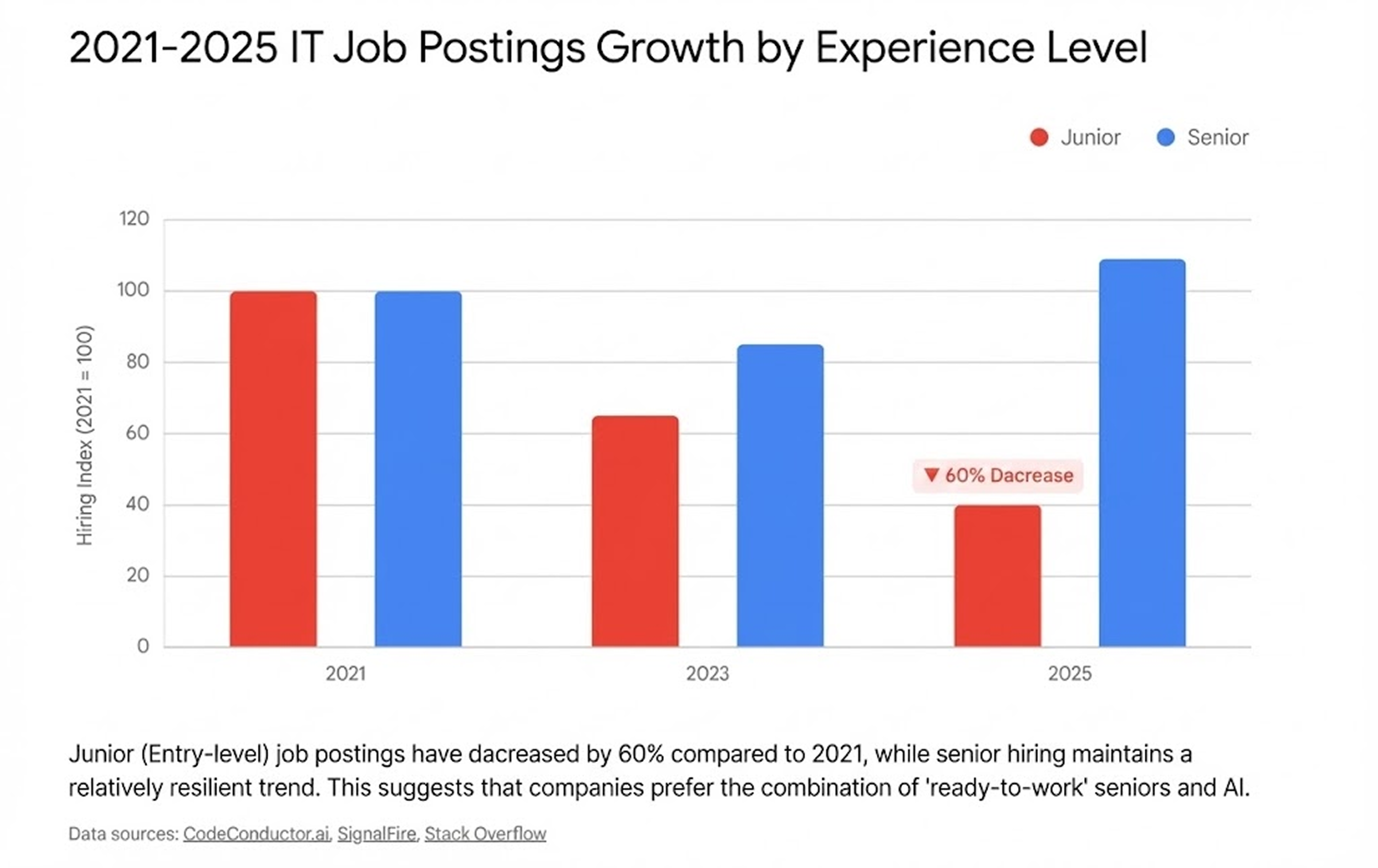
The Stanford Digital Economy Lab has analyzed that since 2022,entry-level tech jobs have noticeably decreased.했다는 결과가 제시됩니다. 특히Employment of software developers aged 22-25 has decreased by almost 20% as of July 2025 compared to 2022.했다는 결과가 제시됩니다.
As AI agents perfectly replace the work of those with less than 3 years of experience, the labor market faces extreme polarization.”
What's interesting is that movements in the opposite direction are also appearing at the same time.
In other words, as the era of “anyone can develop” arrives, paradoxically,the value of ‘super developers’ has increased even more.
A representative event is Google's “acquisition (recruitment) of the Windsurf team.”
The data summarizes that Google bet$2.4 billionto acquire the Codeium/Windsurf team.
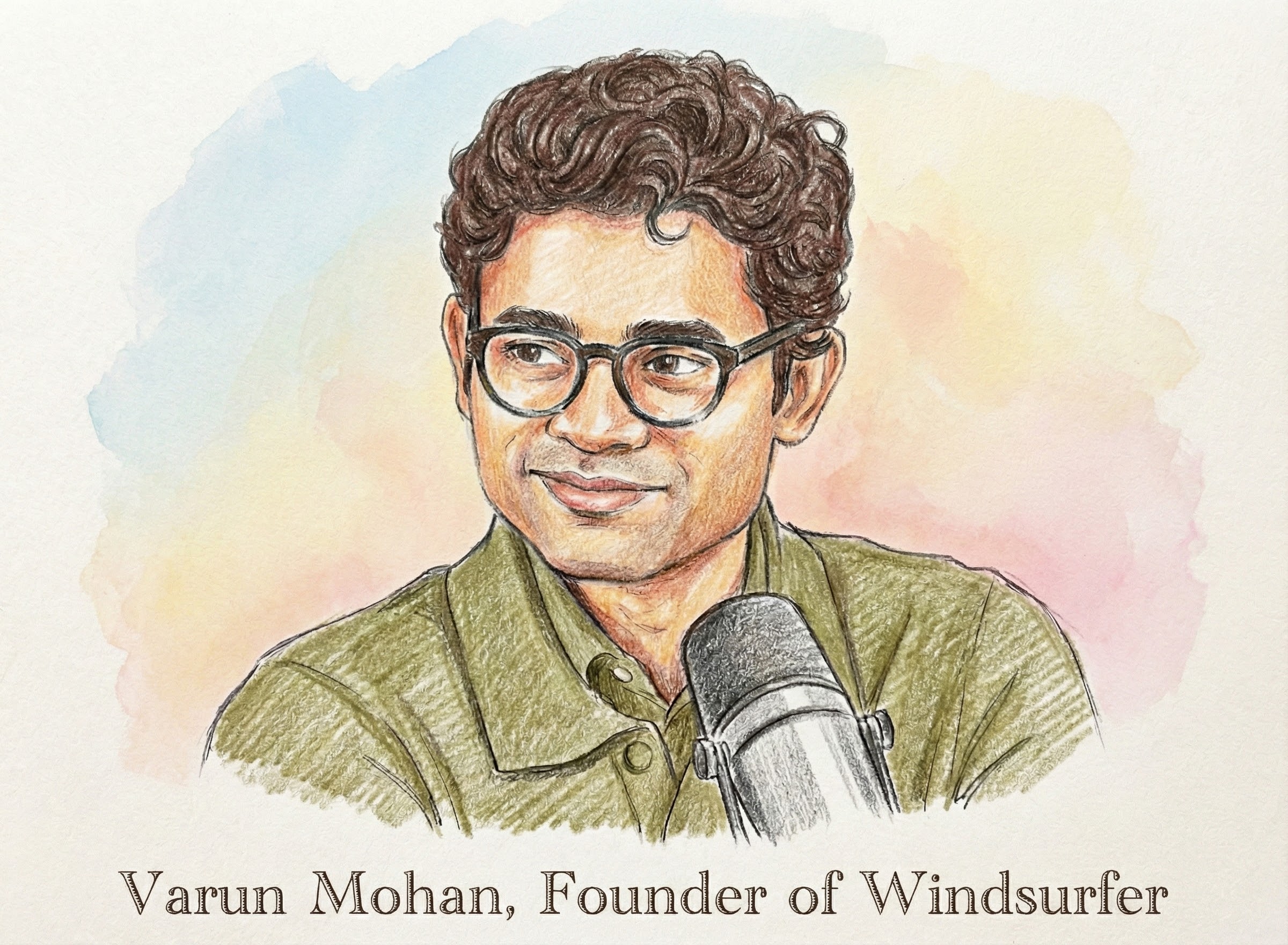
External reports also convey this deal in a similar context.
The question this scene poses to companies is uncomfortable but realistic.
Reducing juniors reduces immediate costs,but cuts off the future senior pipeline.이 끊깁니다.
Conversely, if you only hire seniors, the organization becomes a ‘technical aristocracy’ structure,making collaboration, onboarding, and knowledge transfermore difficult.
Ultimately, what's important is not the “scale of hiring,” butrole design.입니다.
The 2025 developer organization is centered around “supervisors, validators, and architects” rather than “writers.”
And this change is not just about development.
The same thing is happening in customer service, sales, and operations.
For example, Klarna is known to have had AI perform the work of 700 consultants, and OpenAI introduced this as a case study. However, the atmosphere at the end of 2025 becomes much colder. Although AI has reduced costs, the scene of needing people again at points where “human empathy” is needed is repeated.
In the end, 2025 states definitively:
Jobs disappear, but they are also reborn in more expensive and difficult forms.
7) Security Collapse and Deepfakes: The Cost of Trust Exploded
The security issues of 2025 were not just at the level of “the security team got busier.”
The world stopped once in a while, money disappeared once in a while, and people's trust collapsed once in a while.
Technology got faster, but defense couldn't keep up with that speed, and the result wasglobal outages and large-scale data breachessurfaced.
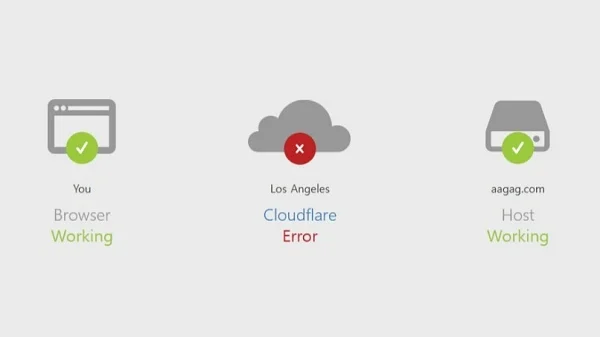
The most symbolic scene exploded in the infrastructure.
The Cloudflare outage simultaneously paralyzed millions of websites and AI APIs,되면서
revealing the reality that “digital civilization is more fragile than we thought.”
In finance, a more direct price tag was attached.
Global exchangeBybit was hacked, resulting in $1.5 billion (approximately 2 trillion KRW)disappearing, imprinting the fact that security is not an ‘accident’ but
a profit and loss variable that determines corporate value and survival.가 됐다는 점을 각인시켰습니다.
여기에The leak of 4 billion cases from the Chinese surveillance DBshows that the speed at which data can be ‘weaponized’ is accelerating as fast as the speed at which it accumulates.
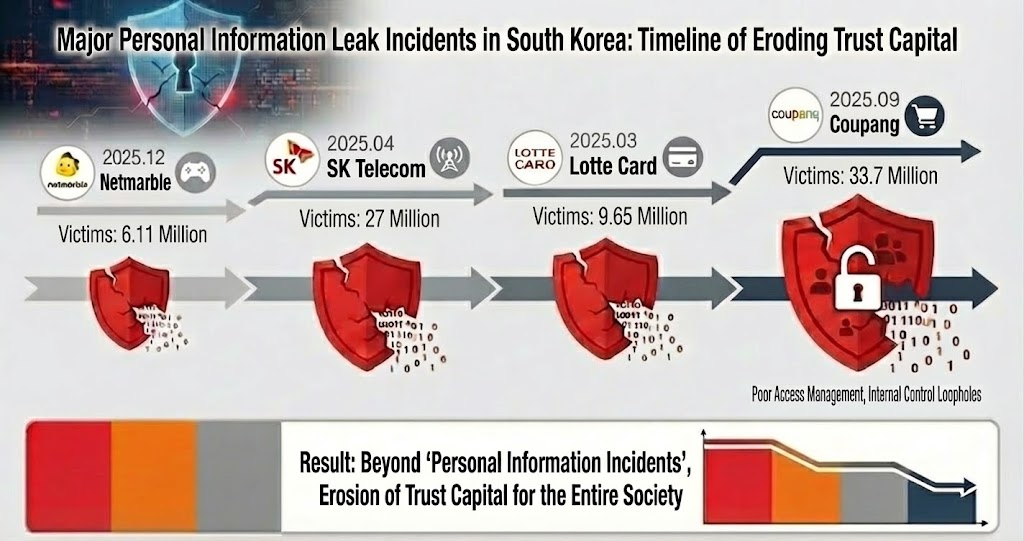
One year in Korea led to a more realistic timeline.
SK Telecom 27 million,Lotte Card 9.65 million,Netmarble 6.11 million,Coupang 33.7 million.
As the numbers accumulate, it becomes not a ‘personal information accident’ butan event that erodes the entire society's trust capital.이 됩니다.
In particular, the message Coupang's case sends is eerie. Not only external hacking but alsoholes in internal controls such as authority managementhave revealed that “the data of virtually the entire nation can be released into the market.”
And deepfakes have solidified as a “social problem” beyond a “technical problem.”
The Korean government announced the results of a focused crackdown on crimes related to deepfake sexual offenses (963 people arrested, etc.), suggesting that this has entered not just a simple campaign butthe enforcement stage.로 들어갔음을 시사합니다.
From a company's perspective, the lesson of 2025 is brutally clear.
The risks of the AI era are not just “hacking.”Manipulation (deepfakes), impersonation, misinformation, and insider accountsall become attack surfaces.
In particular, as AI content increases in marketing/PR, companies mustpay the ‘cost of proving authenticity.’을 지불해야 합니다.
In the end, “trust” is not a matter of emotion, buta matter of systems, policies, and evidence.가 됩니다.
The moment AI becomes a ‘utility,’ trust becomes ‘infrastructure.’
Act 4: The Bill Arrives
“Power and Capital, and Physical Limitations”
8) AI Becomes Political: The PayPal Mafia Goes to the White House — “Now AI Manages the Country”
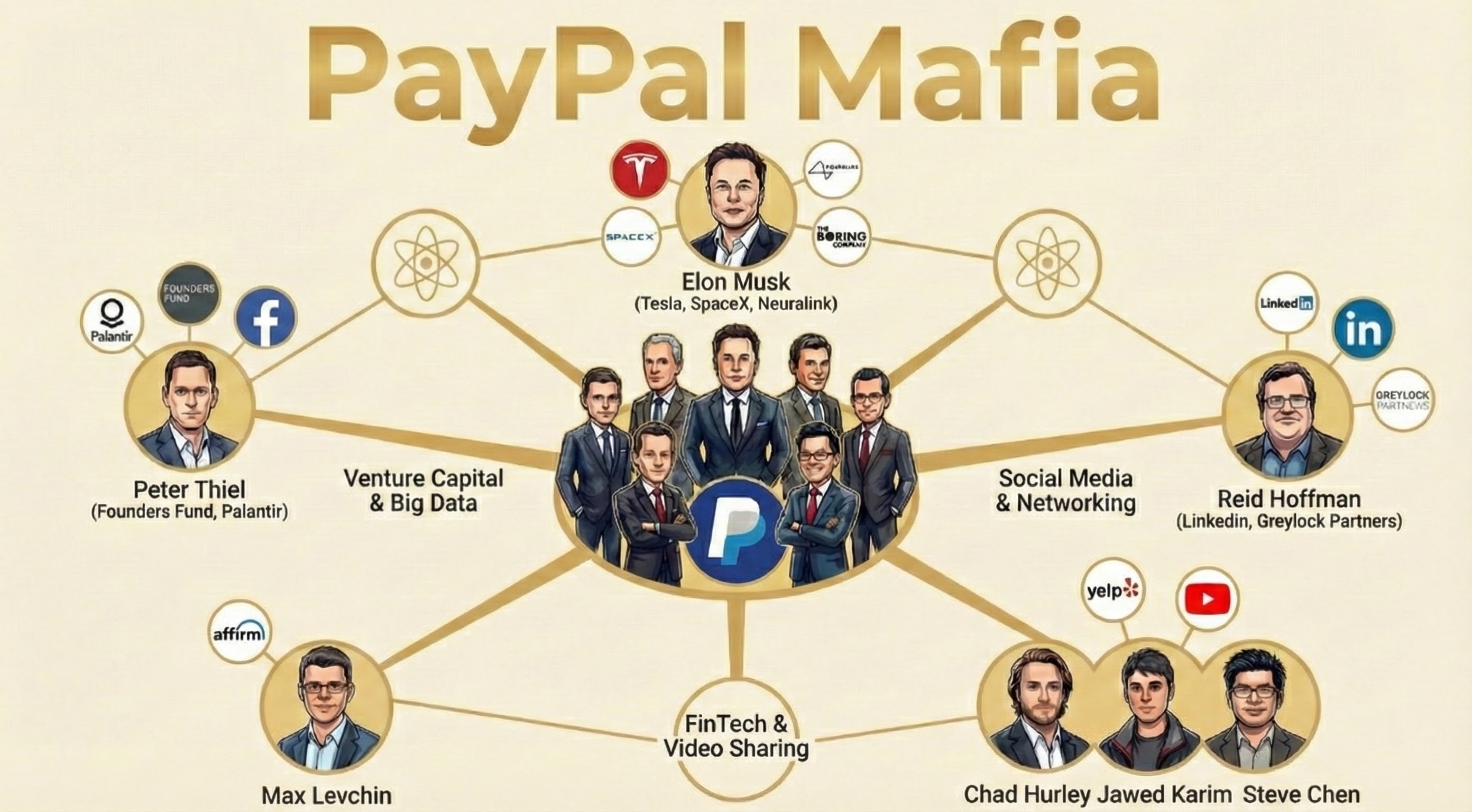
2025 is also the year technology became political power.
This is summarized by the phrase “The PayPal Mafia Goes to the White House.” As government efficiency, defense, and deregulation combine with AI,the operation of the state itself is becoming software-ized.되기 시작했다는 뜻입니다.
In fact, in July 2025, the White House announced‘America’s AI Action Plan,’explicitly stating that AI is at the core of national competitiveness.
And the executive order on data center infrastructure, released on the same day (July 23, 2025), shows the direction of pushing the construction of large-scale data centers as afederal-level ‘speed race.’Here, it presents criteria such as “new loads of 100MW or more” and even mentions the readjustment of permit procedures, federal land use, and environmental regulations.
For companies, this trend is not just political news.
As regulations ease, opportunities increase, but at the same time,responsibility is transferredto the private sector.
When AI enters administration/defense, corporate transactions become‘policy B2B’ instead of general B2B(procurement, regulations, audits, security requirements).
Above all, while “AI is global,” AI in 2025 is becoming more explicitlya national strategic asset.AI is now becoming
AI is no longer just a ‘product,’ butthe language of national infrastructure and power.AI is now becoming.
9) Money Game and Energy War: Data center CAPEX pressured the power grid
The AI industry may seem like software, but AI in 2025 boils down to physics.
Smarter models consume more computation, and more computation demands more power.
Therefore, the real war in 2025 was not about “model performance” but aboutsecuring power (infrastructure).was.
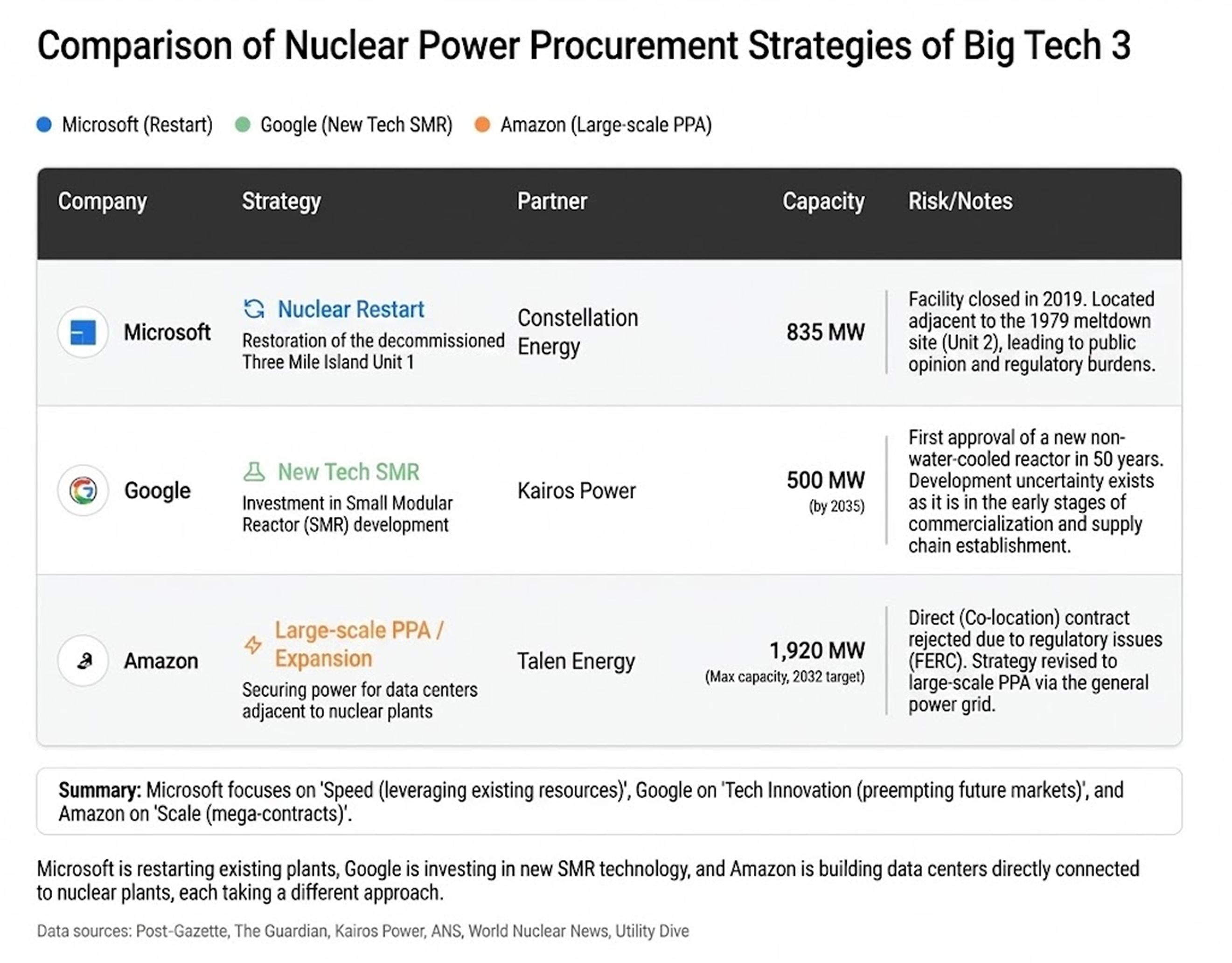
Market analysis observes the expansion of Big Tech's data center/AI infrastructure investment as a massive trend. For example, IMPLAN analysis concludes that the total CAPEX of Amazon, Alphabet, Microsoft, and Meta in 2025 (fiscal year) is$364 billion,a significant increase compared to 2024.
And this investment has a “project name.”
In January 2025, OpenAI announced theStargate project,formalizing plans to invest$500 billionin AI infrastructure over the next few years (with an initial $100 billion to be executed immediately), and updated progress in September 2025 by disclosing additional data center sites.
The problem is that this massive plan cannot be solved with money alone.
The power grid cannot be expanded suddenly. Therefore, in 2025, nuclear power, transmission, and regulatory issues come to the forefront.
Microsoft's data center power demand and discussions about restarting nuclear power plants (such as Three Mile Island) were reported as symbolic examples,
and Amazon's attempt to directly connect a nuclear power plant to a data center was reportedly blocked by a regulatory agency (FERC).
As project data shows, the AI investment war eventually escalates into an “infrastructure acquisition war.”
And the analysis concludes that Wall Streetforecasts total hyperscaler spending in 2026 to be $527 billion.level.
For companies, this trend does not end as a “Big Tech story.”
AI consumes power, and power becomes a cost. The introduction of AI immediatelychanges the cost structure.changes.
Data center location (region), power contracts, carbon regulations, and power grid risks are not IT department issues butmanagement decision-making.becomes.
Power bottlenecks, in turn, accelerate the transition to on-device/edge computing.
The conclusion that 2025 showed is simple.
AI now competes on the ‘electricity bill.’
10) AI Bubble and Monetization: “So, who made money?”
At the end of 2025, the same question arises in almost every conference room.
Okay. I understand everything. But…Was there a profit?
This is how 2025 is summarized.
Companies that sold ‘picks and shovels (infrastructure, chips, platforms)’ like NVIDIA, Microsoft, Oracle, and Palantir made money, but‘Wrappers’ that simply brought in AI models as APIs collapsed.collapsed.

Market data also reveals similar tensions. Some consulting/research citations indicate that generative AI iscreating value widely,but the number of companies that answered that way is still small (e.g.,around 5%),andimproved profit marginsis also limited (e.g.,around 15%).This means that large-scale spending has already begun, but recovery is slower than expected.
Therefore, on the ground, there is self-deprecation such as “AI is like a Ferrari in math but like a donkey in scheduling.” They directly encountered the so-calledjagged frontier.jagged frontier.
However, the conclusion does not end with the statement “AI is a bubble.” Rather, the bubble theory of 2025 is not adeclaration of collapsebutcloser to a reckoning.There was also a scene symbolizing the atmosphere.Michael Burry,famous forThe Big Short,reappeared and sounded a warning against the AI frenzy, and the market began to ask again.
Does this heat lead to real profits, or is it a shadow of investment overheating?
Now the market asks “How much is left?” rather than “Wow, that's amazing.”
2025 was the year that question was formalized.
Concluding Remarks: 2026 Will Be the Year of ‘Proof’
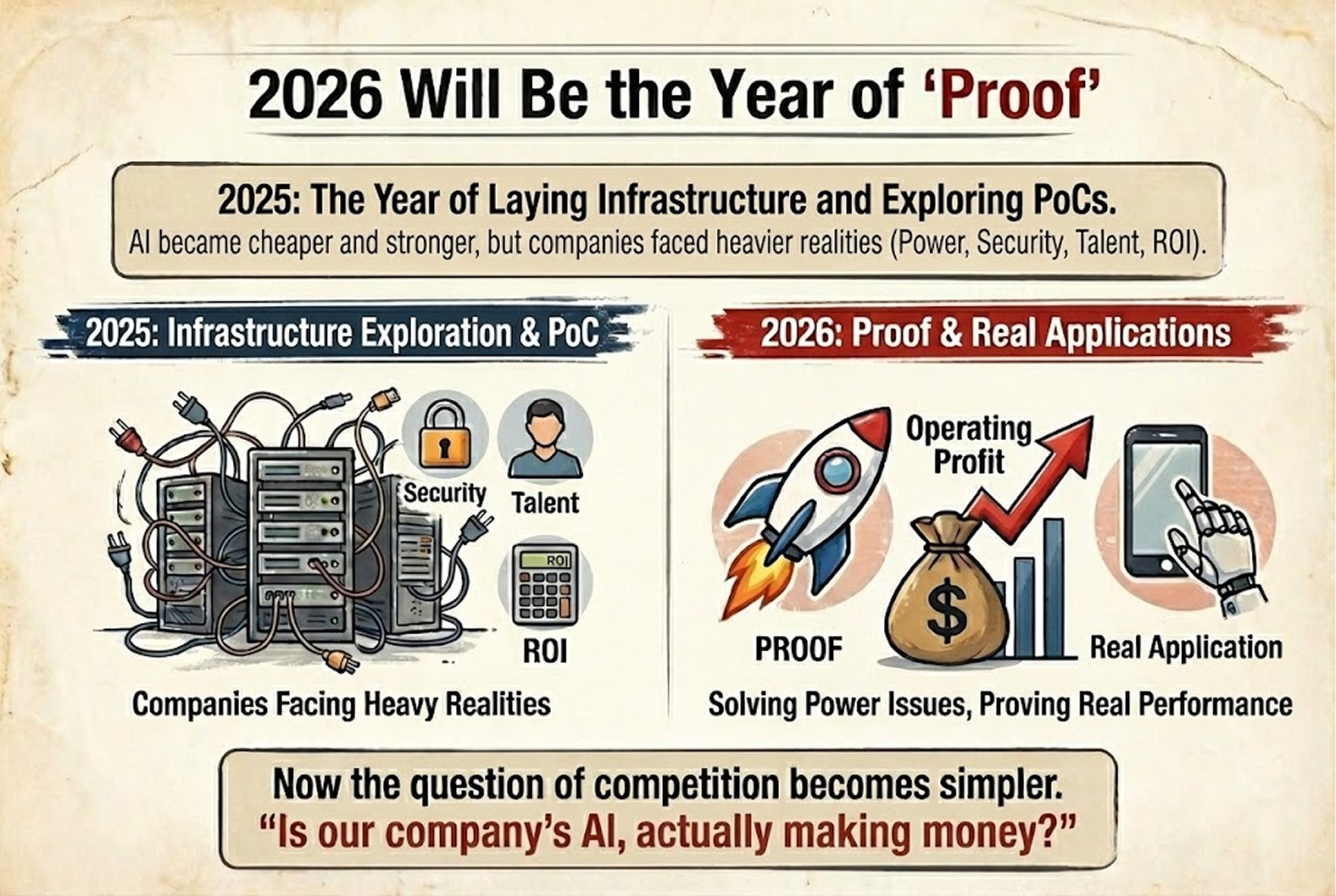
2025 can be summarized in one sentence.
AI has become cheaper and stronger, but companies have faced heavier realities (power, security, manpower, ROI).
Therefore, 2026 naturally moves to the next stage.
If 2025 was the year of laying infrastructure and exploring PoCs, 2026 will be theyear of ‘Proof’.is.
It is a time when only companies that solve power problems and produce “real applications” that actually change operating profit will survive.
The second act of AI has already begun.
Now the question of competition will become simpler.
“Is our company's AI actually making money?”
💡 Guide for Deeper Exploration (How to Use NotebookLM)
The content of this report is based on an extensive collection of 525 global sources. If you wish to review the full '2025 AI Trends In-Depth Data' collected using Deep Research from Gemini 3.0 and GPT-5.2, please utilize the Google NotebookLM link below.
👉 Visit the '2025 AI In-Depth Analysis' NotebookLM
[NotebookLM User Guide]
Log in with Google Account: NotebookLM is a free service provided by Google. You must log in with your Google account to access the full library of materials.
Ask Questions: After accessing the link, simply type your questions in natural language into the chat window.
(e.g., "Summarize the technical features of Gemini 3.0," or "What are the commonalities among security incidents in 2025?")
Generate a Podcast: Use the 'Audio Overview' feature in the top right corner to convert this extensive data into an audio file (in English). Two AI hosts will explain the content in a conversational format, making it perfect for listening while on the go.
Verify Sources: You can directly click on the original source materials (articles, reports, etc.) cited in the answers, allowing you to easily verify the reliability of the information.
Would you like me to refine this further for a specific format (e.g., a newsletter or a formal technical report)?