If AI Can Ace Korea’s College Entrance Exam, Are We All Equally Skilled?
An event entrance and one last seat show why people can get different things done with the same AI.

On November 15, the top-scoring candidate in this year’s Korean tax accountant exam admitted using generative AI to cheat in both rounds and turned himself in to police. According to subsequent reporting, he photographed the questions with a tiny camera hidden in a correction tape dispenser and sent them to a laptop at home using a modified calculator and a smartphone. He reportedly read the AI-generated answers on a small display attached to his clothing. On November 16, the National Tax Service began proceedings to invalidate his exam results and bar him from taking the exam for five years.
Lee Jin-woo, who earned a perfect score on the Legal Education Eligibility Test (LEET), Korea’s law school admissions exam, had denied allegations that he cheated using AI. He was found dead on November 19. Police said they would continue investigating the allegations. As of November 20, public reporting had not established whether he had cheated.
Reading those stories left me with a different question. If everyone had access to the same AI and it could answer every question on an exam, would people’s skills converge, too?
Sources · Hankook Ilbo on the tax exam cheating method and investigation · National Tax Service announcement on the exam invalidation proceedings · YTN on the LEET investigation after Lee’s death
What would you put into the calculator?
“If we split 120 attendees into four equal lines, how many people would be in each line?” Anyone who enters 120 ÷ 4 into a calculator gets 30.
AI can read the question, choose the calculation, and write the answer. In an independent benchmark using publicly released questions from Korea’s 2027 college entrance exam, the College Scholastic Ability Test (CSAT, also known as Suneung), five of the 16 models answered all 147 assessed questions across Korean, math, and English correctly. The benchmark used the answer key released on exam day. The exam is named for the 2027 academic year and was held in November 2026.
Imagine everyone taking the test could use an AI like that. If scores cluster at the maximum, it becomes harder to tell people apart from their scores. The exam tells you which problem to solve. At an event, you’re more likely to hear, “The line to get in is too long.”
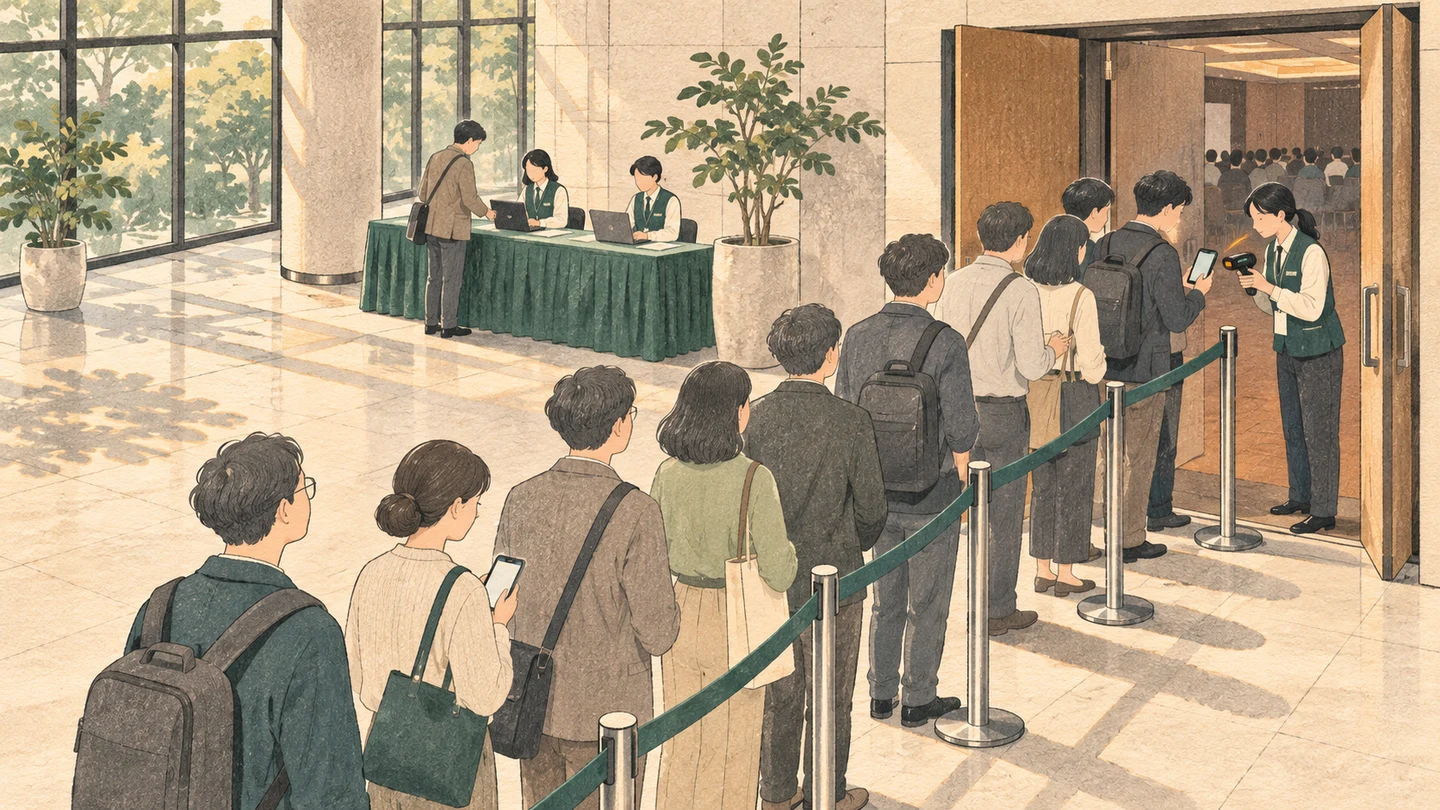
The registration desk might be fielding too many questions. Or the line might be backing up at the door where staff scan QR codes one by one. If the scanners are the bottleneck, adding a registration desk could just send people to the door faster. Before asking AI what to change, you need to find out where the line is getting held up.
Sources · Korea Institute for Curriculum and Evaluation, 2027 CSAT questions and answers · KSAT AI Benchmark, model results and test conditions
What happens when two people book the last seat?
Say an event organizer who has never learned to code builds a booking tool with AI. They enter a name, click a button, and see a confirmation screen. Then a situation they might face on event day comes to mind. “What happens if two people try to book the last seat at the same time?”
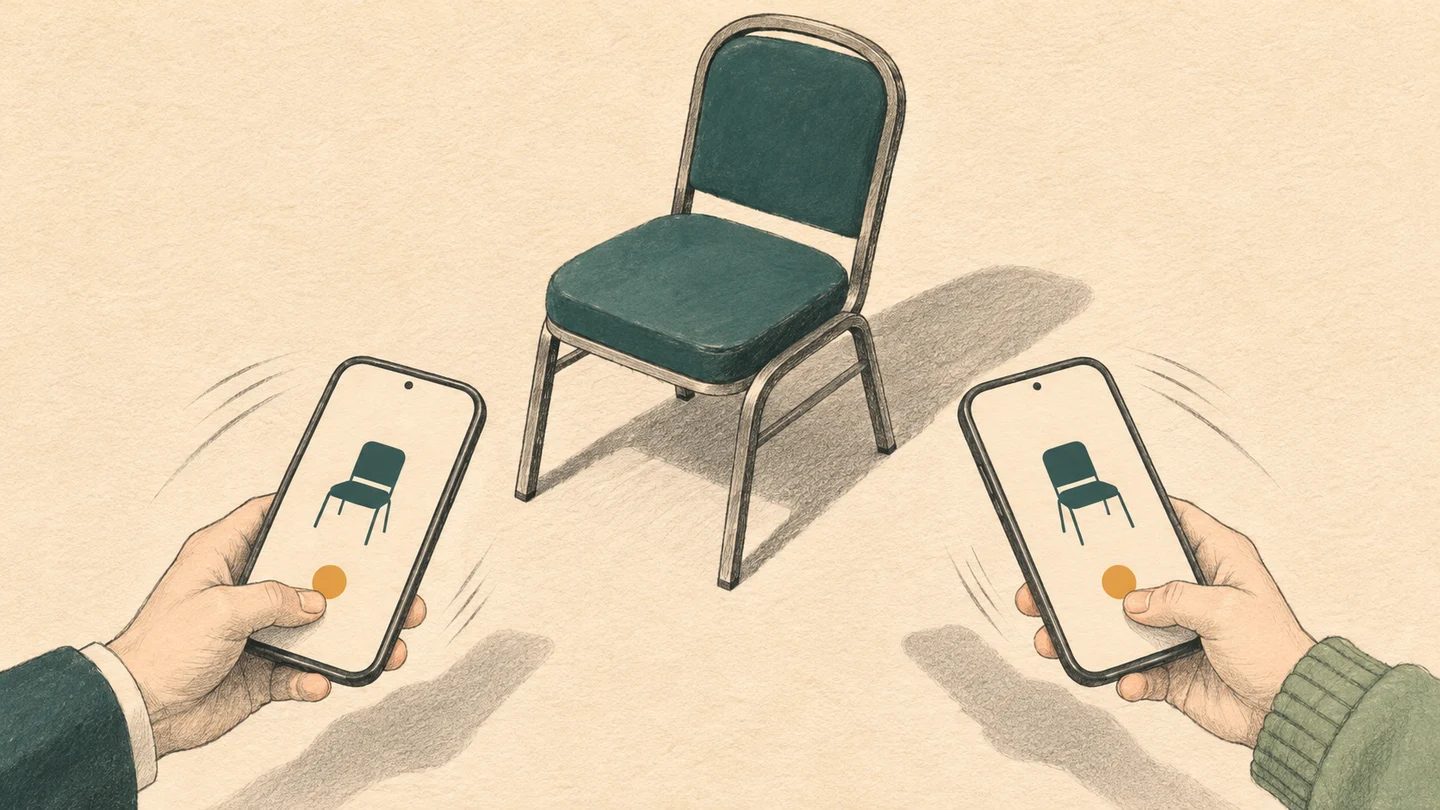
The organizer asks AI to test what happens when the two requests arrive together. They check that only one booking is recorded and that the other attendee sees a message saying the event is full. If both bookings go through, they fix the issue and run the same test again. Someone who has run events can recognize what might go wrong and explain what would count as a fix, even if reading the code is difficult.
By AI competence, I mean being able to decide what to delegate, explain the context, and check the result until it’s ready to use. For the organizer, that includes the work that comes after asking AI to build a booking page.
Reference · Dakan and Feller, AI Fluency Framework
People got different results with the same AI
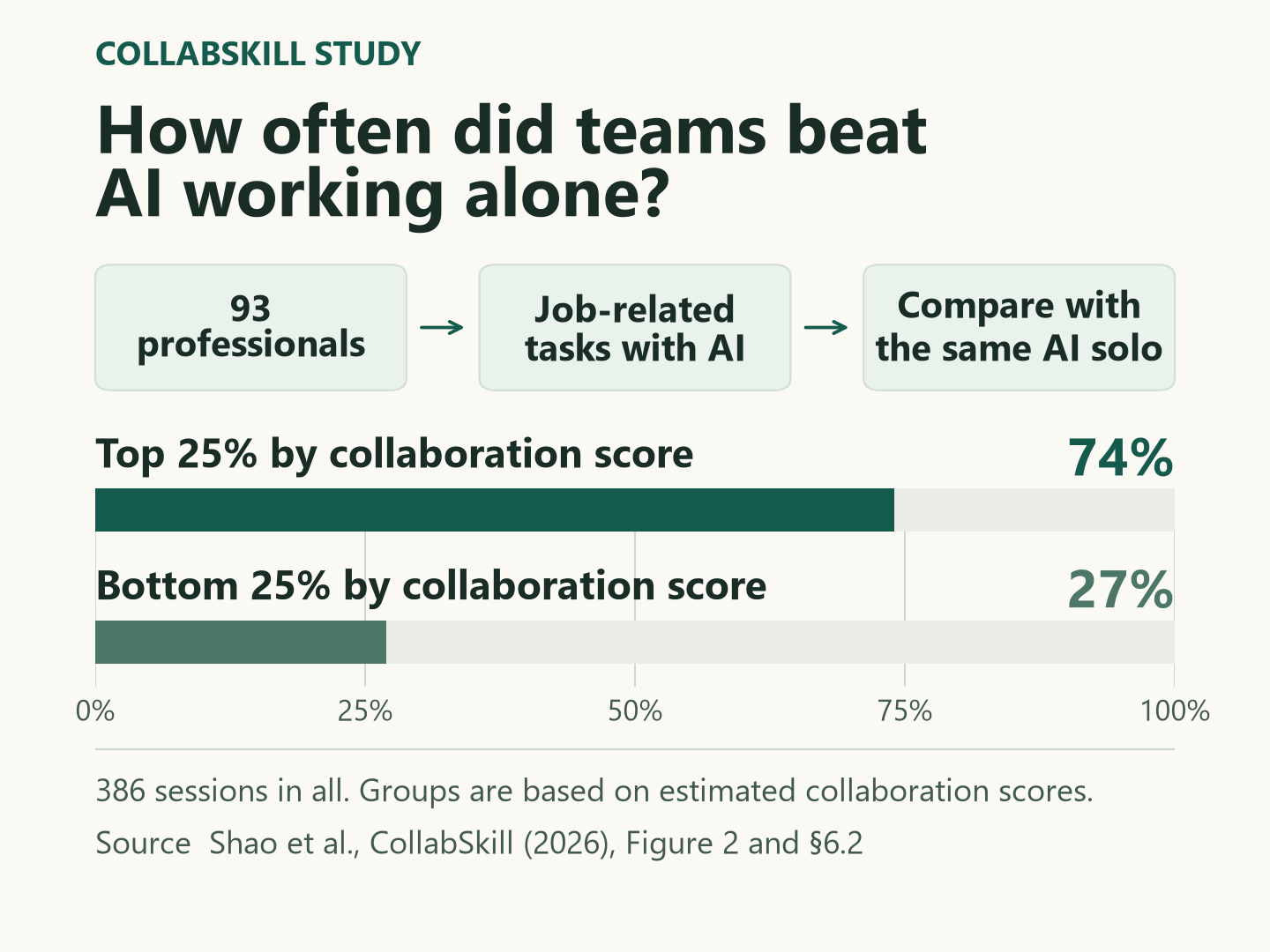
The CollabSkill researchers gave 93 professionals tasks related to their jobs and randomly matched them with AI agents. They collected 386 collaboration sessions in all. To compare outcomes, they matched results produced by a person working with an AI agent against results from the same AI agent doing the same task alone. People in the top quarter of the estimated collaboration scores beat the AI working alone in 74% of those comparisons. In the bottom quarter, the figure was 27%. Those collaboration scores may also reflect how well participants could already do the work.
The session records show some differences in how people worked. Sessions tended to score higher when people said who would use the output or supplied an example of what they wanted. The number of messages they sent did not have a clear relationship with the score. For the booking tool, “Only one booking should go through even when two people click at the same time” gives AI something specific to work with. Asking it to “try again” leaves that requirement unstated.
Emma Wiles and Katelyn Cranney gave a Python data analysis task to 332 consultants whose jobs did not routinely involve coding. According to the public abstract of their ongoing study, the group with access to AI scored 34 percentage points higher on that task. The researchers also looked at how participants broke the work down, which parts of the generated code they edited themselves, and how they checked the results. Whether similar gains carry over to other kinds of work is an open question.
Sources · Shao et al., CollabSkill, §6.2 and Appendix J · Wiles and Cranney, AI Competence as Human Capital, public abstract
When is the job done?
“I built a booking tool” can mean several things. Once the booking screen loads, the next step might be testing what happens when the event is full or someone cancels. To hand the tool over to the event team, the people on duty need to see which seats are booked and know how to handle a cancellation. Once you decide where the work needs to end, you can give AI a more specific job.
The line at the entrance works the same way. An AI estimate of wait times can help you choose how to check people in. Measuring how long people actually wait before and after the change tells you whether it helped.
“Can AI do this?” is a good place to start. Once there’s an answer, ask, “What do I need to check before I can use it?” For a booking tool, you can start by having two people press the button at the same time when there’s one seat left.
Reference · Design Council, Framework for Innovation