I Put AI to Work—and Got Busier Myself
The Human Multitasking Skills We Need in the AI Era
Introduction — While AI Works, I Assign Another Task

While delegated AI tasks run, the person plans the next assignment and checks the results that come back.
When I give Codex or Claude Code a task, it can take as little as two or three minutes, or as long as thirty. Asking it to review the implementation and fix the problems it finds adds to the wait. In my experience, that process tends to produce more thorough results.
At first, I waited for the answer. Over time, I started assigning other work in between. While task A runs, I plan task B. After assigning B, I gather the material for C. When A finishes, I check the result and give the next instruction.
Working this way brought me to a thought.
To use AI well, humans need to get better at multitasking.
By multitasking, I mean the ability to plan assignments and judge the results in turn while several AI tasks are in progress. But running more tasks has also increased the number of things I need to remember, the results I need to review, and the hours I spend working.
Reading accounts from people with similar experiences helped me think about what this ability needs to include.
Supporting material: My own experience and a discussion among people running multiple Claude Code sessions.
Aran Komatsuzaki — Parallel Agents Do Not Make Every Problem Faster
Aran Komatsuzaki shared his experience of using Codex for extended work on mathematics and physics research problems. One of his observations was that running more agents does not make the time needed to solve every problem shrink in a simple, predictable way.
Some problems require a small attempt, a check of the result, a change of direction, and another attempt. The next step depends on the previous judgment, so parts of the process still have to wait, however many agents are available. It is a personal research account, but it illustrates how the value of parallel work depends on the nature of the task.
The same can apply to everyday work. Independent research assignments and drafts can proceed at the same time. A task whose direction depends on those research findings needs a sequence.
The starting point for multitasking is therefore the ability to divide work. We need to distinguish tasks that can be delegated independently from those that must finish first. Explaining the desired result and the criteria for completion is part of that ability.
Source: Aran Komatsuzaki on using Codex for research.
“How Many CC Sessions Do You Run Concurrently?” — When the Human Becomes the Bottleneck
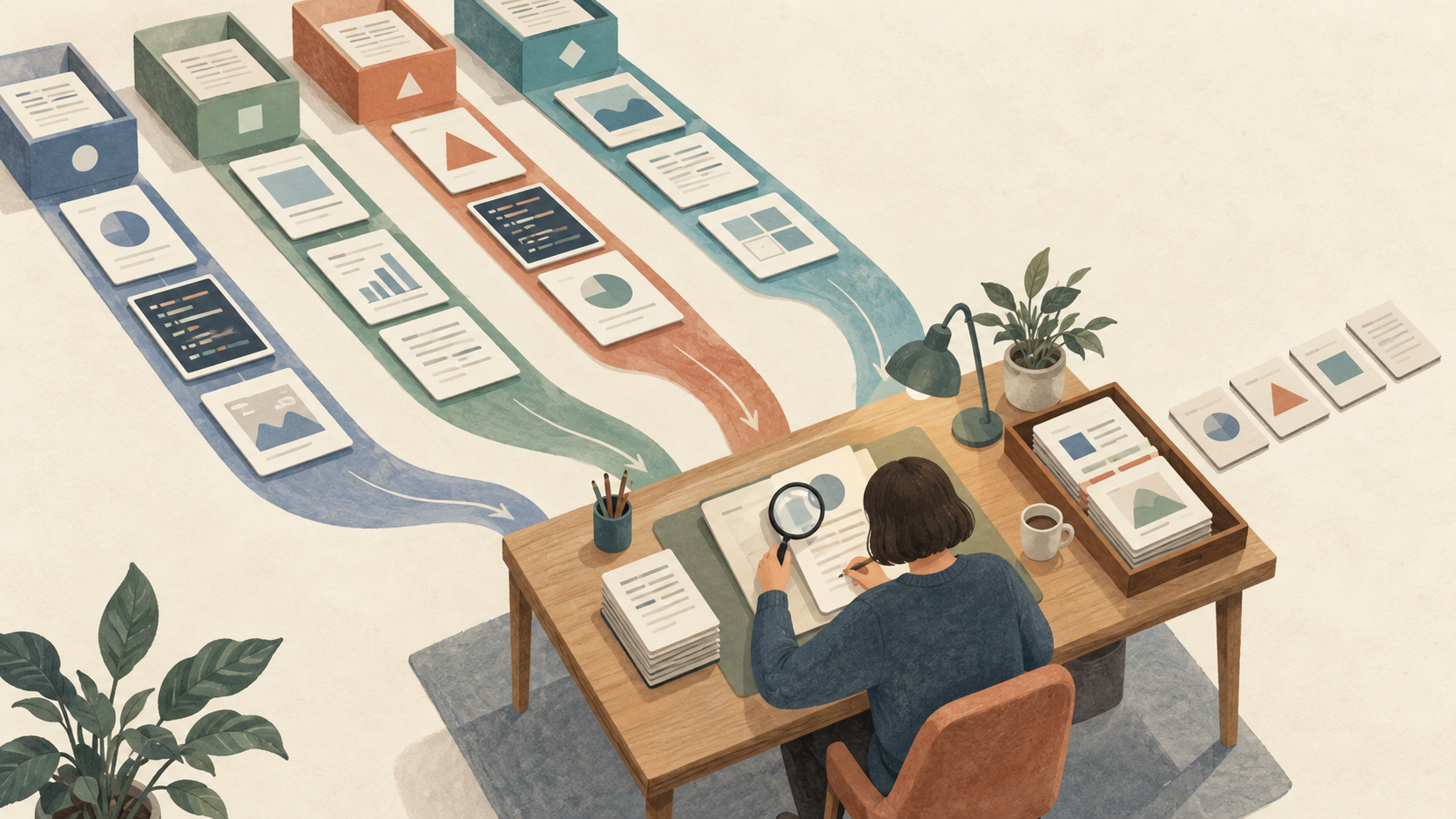
Tasks can run in parallel, but understanding and judging the results still takes time.
The author of this Reddit post says that beyond five or six sessions, reading responses and thinking about the next assignments makes the author the bottleneck.
One commenter describes approving work without enough thought when running more than two sessions; others say they manage around four. People have different tasks and experience, so no particular number should be treated as the answer. What matched my experience was the increase in judgment required when several results arrive.
Assigning work to AI is easy. Reading the output, checking that it meets the requirements, and deciding how it should be revised all take my time.
That makes the ability to review and judge results essential. An AI finishing its assignment and the work meeting my needs are different milestones. Even when AI performs a review, someone needs to understand that review and make the final decision.
This is also why knowledge of your own field matters. Approving a result simply because it reads naturally and sounds plausible can mean missing the chance to notice a problem.
Source: How many CC sessions do you run concurrently?
“How I Run 4–6 Parallel Claude Code Sessions Across 3 Repos” — Getting Memory Out of Your Head
Running several tasks creates another problem: remembering what you assigned and where.
The author describes keeping separate sessions for specific tasks and asking for a summary of earlier work and unfinished items when resuming. The post particularly emphasizes the cost of reconstructing which task was running in which window after restarting the computer. It also introduces the author's own tool, so its reported benefits should be read as an individual account.
I related to that. Relying on memory makes it easy to lose track of whether a task has finished without being reviewed, whether I sent a revision request, or whether it is waiting for my reply.
That is why I began to feel the need for a tool that organizes tasks and the review queue. I wanted to record each task's goal, current state, result to check, and next action.
Multitasking in the AI era needs to include the ability to track delegated work. Reducing the time spent rereading an entire conversation to reconstruct the situation makes it easier to keep several tasks moving.
Source: How I run 4–6 parallel Claude Code sessions across 3 repos without losing my mind
“Running Multiple Agents in Parallel Is Bringing Back Context-Switching Fatigue” — Deciding When to Check
The comments on this post suggest ways to reduce the burden of constantly watching several agents.
Suggestions include recording completed results and open issues in files for batch review, notifying the person only when a human decision is essential, and keeping a record that makes changes easy to understand when returning to a task. Some people instead report reducing the number of projects they run in parallel.
The lesson I took from this was that I also need to manage the order and timing of review.
If I stop what I am doing and switch windows every time an AI finishes, I have to keep rebuilding my understanding of each situation. Putting finished results into a review queue and checking the questions that genuinely need a decision first may help.
Alongside running several tasks, we need the ability to organize the moments when a person has to intervene.
Source: Running multiple agents in parallel is bringing back context-switching fatigue
“AI Doesn’t Reduce Work—It Intensifies It” — The Longer Workday

Starting the next assignment has become easier. Deciding when the day's work ends takes a separate decision.
The change I least expected was in my working hours.
I thought I would rest while AI worked. Instead, I fill each wait with another assignment, and it never seems to end. I review one result, ask for revisions, and start another task.
I take a short nap, wake up to check the results, and set things running again. Being able to do more is enjoyable. But the point when I finish work and rest keeps moving later.
Berkeley researchers observed a U.S. technology company with about 200 employees over eight months and reported expanding task scope, work spilling into breaks, and people managing several AI tasks at once. A single-company observational study cannot be generalized to every user, but the possibility of a time-saving tool expanding the workload resonates with my experience.
There are also Reddit comments from someone who says running multiple sessions has added two or three hours to the workday, and from another person still unable to close four task windows at three in the morning.
That is why I think multitasking also needs to include the ability to take on a manageable amount of work and decide when to stop. When the review queue grows, I need to check the results already waiting and practice closing tasks that meet the completion criteria.
Sources: AI Doesn’t Reduce Work—It Intensifies It, Mental burnout from too many parallel Claude Code sessions?
Conclusion — A Human Ability to Develop in the AI Era
Using AI well requires the ability to ask good questions and knowledge of your field. I think another ability will become increasingly important alongside them.
The ability to design several tasks, delegate them to AI, keep track of progress, and judge and finish the work that comes back.
I would call this human multitasking.
As AI becomes able to handle more work, people need to choose what to delegate and decide what counts as complete. Alongside managing concurrent tasks, we need to develop the ability to set priorities, review results, and stop.
I need to practice this myself. Several tasks are running again today. I need to learn how to finish work well as much as how to get it started.
Supporting material: This is my interpretation of my own experience, the concurrent-session discussion, and the observational research on work intensity.
Sources and References
How I run 4–6 parallel Claude Code sessions across 3 repos without losing my mind
Running multiple agents in parallel is bringing back context-switching fatigue
The user posts are treated as personal accounts and opinions, and the Berkeley research as an observational study of one company. The three illustrations were generated with AI.