One Year After the Ghibli Profile Picture Craze: How Far Has Your AI Come?
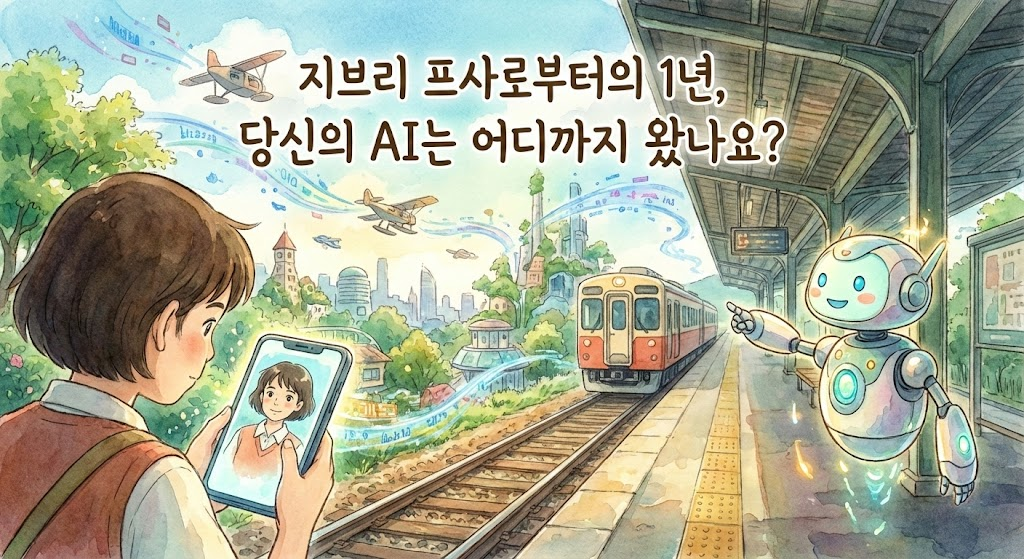
Not the era of "click," but the era of "operation"
It was about a year ago.
A time when everyone's feed was suddenly unified into one genreexisted.
Some with sparkling eyes,
Some with overly gentle expressions,
Some... the results looked strangely mature.
That's right.Ghibli profile pictures.
It seemed like a simple game back then, but looking back now, it was quite an important scene.
It was the moment when AI came down from "technology in demo videos" to"a feature that anyone can immediately touch."And a year since then.
And a year since then.
This question arises.
Where has AI come since the Ghibli profile picture trend?
AndHow far has your use of AI come?
1) What the Ghibli Profile Picture Showed: The Sensation of Zero Technical Cost
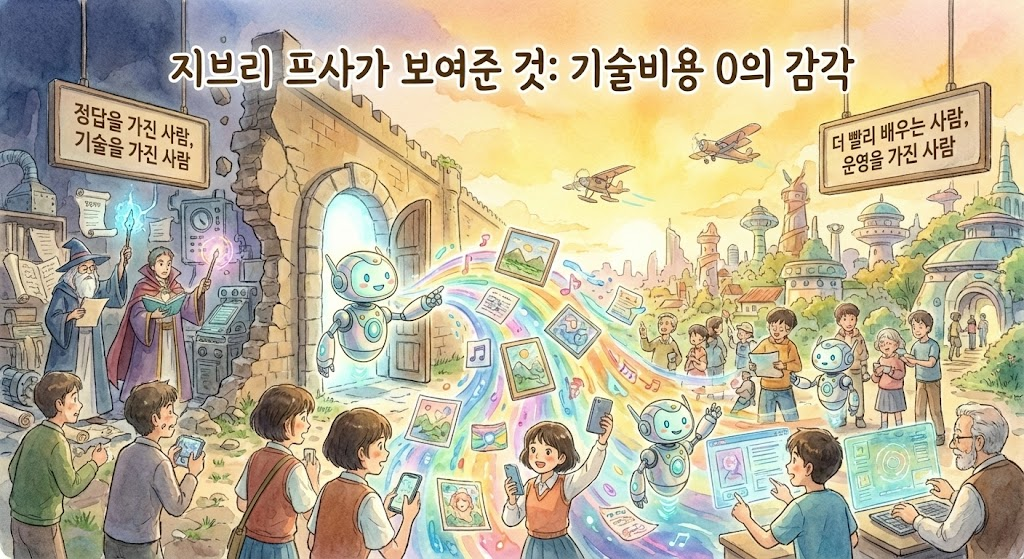
The Ghibli profile picture trend didn't just explode because "image generation" was amazing.
More precisely,It was closer to the shock of "This level of result with this level of effort?"It was closer to the shock of "This level of result with this level of effort?"
Even without having learned to draw
Even without being able to handle design tools
Even without using expensive outsourcing
A single inputAn experience of getting a "plausible result."
This is what came into the hands of the public.
The really important thing here isn't "The picture came out well."
The cost structure has changed.is the point.
In the past, ‘people who can do it’ were rare, and that rarity was a competitive advantage.
But from some point on, ‘possible’ becomes the ‘default’.
The Ghibli profile picture was a scene where that default came down.
And from this point on, the axis of the game shifts like this.
People with the right answer→People who learn faster
People with technology→People with operation
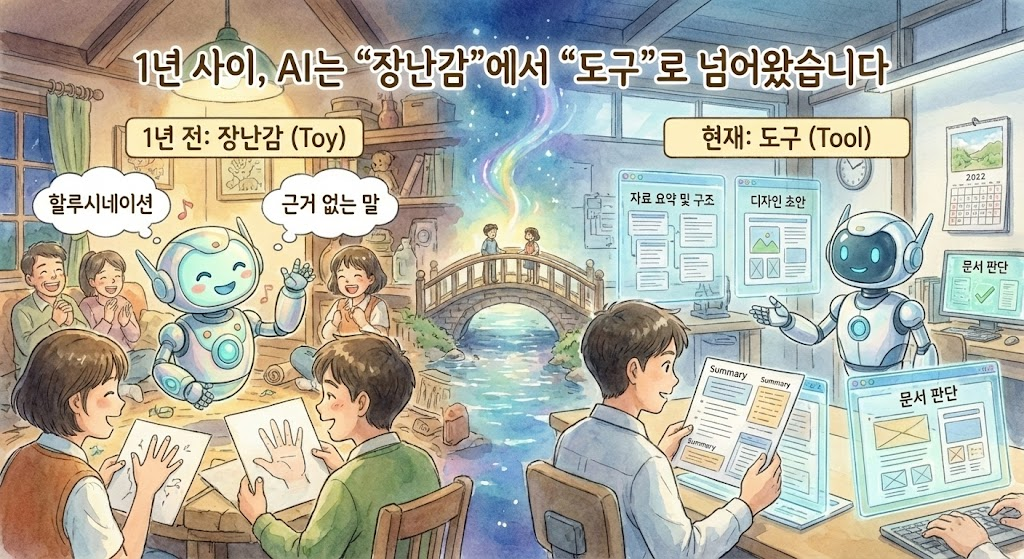
2) In the past year, AI has moved from "toy" to "tool"
You'll remember that time.
"It's a fun chatbot, but... it's ambiguous for work because of hallucinations."
"Why does the person have six fingers?"
"It sounds plausible, but there's no basis for it?"
That's right. It was clumsy in the beginning.
But a year is too long for AI.
Many tasks have now changed like this.
Instead of 'reading and summarizing data',If you put in the data, the structure is established first
Instead of 'new design',A draft is laid out first
Instead of 'time to write a document',The time to judge the documenthas become important.
The core of the experience is one thing.
AI doesn't "replace" work,
work“in progress”started arriving in front of you.
So the sense of planning also changes.
Planning or direction in the AI eraYou have to look at least 6 months ahead and run.
Even if it doesn't seem possible right now, it's catching up really scary.
3) Like weather forecasts, AI also operates on 'probabilities'
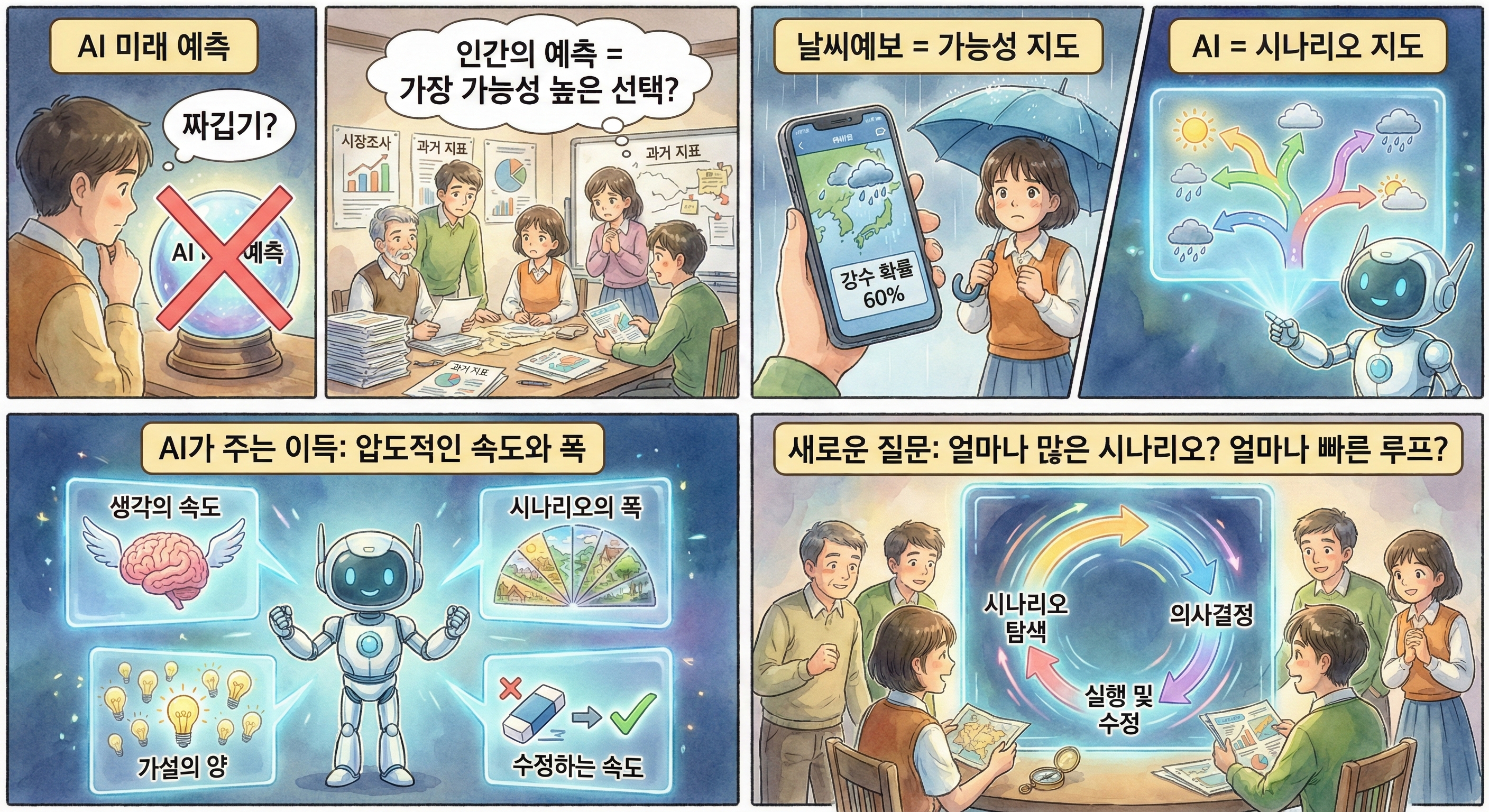
Refuting the statement "Don't predict the future with AI"
There is a saying that always comes out at this point.
"Don't predict the future with AI.
After all, it's just a sentence that pieces together people's thoughts."
That's right.Half right.
AI basically creates "the next sentence that is probabilistically plausible."
So if you believe it as it is, you'll have an accident, and if you make unfounded assertions, it's dangerous.
But.
Why is that statementonly halfright?
People have never "gotten the future right" in the first place.
People alwayspredictthe future, but a more accurate expression is this.
Looking at market research reports
Looking at expert comments
Looking at past indicators
Mixing in the feeling of the conference room
"The most likely choice"has been made.
In other words, decision-making is originallyon probability.is done.
The weather forecast is the same.
It doesn't "confirm" whether it will rain.
However, it gives you enough of apossibility mapto decide whether to bring an umbrella.
AI is the same.
AI does not predict the future.
Instead,It quickly unfolds a map of possible scenarios.
The benefit you get here is not "the right answer."
Speed of thought
Breadth of scenarios
Amount of hypotheses
AndThe speed of correcting when wrong
These four things become overwhelmingly faster.
So the question must also change.
Instead of "Does AI get the future right?"
"With AI,How many scenarioscan you draw?"
"With AI,How quickly can the decision-making loopbe turned?"
4) After a year, people also diverged
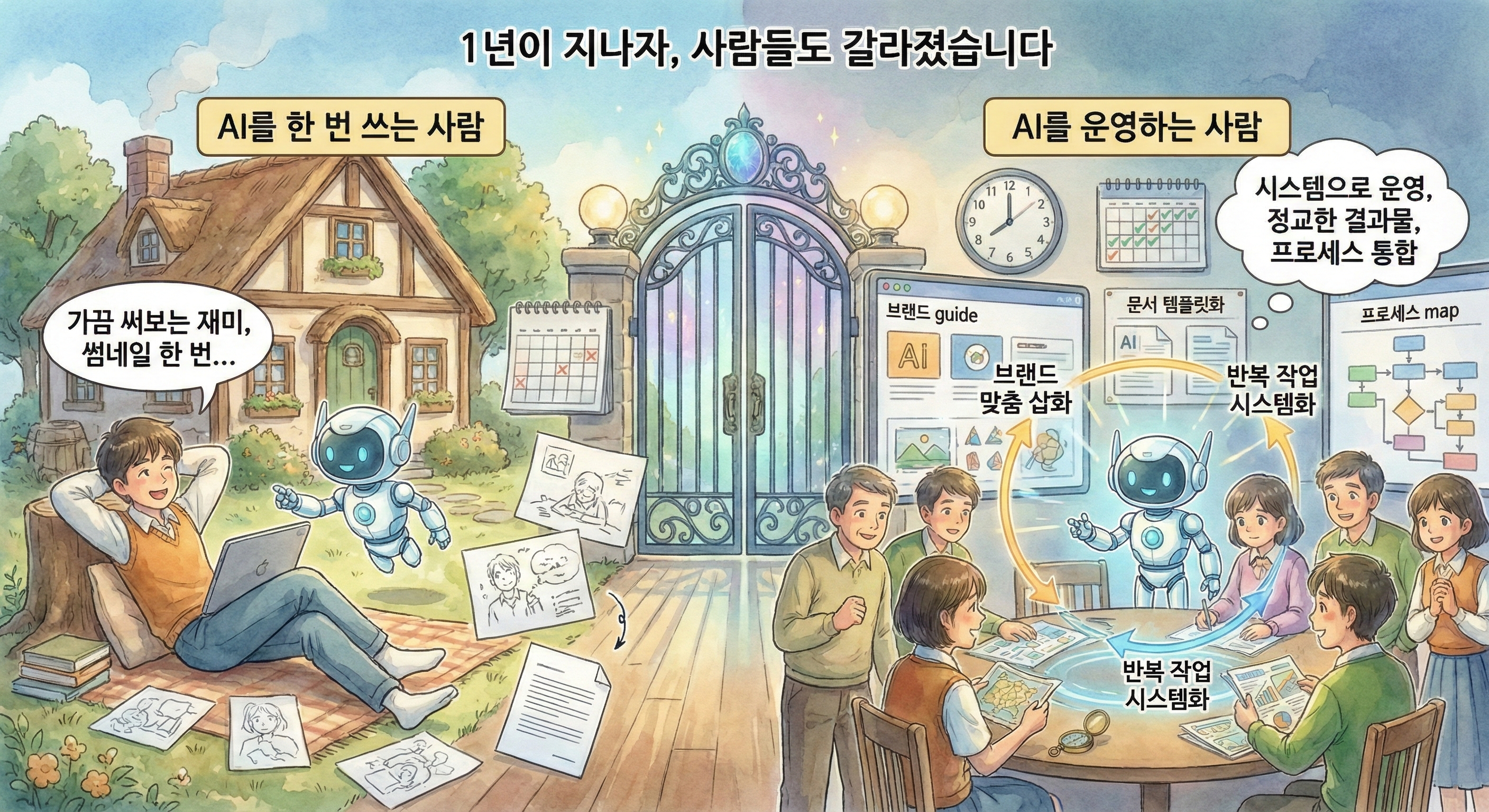
The Ghibli profile picture craze was a moment when everyone stood on the same starting line.
But after a year, the results were quite different.
Some people still use AI like this.
"Fun to use sometimes"
"Pulling out a thumbnail once"
"Creating a plausible article"
On the other hand, some people do this with AI.
Produce sophisticated illustrations/artworkthat match the brandand
Document, proposal, and research resultsTemplatizeand
Insert AI into the work processTurn repetitive tasks into a system.
The important thing here is not "which model to use."
The difference is just one thing.
The difference between "people who use AI once" and
The difference between "people who operate AI"
5) The conclusion that has been repeated in blog posts
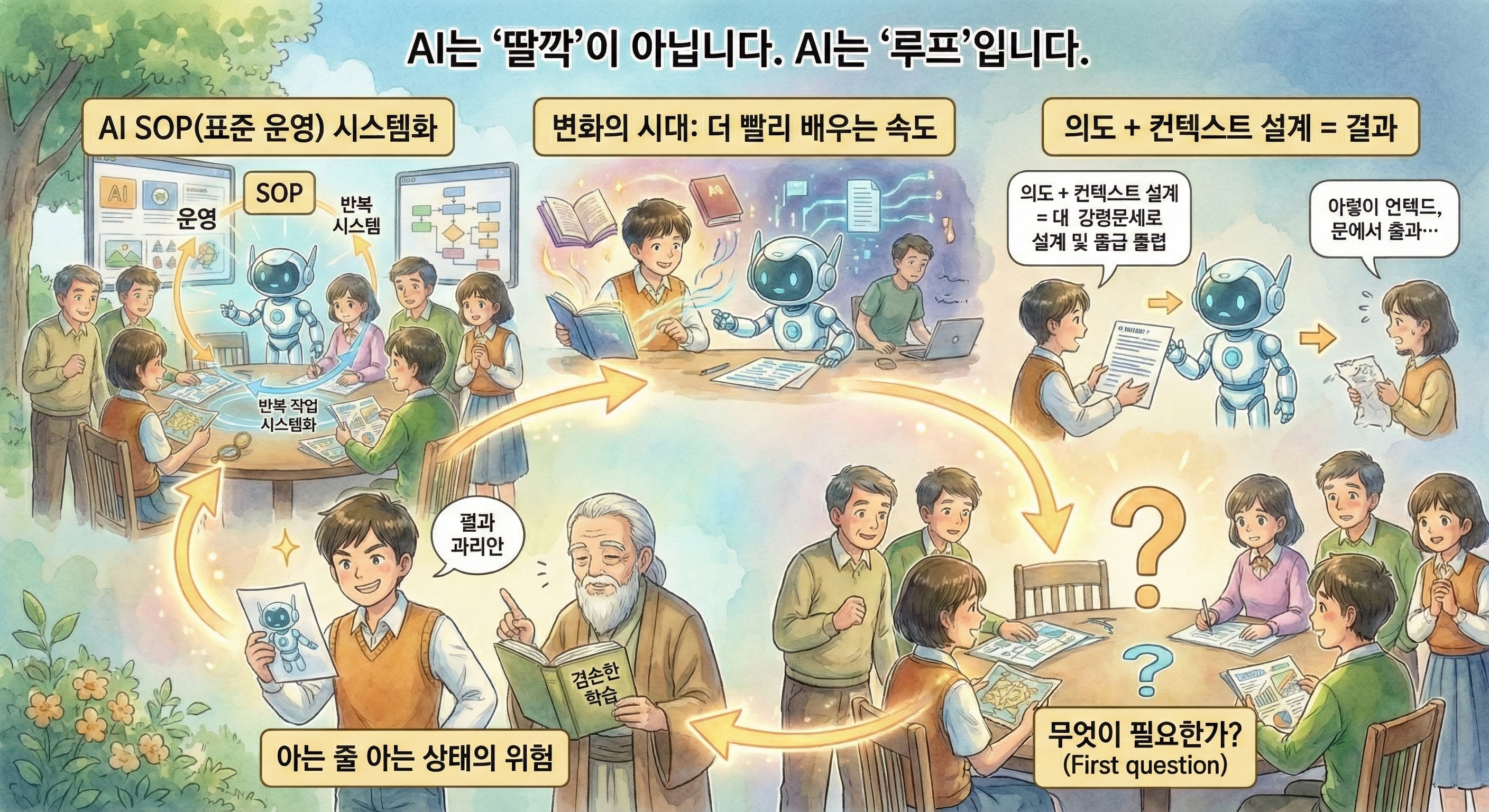
In fact, this conclusion does not arise all at once.
It becomes clearer and clearer as you use AI, fail, and rebuild the structure.
To summarize the conclusions I have repeated in USLab.ai blog posts, the flow is as follows.
In an era of change, the speed of learning fasterbecomes the game.You can't just throw an intention, you have to design the context, and the result will survive.
You can't just throw an intention, you have todesign the contextand the result will survive.
So instead of "What do I do with AI?"“What is needed?”should be asked first.
The most dangerous thing in that process is not “ignorance” itself, butthe state of thinking you know.It is.
Lastly, using AI well is not a matter of individual talent, butsolidifying it as an SOP (Standard Operating Procedure).solidifying it as SOP(standard operation).
And if we put all of this into one sentence, it becomes the message of this article.
AI is not a ‘click’.
AI is a ‘loop’.
6) AI doesn't do everything with just a click.
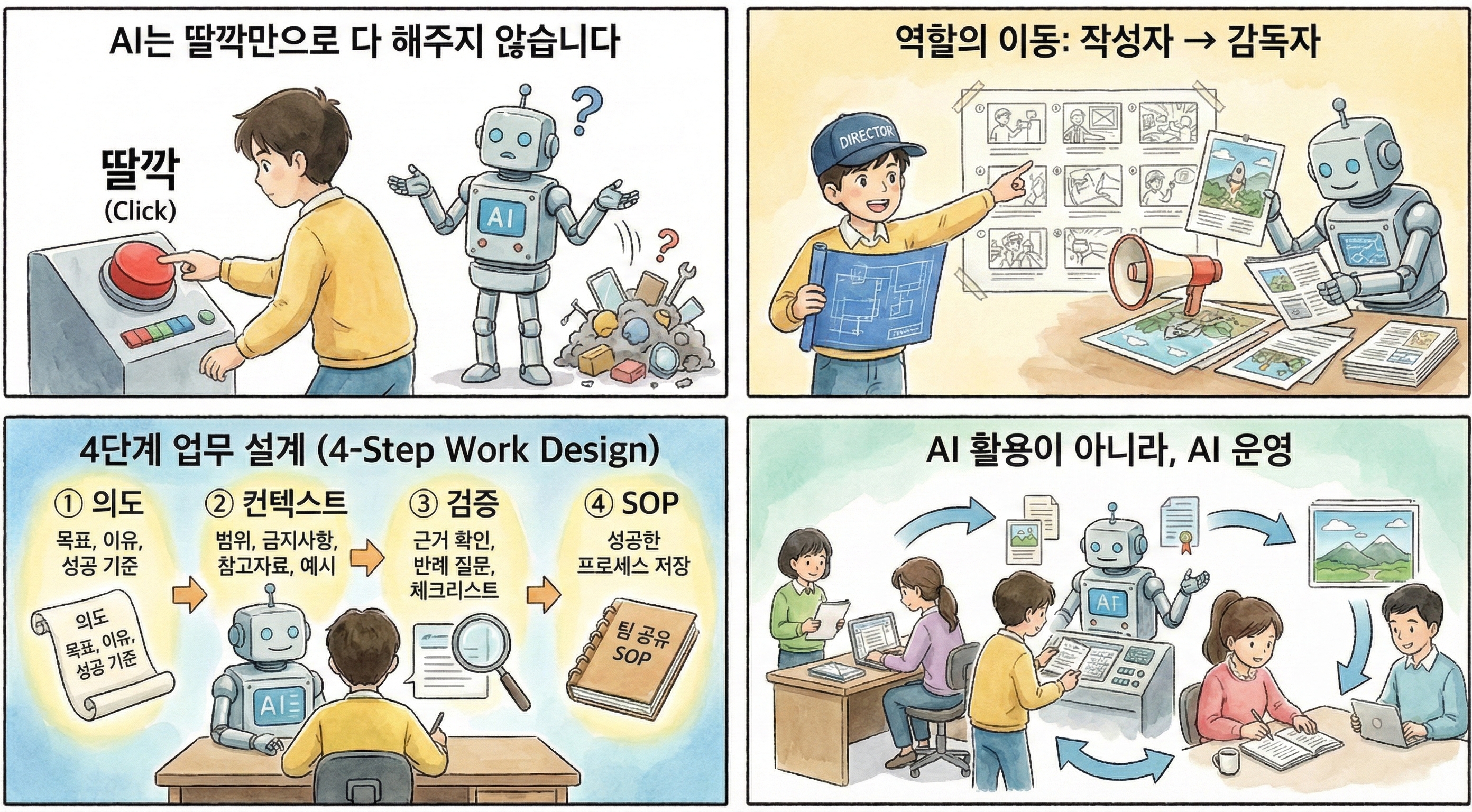
So, "the user must also adapt to AI."
Many people get frustrated here.
"So, in the end, people have to do everything?"
Yes, that's somewhat correct.
But if you change your perspective, it becomes like this.
AI does not "replace" work.
Instead, it changes work into"a different form."It transforms it.
With the advent of AI, the role shifts from 'creator' to 'supervisor'.
Deciding what to create,deciding
Determining by what criteriato verify,
Deciding how much to delegate,dividing authority,
How to stop it when it makes a mistake,putting in place safety measures.
In other words, the person using AI is increasingly becoming not a "prompt writer" but a
task designer.becomes.
So, "adapting to AI" ultimately means this.
① Write down the intention first
Before throwing "do it" directly at AI,
What is the goal?
Why are we doing this?
What are the success criteria?
These three things must be captured in one sentence first.
② Provide context
The moment AI falters is mostly due to "lack of information."
Scope (how far/from where)
Prohibitions (what not to do)
References (basis of belief)
Examples (desired tone/format)
Giving this doesn't suddenly make AI a genius, butit becomes less absurd.
③ Insert a verification loop
The problem with AI is not that "it's sometimes wrong," butthat it's plausibly wrong.That's the point.
So verification is not an option but a necessity.
Verify grounds
Counterexample questions
Check numbers/proper nouns
Output standard checklist
④ Fix with SOP
Doing well once is luck,
making sure it goes well next time is skill.It is.
Save good inputs,
record failure patterns,
organize so that the team can share,
solidifying it into a re-executable form.
Only when you come this far, it is not "AI utilization" butAI operation.It becomes.
Conclusion: How far has your AI come?
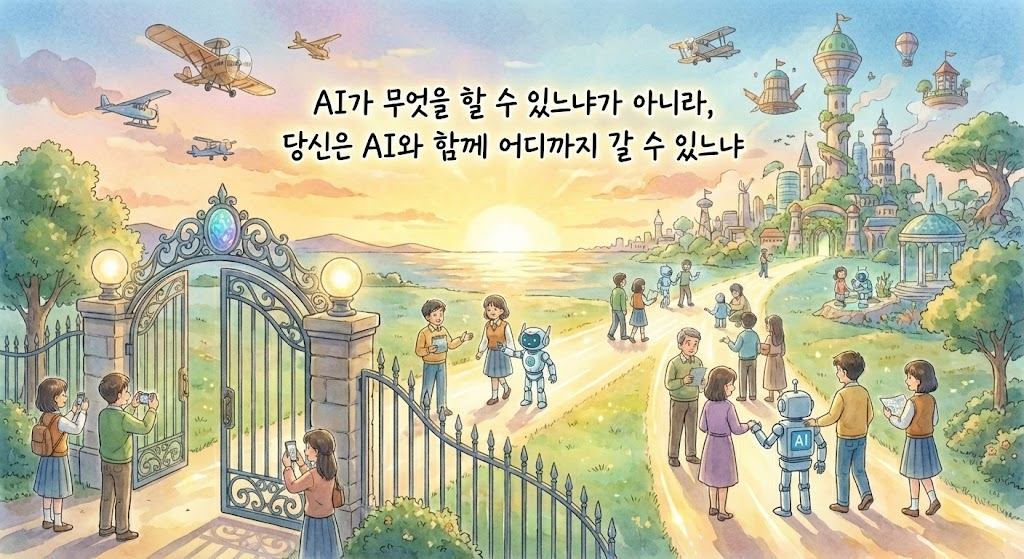
The Ghibli profile picture was the "entrance" a year ago.
From that entrance, people split into two paths.
Some people are still just taking pictures at the entrance,
and some people are going inside and making roads.
So the most important question is this.
Not what AI can do, but
how far can you go with AI?