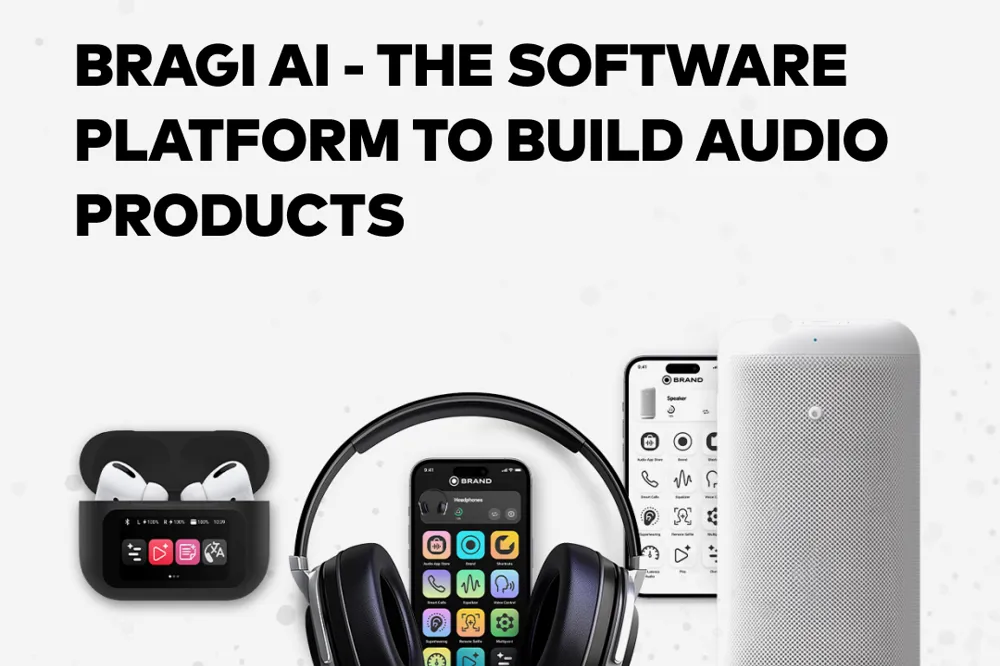
A modular audio software platform for audio device manufacturers, enabling them to easily integrate AI voice interfaces and various voice apps to implement smart headphones.
HonoreeEnterprise Tech인공지능오디오 인터페이스어린이 교육차량용 AI스크린리스상호작용
브라기 AI
11
0
Bragi
One-Line Product Definition
Problem Definition
Earphone and headset manufacturers want to incorporate the latest smart features (voice assistants, automatic controls, etc.) into their products, but they struggle to implement them due to a lack of in-house AI development capabilities and the difficulty of optimizing for each device. In-house development is costly and time-consuming, and relying on voice assistants from large platforms like Google/Apple makes it difficult to maintain brand identity.
Additionally, wearable devices have limited updates, making it difficult to add features after release, and the short product lifecycle increases electronic waste. Manufacturers face the dual challenges of product differentiation and lifespan extension.
Key Differentiators
Full-Stack Audio Platform: Bragi AI is an end-to-end platform encompassing everything from firmware to mobile apps and cloud management. By adopting it, manufacturers can immediately equip their products with AI features with minimal effort. Its strength lies in being a one-stop solution that eliminates the need for individual module development.
Brand Agent: This feature allows the construction of a dedicated voice assistant for each company, implementing a voice interface that operates with the brand's unique voice, tone, and language. For example, a specific headphone brand can provide its own character voice assistant to create a differentiated user experience.
Chat AI Function: With a built-in chatbot-type voice interface based on OpenAI technology, users can perform hands-free voice conversations, interpretation (translation), voice memo creation, etc., using only their earphones. Users can access various services in natural language without taking out their smartphones.
Multi-Chipset Compatibility & OTA Updates: Designed to operate on various Bluetooth audio chipsets, it has fewer hardware restrictions, and new features can be added even after product release through wireless updates. This extends product life and reduces electronic waste.
Key Adopters
Earphone/Headphone OEMs and Brands (B2B) – Quickly incorporate smart features to strengthen product portfolios
Smartphone/PC Manufacturers (B2B) – Utilize for developing dedicated voice interfaces that interlock with their devices
Automotive Audio Companies (B2B) – Can be used to unify voice assistants within vehicles (integrate Bragi module)
Call Center/Business Headset Companies (B2B) – Utilize for developing headsets with real-time interpretation or memo functions
Scalability
Targeting the global audio market (headphones, TWS earbuds, etc.), it can target manufacturers worldwide as customers. It is a particularly attractive solution for mid-sized brands looking to differentiate themselves with smart features.
However, it must compete with or coexist with big tech voice assistant ecosystems (Siri, Google Assistant, etc.), and some manufacturers may still prefer big tech solutions, making it a challenge for Bragi to establish its position.
There is room to expand the platform beyond audio to fields such as IoT and smart home devices. For example, it can be applied as a dedicated voice interface for smart speakers and home appliances, creating potential for market expansion.
Regionally, multilingual support is key, so AI optimization for local languages such as Korean will increase adoption by domestic companies.
Judges' Evaluation
As it received the Innovation Award in the Enterprise Technology category, it garnered more attention from industry insiders than consumers. At CES, audio industry professionals responded positively, saying, "A solution that can dramatically shorten development time," "Technology that allows even small and medium-sized brands to release AI earphones." (Source: CES exhibition booth feedback).
The technological completeness is stable due to the use of proven engines such as OpenAI, and Bragi is evaluated to have a high understanding of actual hardware integration because the platform was designed based on its past experience in developing its own earphones.
Regarding market expectations, there were opinions about the profitability of the B2B model, with some viewing that it is uncertain how much Bragi's business model will spread, as large brands prefer in-house development and smaller companies are cost-sensitive. However, it is also mentioned that it has the potential to lead the audio industry trend by presenting a new user experience that operates without a smartphone.
Analyst Insights
⚠️ The technical concept is attractive, but the market is uncertain, with success depending on industry adoption
The award list data is based on the official CES 2026 website, and detailed analysis content is produced by USLab.ai. For content modification requests or inquiries, please contact contact@uslab.ai. Free to use with source attribution (USLab.ai) (CC BY)
댓글 (0)
댓글을 불러오는 중...