Wearable walking rehabilitation robot for infants and toddlers (ankle-driven exoskeleton)
HonoreekoDigital Health인공지능(AI)IoT텔레헬스디지털 헬스원격 모니터링개인 맞춤형 건강관리
밤비니 키즈
9
0
Cosmo Robotics
One-Line Product Definition
Problem Definition
Infants and toddlers with walking disabilities due to congenital or acquired nervous system damage have limited access to appropriate walking rehabilitation devices. Existing exoskeletons are mostly designed for adults, making it difficult to train natural walking postures. Particularly for infants in their early developmental stages, lightweight equipment that supports the ankle and entire foot is needed.
Key Differentiators
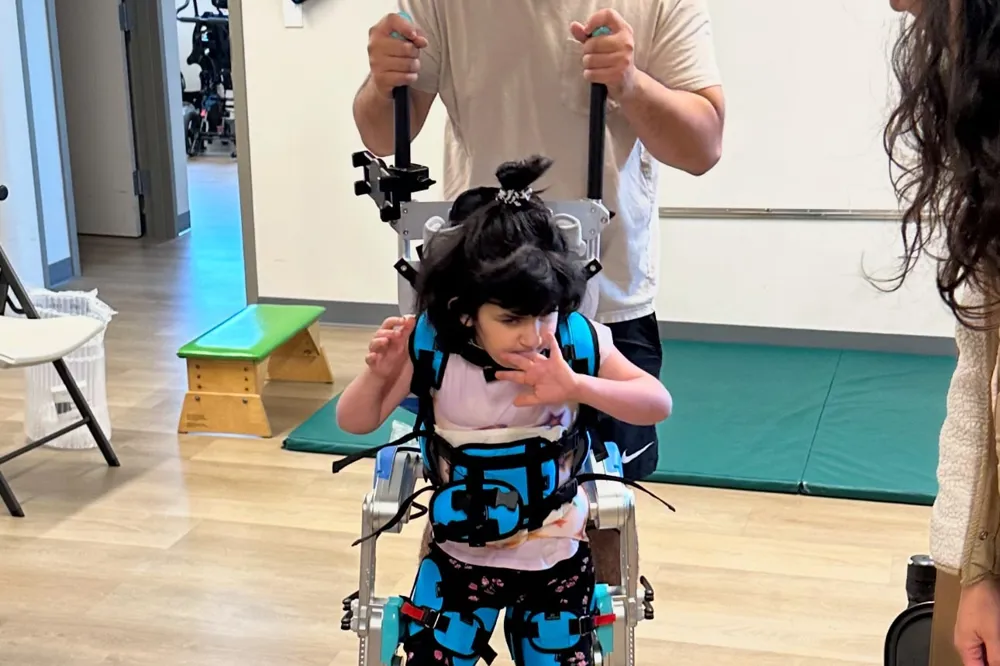
Bambini Kids is a walking rehabilitation exoskeleton exclusively for children aged 2.5 to 7 years. It is the world's first to drive ankle motors, supporting walking on actual ground, and provides both active and passive modes. It also alleviates spasticity (rigidity) and contracture (muscle shortening due to rigidity), which are symptoms of conditions like cerebral palsy, through natural walking movements.
It is much lighter and more mobile than other infant robots, and it can provide various levels of assistance tailored to a child's actual stride. While existing medical devices only support sitting or standing postures, Bambini Kids' key differentiator is that it implements "rehabilitation in a real walking environment."
Key Adopters
The main customers are medical institutions such as rehabilitation centers and pediatric rehabilitation hospitals, as well as physical therapists (B2B). There is also a high possibility of introducing health insurance and government subsidy programs (B2G) to support treatment costs. In addition, there may be purchase demand from families (B2C) with children who need intensive rehabilitation, despite the high cost. It can also be used in the form of medical device rentals as part of corporate ESG programs or welfare initiatives.
Scalability
Currently, it is designed for children aged 2.5 to 7 years, but it can be expanded structurally to accommodate different age groups with different body sizes (e.g., Bambini Teens), or it can be developed into equipment for training more complex walking patterns by supporting the knee joint.
Since it has a light and modular design, it can be linked with additional sensors (e.g., posture/balance sensors) to expand into broader rehabilitation areas (e.g., stroke). However, medical device certifications (US FDA, European CE, etc.) and safety standards are strict, so approval procedures in each country must be followed.
Judges' Evaluation
It won the Innovation Award at CES 2026 and gained attention by being featured in global media such as Fox News. The product has already been certified by the Korean MFDS and is in the process of certification in the United States and Europe. The technical completeness is at the clinical stage, and expectations are high as actual clinical trials are reportedly underway. The demand in the rehabilitation medical market is clear, so there are few factors for undervaluation, but securing insurance and other support systems due to high costs, as well as data on actual clinical effects, are key to commercialization.
Analyst Insights
🔥 High market potential / Feasible for business connection (Clear prospects for global expansion as a niche medical device with high necessity) (Demo video: see Cosmo Robotics Bambini Kids demonstration)
The award list data is based on the official CES 2026 website, and detailed analysis content is produced by USLab.ai. For content modification requests or inquiries, please contact contact@uslab.ai. Free to use with source attribution (USLab.ai) (CC BY)
댓글 (0)
댓글을 불러오는 중...