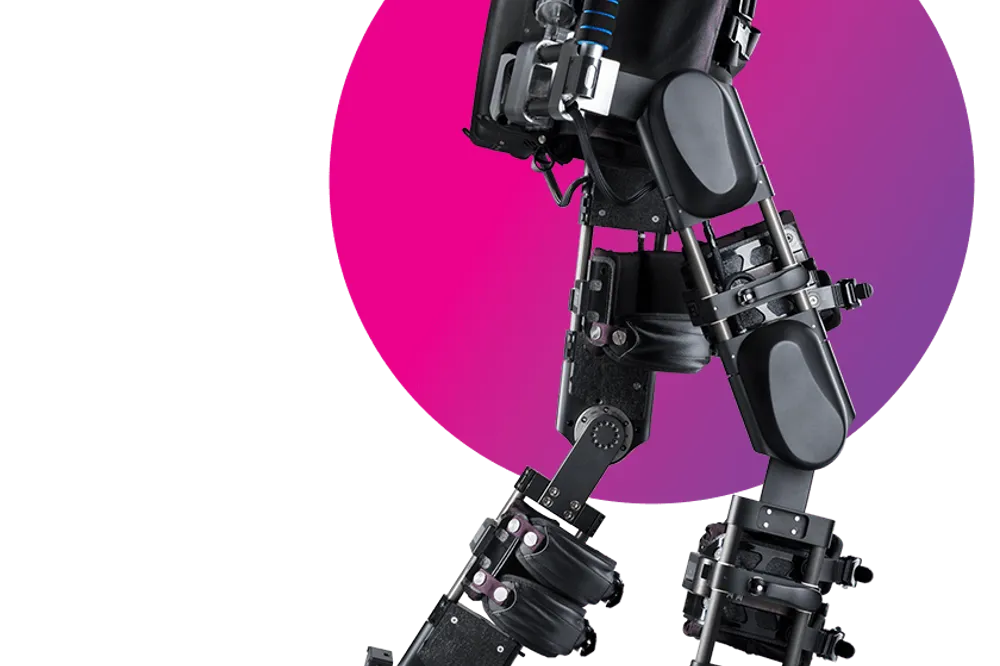
A medical robot that helps children with gait difficulties due to neurological disorders recover their walking ability and undergo rehabilitation training through a wearable exoskeleton.
HonoreekoDigital HealthAI 헬스케어IoT 융합디지털 헬스원격 진료맞춤형 건강관리
밤비니 틴즈
18
0
Cosmo Robotics
One-Line Product Definition
Problem Definition
Children with congenital or acquired neurological disorders experience difficulties in daily movement and rehabilitation training due to gait impairments. In particular, complications such as spasticity and contracture due to cerebral palsy are often accompanied, which are difficult to improve with existing treatments alone.
Traditional rehabilitation therapy relies heavily on manual assistance from therapists or is conducted with fixed gait rehabilitation devices, which limits the ability to stimulate children's interest and active participation. In addition, the lack of specialized equipment tailored to the growth stage and the difficulty of consistent gait practice were also problems.
Key Differentiators
As the world's first ground-walking exoskeleton robot for children, it implements a more natural walking pattern by including a drive unit in the ankle joint. Unlike existing exoskeletons that were mainly adult-centered, Bambini Teens is differentiated by being designed exclusively for children aged 5 to 12.
It provides both active and passive gait training modes, allowing for customized rehabilitation depending on the child's condition. This helps not only with muscle strength assistance but also with learning gait patterns in the brain nerves.
It is characterized by the ability to induce smooth movements like the hand movements of a professional physical therapist during walking, and it has a comfortable fit and interaction designed to allow children to participate enjoyably.
Through AI and IoT-linked remote monitoring, continuous gait practice and expert consultation are available even at home, realizing rehabilitation outside the hospital.
Key Adopters
Individual children and their families in need of rehabilitation therapy (B2C nature)
Pediatric rehabilitation hospitals and clinics (specialized medical institutions, B2B) – adopted as equipment to improve treatment effectiveness
Educational institutions and special schools (public sector, B2G) – can be used as assistive technology devices
Scalability
As a medical device, medical device approvals are required in each country, but Korean MFDS certification has already been completed and US FDA/European CE certification procedures are underway. Although regulatory barriers exist, preparations for entering the global market are in progress.
There is high potential for technology expansion to other age groups such as elderly rehabilitation and gait assistance for adults with disabilities. In addition, there is potential to develop into a smart rehabilitation platform through accumulated gait data and AI analysis.
The pediatric rehabilitation robot field is a new market with few competitors, and if it establishes itself as a leading company, high growth is expected in the global medical/welfare field.
Judges' Evaluation
The CES Innovation Award recognized its technology and design. It received attention from major media outlets such as Fox News at the local exhibition and was praised as an innovative technology that helps children learn to walk naturally.
In terms of technological completeness, it is evaluated as being in a mature stage, to the extent that it has already undergone clinical field testing and certification. In particular, it is expected that the market launch is imminent as safety and effectiveness in actual use have been proven.
In the market, expectations are high from the perspective of reducing rehabilitation treatment costs and maximizing effectiveness, but as it is an expensive device, whether it will be incorporated into the healthcare system and whether insurance will be applied are pointed out as key to commercialization. Overall, it is innovative, but as it is in the early stages of commercialization, a cautious view is that market verification is needed.
Analyst Insights
⚠️ High technological innovation, but verification and commercial adoption in the medical market remain to be seen
The award list data is based on the official CES 2026 website, and detailed analysis content is produced by USLab.ai. For content modification requests or inquiries, please contact contact@uslab.ai. Free to use with source attribution (USLab.ai) (CC BY)
댓글 (0)
댓글을 불러오는 중...