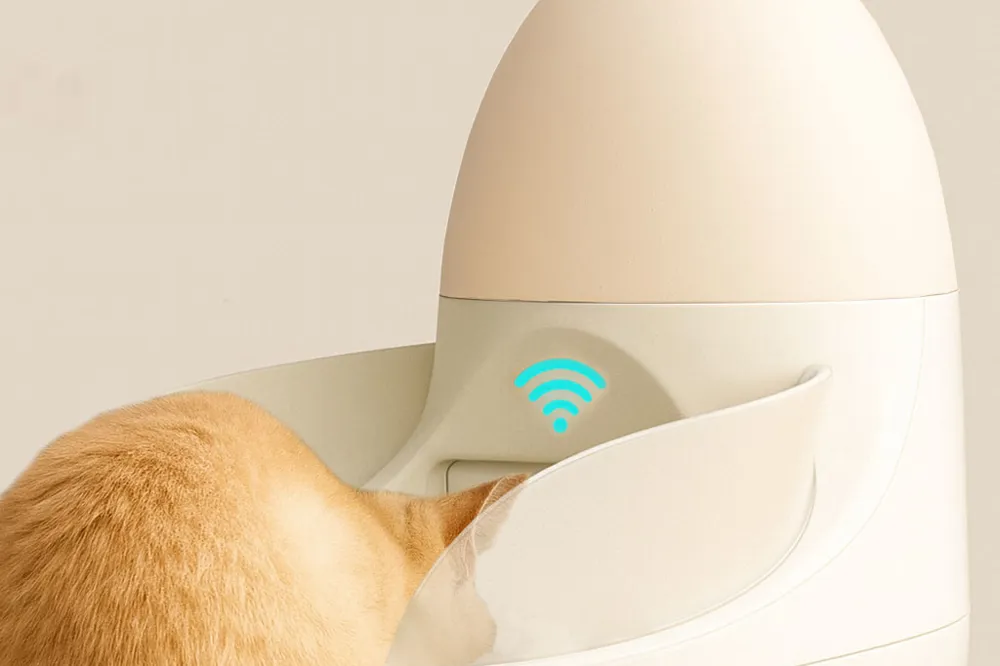
A smart automatic feeder designed to individually recognize cats using RFID tags, enabling customized feeding tailored to each cat's age, weight, and health condition in multi-cat households. It integrates hygiene management features such as UV sterilization and records dietary habit data.
HonoreekoPet & Animal Tech산업 자동화데이터 분석예측 모델링건설 기술스마트 팩토리디지털 전환
peanutcat - egg-1
33
0
Hubplatform
One-Line Product Definition
Problem Definition
In households with two or more cats,there's the issue of one cat eating another's food (gluttonous cat).Also, if a specific cat requires special or medicinal food, it's difficult to provide separate feeding when they are together. Concerns arising from this in multi-cat households include increased obesity in cats, nutritional imbalances, and stress due to food competition.
In reality, 50% of all cats live in multi-cat households, and especially for purebred cats, dietary control is often essential due to genetic diseases. While automatic feeders have existed, they only distribute the same amount to all cats or dispense food at fixed times, lacking individual management.
Against this backdrop, the question, "Isn't there a smart bowl that can feed each cat differently?" led to the creation of peanutcat egg-1. In other words, it's a product designed to solve feeding conflicts in multi-cat households and the limitations of managing feline obesity/diseases.
Key Differentiators
The core of the egg-1 smart feeder is RFID-based individual recognition feeding. By registering each cat's RFID collar or subcutaneous chip ID, the feeder recognizes the cat upon approach and opens the lid to provide only the amount set for that cat. Even if another cat waits nearby, the lid remains locked, preventing food theft and fundamentally blocking overeating/undereating issues in multi-cat environments.
It also has a large storage container that can hold two months' worth of food, reducing the need for frequent refills, and features adjustable height and side barriers, allowing cats of different sizes to eat comfortably.
Eleven innovative features are mentioned, with the standout being UV LED sterilization, which periodically removes bacteria or mites that may inhabit the food. This is a hygiene enhancement in response to some contaminated food incidents in 2024 (cat deaths due to parasites).
In addition, the Guardian voice playback feature allows recording the owner's voice to be played during meal times, reassuring the cat, and the slow feeder option controls the eating speed of cats that eat quickly, reducing vomiting.
In a beta test involving 19 rescued cats, the cats using this device showed significant health improvements: all underweight cats reached normal weight, obese cats lost weight at a safe rate, and cats that vomited 2-3 times a day improved to less than once a week. The proven health management effect based on this data is the competitive edge of egg-1.
Key Benefits
Individual cat owners in multi-cat households (B2C)directly purchase and use the product. The cost is borne by individual cat owners, and while the product price may be higher than regular automatic feeders, consumers who are proactive in investing in their pets' health are willing to pay.
For B2B, it could also be useful in animal shelters or cat cafes, but these institutions have budget constraints, so it will initially be distributed mainly to general households before becoming widespread. In the future, B2B2C models such as monthly subscription services (e.g., device rental + health data monitoring) in conjunction with pet insurance companies or veterinary hospitals are possible, but the initial market will be individual consumers raising one or more cats.
Scalability
Technically, no special infrastructure is required, and RFID recognition is a universal technology, so it can be applied to any multi-cat household worldwide. The proportion of cats in the global pet market is steadily increasing, so there is sufficient overseas demand. However, product tuning may be necessary considering each country's radio wave certification (RFID frequency band regulations, etc.) or differences in food size/shape.
In terms of expansion, it can evolve into a service that links accumulated feeding data and weight/health data to the cloud to share with veterinarians or generate health reports. Furthermore, this technology can be applied to smart feeders for dogs or individual feeding management for farm animals.
In particular, it can be integrated as a module of a pet IoT platform, supporting the owner's overall pet management (food, water, toilet, etc.) through a smartphone app. There are no major regulatory issues, but reliability verification (impact on life in case of failure) is important in the pet sector, so large-scale dissemination may take time.
In summary, egg-1 precisely targets the niche market of multi-cat households worldwide at this time and has the potential to grow into a pet tech platform.
Judges' Evaluation
It gained international attention by winning the Innovation Award in the pet & animal tech category at CES 2026. Both the pet industry and the veterinary community are showing positive reactions, recognizing it as a "smart device that solves the feeding problems of multi-cat households."
The American Animal Hospital Association (AAHA) official magazine introduced peanutcat Egg-1 as an "innovative product that helps solve feline obesity and dietary problems," mentioning that veterinarians can use the device's data to consult with clients on obesity management. In terms of technical completeness, the accuracy of RFID recognition and hygiene management functions are also evaluated as addressing realistic problems well.
However, some worry about the initial adoption barrier due to the expected higher price compared to regular feeders, but there is a consensus among cat owners that "it's worth investing considering the treatment costs of overweight cats," so it is not expected to be a major obstacle. Overall, peanutcat egg-1 is receiving favorable reviews as a practical innovation that is not underestimated, a "solution that anyone who has raised cats would immediately agree with."
Analyst Insights
🔥 High Market Potential / Feasible for Business Connection – With the number of multi-cat households increasing worldwide and a consumer base willing to spend generously on their pets' health, this product, which accurately addresses their pain points, is likely to succeed commercially.
The award list data is based on the official CES 2026 website, and detailed analysis content is produced by USLab.ai. For content modification requests or inquiries, please contact [email protected]. Free to use with source attribution (USLab.ai) (CC BY)
댓글 (0)
댓글을 불러오는 중...