A portable upper limb rehabilitation robot that helps patients with upper limb paralysis due to stroke, etc., to rehabilitate at home.
HonoreeAccessibility & Longevity재활 로봇웨어러블 센서개인 맞춤형 훈련원격 모니터링뇌졸중 재활운동 능력 회복
Arm Rehabilitation Robot
2
0
The Hong Kong Polytechnic University
One-Line Product Definition
Problem Definition
Existing upper limb rehabilitation equipment is bulky and expensive, so it is mainly installed in hospitals or specialized rehabilitation centers, making it difficult for patients to use it continuously at home. This has led to problems such as a lack of sufficient rehabilitation training after discharge and the inconvenience of visiting hospitals.
In particular, stroke patients require high-intensity repetitive exercise in their daily lives, but it has been difficult to achieve this at home with conventional methods.
Key Differentiators
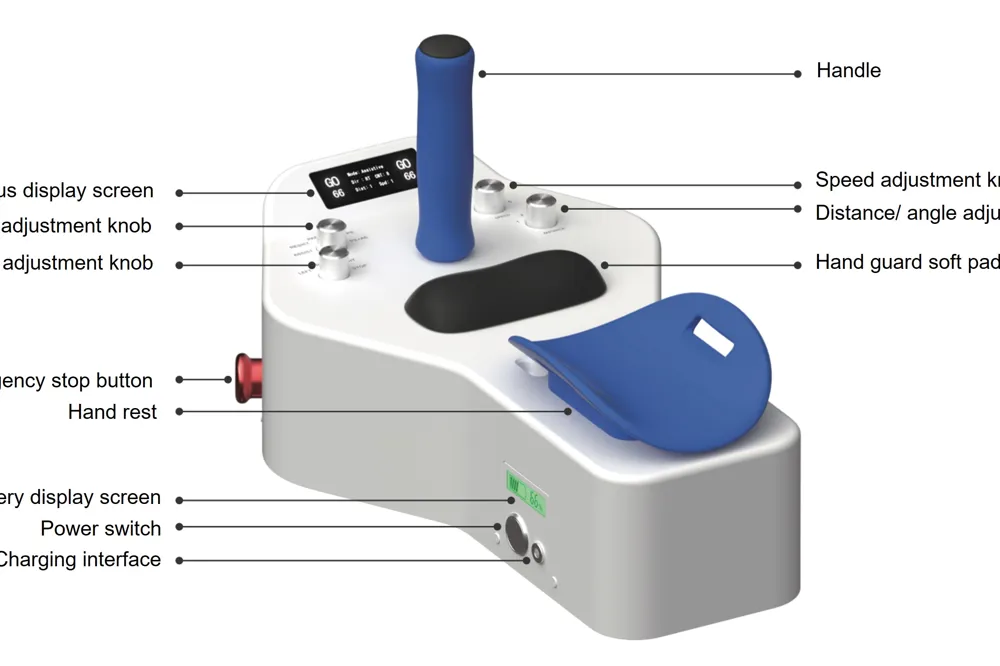
This robot features a tabletop portable design for easy use at home or in community centers, and supports both left-right and front-rear semi-circular and linear path movements with four omnidirectional casters. AI-based guidance leads the patient's arm movements and tracks training data, while high-precision sensors detect even subtle movements.
The biggest differentiator is that it enables home use through low cost and weight reduction. While existing rehabilitation robots are large and expensive for clinical facilities, this product enables standardized intensive rehabilitation training at home with portability and affordability.
Key Adopters
Individual rehabilitation patients or their guardians are the main users and bearers of the cost. Rental and purchase through medical insurance or rehabilitation centers may also be possible, but this product is intended for the B2C market.
Hospitals andphysical therapy clinics (B2B)can use it for home-linked rehabilitation programs or rent it out to patients. However, the ultimate purchaser is the individual patient, with the goal of installing it in the home.
Scalability
Due to the nature of medical devices, regulatory approval procedures in each country (e.g., FDA, Ministry of Food and Drug Safety approval) are required, but demand is high in the global rehabilitation medical market. In particular, it is highly utilized in countries with high demand for stroke rehabilitation due to aging, and there are few restrictions on global expansion if clinical validation is certain.
Technically, it seems possible to expand to other limb rehabilitation or treatment of developmental disabilities in children. Rather than being limited to a specific country or environment, it has the potential to grow into a platform that can be applied to the entire field of rehabilitation therapy.
Judges' Evaluation
It has been recognized for its technological completeness and social value by winning the CES Innovation Award. The industry expects it to be a solution that will open a new era of home rehabilitation, but at the same time, there is also an evaluation that market verification is still in its early stages from the university research stage.
"Rehabilitation effects at the level of professional equipment have been realized at home."It is positively noted in that regard, and is attracting attention as a product that will change the rehabilitation treatment paradigm if the price is reasonable. However, actual distribution may take time depending on challenges such as commercialization, mass production, and medical certification.
Analyst Insights
🧪 Innovative but still in the R&D and concept verification stage
The award list data is based on the official CES 2026 website, and detailed analysis content is produced by USLab.ai. For content modification requests or inquiries, please contact contact@uslab.ai. Free to use with source attribution (USLab.ai) (CC BY)
댓글 (0)
댓글을 불러오는 중...