AX Starts with Eliminating Notion and Slack
AX begins with eliminating Notion and Slack.
More precisely, it begins with preventing Notion and Slack from running our company.
Taking this title literally would be incorrect. Notion and Slack are good tools. They are already good enough products for collaborative document writing, conversation logging, and rapid collaboration.
So, this article is not about “eliminating all SaaS.” Quite the opposite. For general-purpose functions, it's often faster, cheaper, and safer to continue using well-made tools.
The problem isn't that we use Notion and Slack. It's that we bury customer context, policies, approvals, exception handling, and accountability records exclusively within them.
This difference becomes apparent when AI is introduced. Anyone can find and summarize conversations and documents well. However, for AI to know what it can suggest to customers, what exceptions it should stop at, and who gave final approval, a more robust operational structure than a simple search bar is needed.
Digital rent isn't just subscription fees.
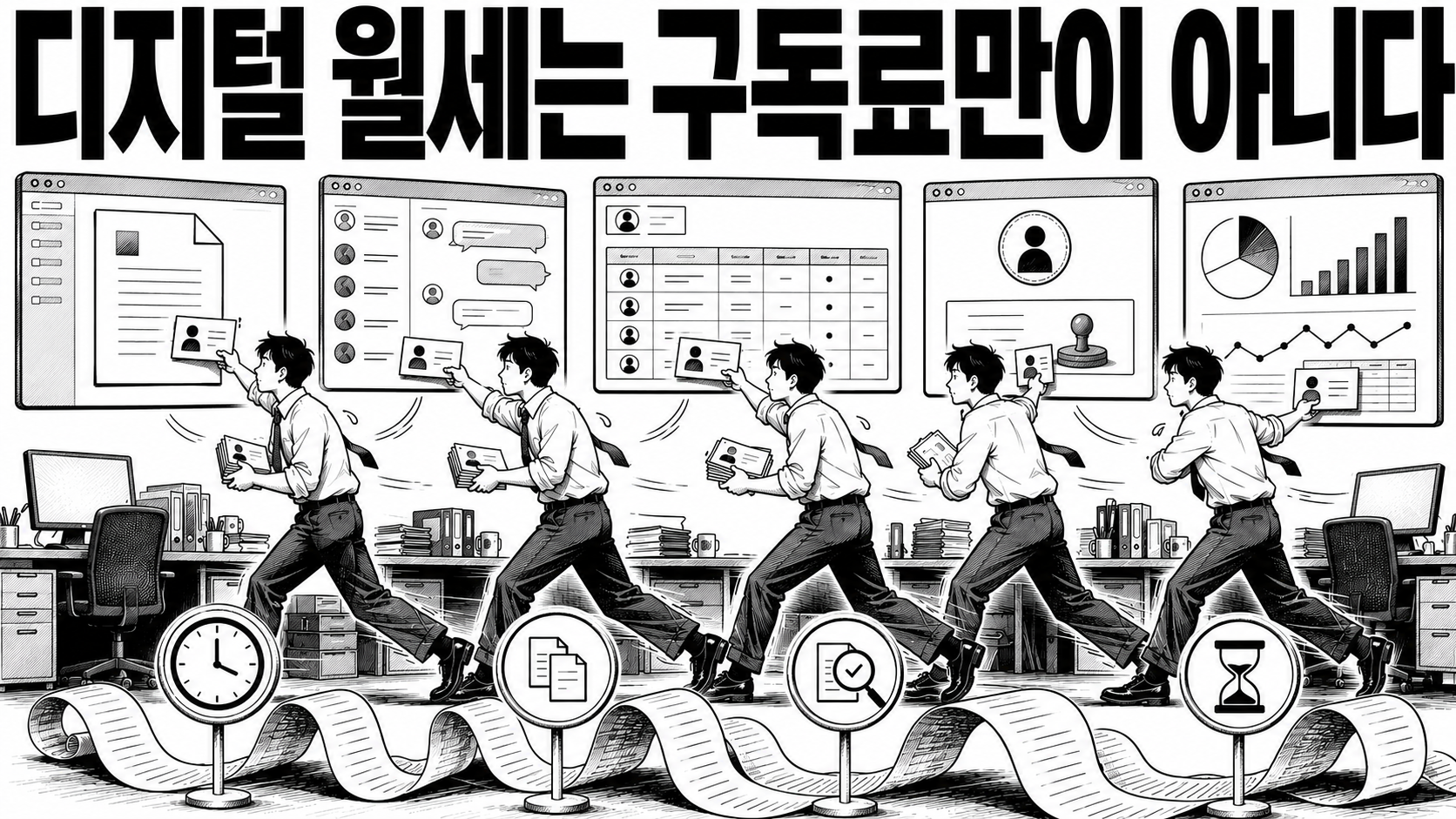
Subscription fees are visible. They are monthly payments, and the bill grows as seats increase. But the real costs are often elsewhere: the time spent re-entering the same customer information into multiple tools, verifying which numbers are correct, restoring context by switching between chats, documents, and CRM, and the memory of exception handling that disappears when a person in charge changes.
Not all these costs can be blamed on “SaaS.” Many costs arise not because there are too many tools, but because the core state of work isn't defined. So, reducing digital rent is less about cutting subscription fees than it is about,“Let's not keep our company's operational state solely within external screens.”This is closer to the meaning.
Notion and Slack are not operating systems.
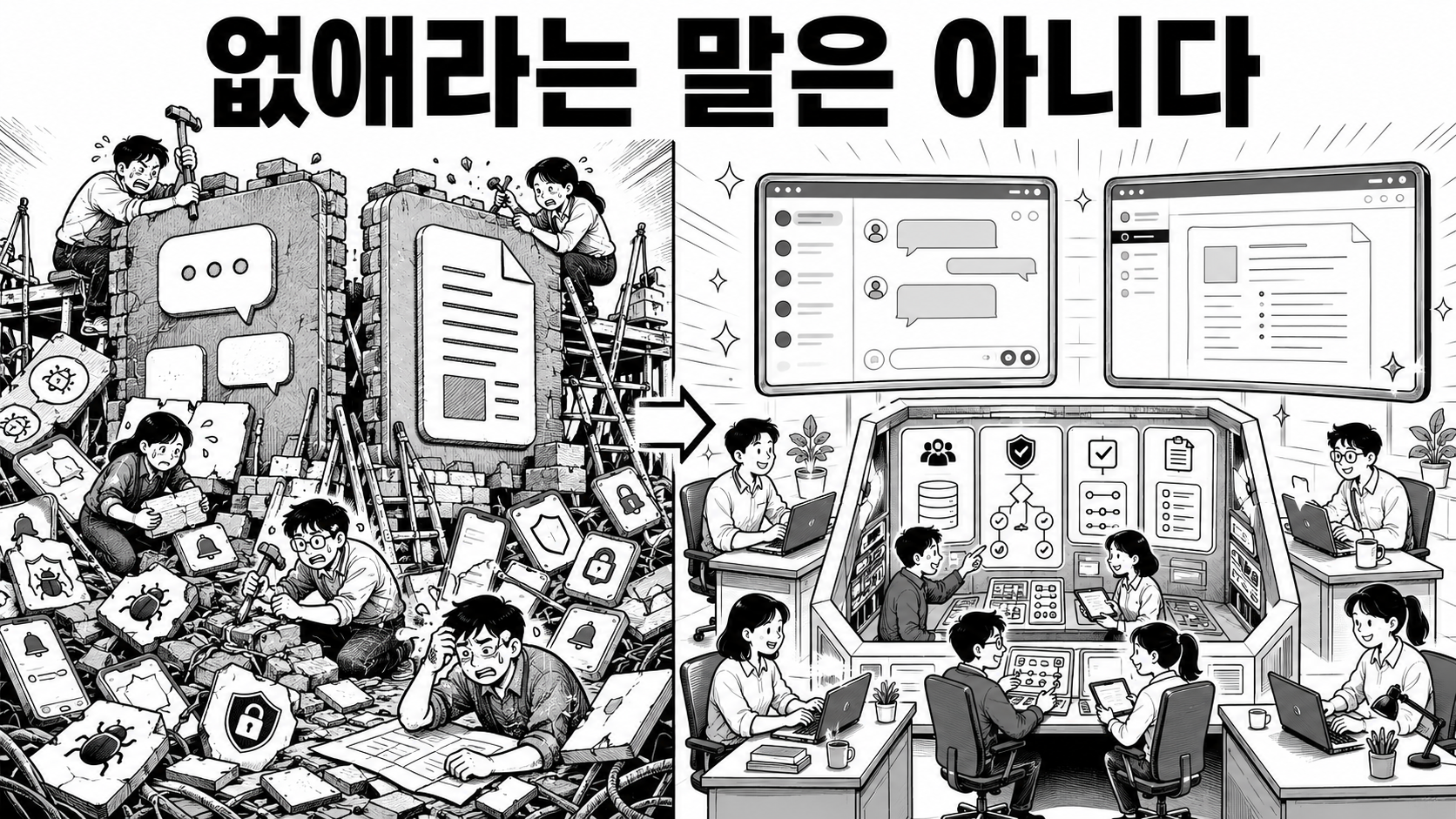
Notion handles documents well. Slack handles conversations well. But what a company actually operates isn't documents or conversations themselves.
What conditions should we offer to which customer?
Which discounts and exceptions are allowed, and who must approve them?
Which data is visible to whom, and for how long is it stored?
Where should AI stop if it's to move beyond drafting to actual action?
When a problem arises, who made the decision and based on what?
The answers to these questions should not remain in a single chat thread or document page. They must exist in a structured format: customer, policy, authority, approval, and audit trail. This way, the company remembers even if people change, and AI doesn't lose its basis for judgment even when assisting with tasks.
Kakao reveals a deeper layer.

Kakao's 'de-Oracle' case illustrates this issue at a deeper infrastructure layer.
(Oracle: A long-standing #1 commercial product in the enterprise database market)
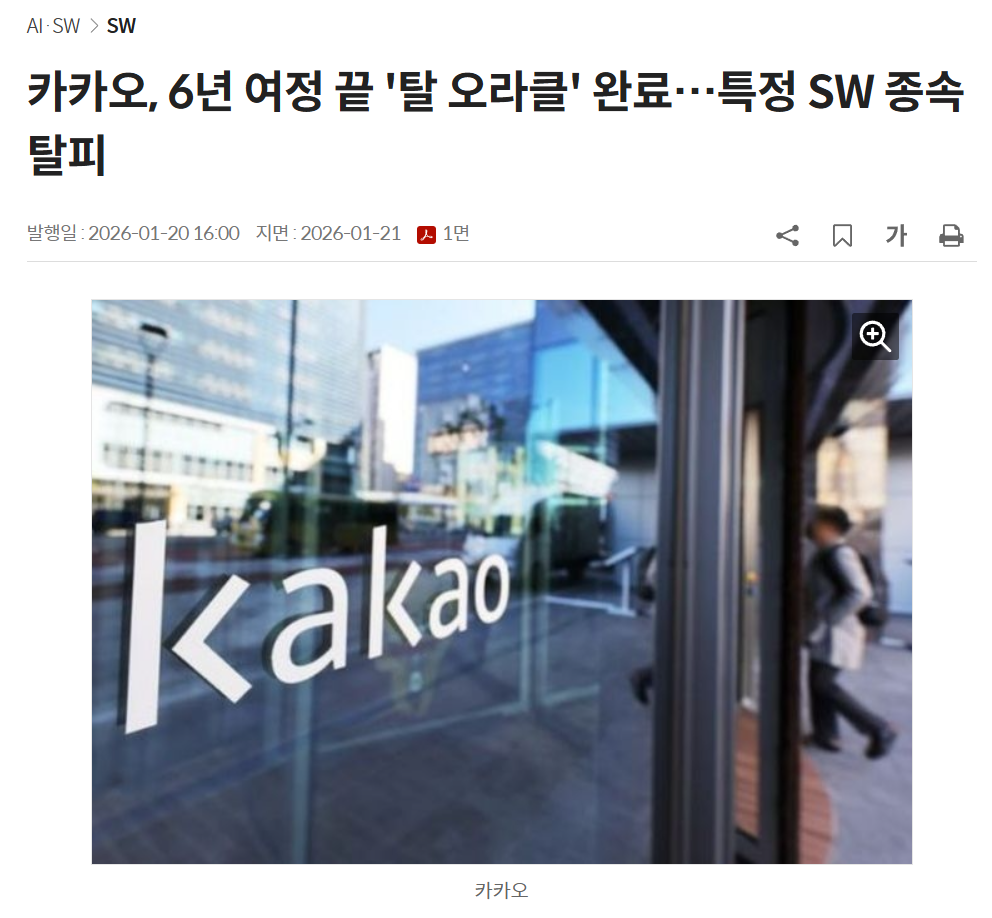
According to an E-Daily report, Kakao initiated the 'Gliese Project' in the first half of 2019 and, starting from the second half of 2021, completed the migration of databases for over 100 systems within the group to open-source-based products such as MySQL, PostgreSQL, EDB, and MongoDB. Subsequently, remaining affiliate services were also sequentially migrated, and Oracle-related maintenance and technical support are reportedly set to end by late 2025. However, this information is not an official Kakao announcement but a media report citing confirmation from Kakao, and some services appear to still be in the process of migration.E-Daily report
What's important here isn't that they “abandoned commercial products and built everything themselves.” Kakao didn't invent new databases.
The key lies in bringing control in-house over how the underlying technologies are used: how fast they run, how to recover if a problem occurs, how to observe what's happening, who can touch what, and how all of this will be operated.
This is also why Kakao didn't simply use the publicly available open-source tool MySQL Orchestrator but instead created and published its own operational standards on its tech blog, ensuring that services don't stop even if one server fails. It signifies their intent to have rules defined by themselves, not by others, even if the rules are the same.Kakao Tech Blog – Developing a New HA Standard Based on MySQL Orchestrator
The problem with Notion and Slack is similar. There's no need to replicate Notion or create a new chat app like Slack. However, customer context, operational status, policy rules, and approval and audit trails must be brought into a structure that our company can read, modify, and explain.
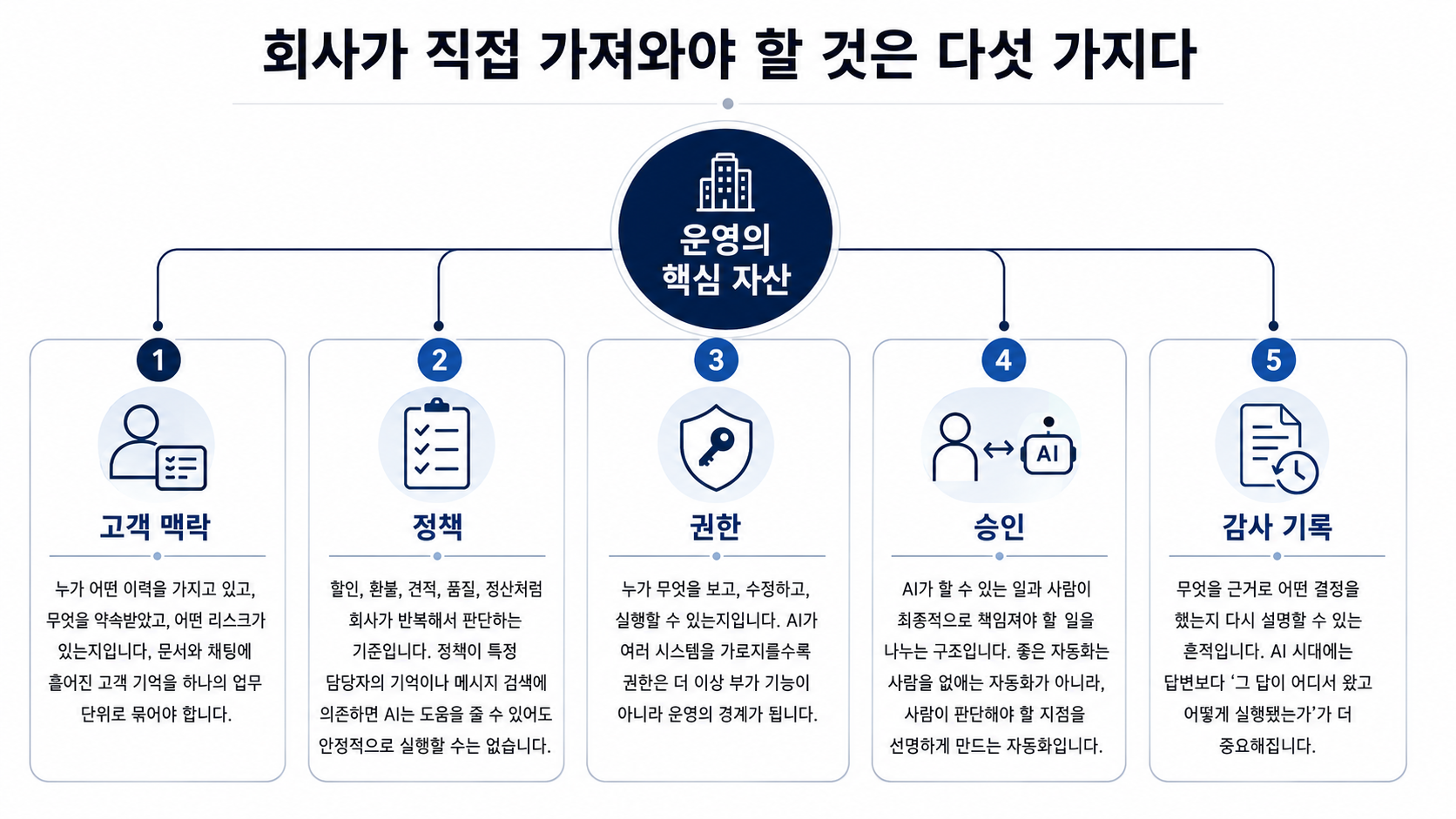
There are five things a company must bring in-house.
1. Customer Context
This includes who has what history, what they were promised, and what risks exist. Customer memories scattered across documents and chats must be consolidated into a single operational unit.
2. Policies
These are the criteria a company repeatedly uses for decisions, such as discounts, refunds, quotes, quality, and settlement. If policies rely on a specific person's memory or message searches, AI can assist but cannot execute reliably.
3. Permissions
This defines who can view, modify, and execute what. As AI spans multiple systems, permissions become less of an add-on feature and more of an operational boundary.
4. Approvals
This is a structure that separates what AI can do from what humans are ultimately responsible for. Good automation doesn't eliminate people; it clarifies the points where human judgment is required.
5. Audit Trails
These are records that allow us to explain what decisions were made and based on what evidence. In the age of AI, “where did that answer come from and how was it executed?” becomes more important than the answer itself.
So, the answer is hybrid.
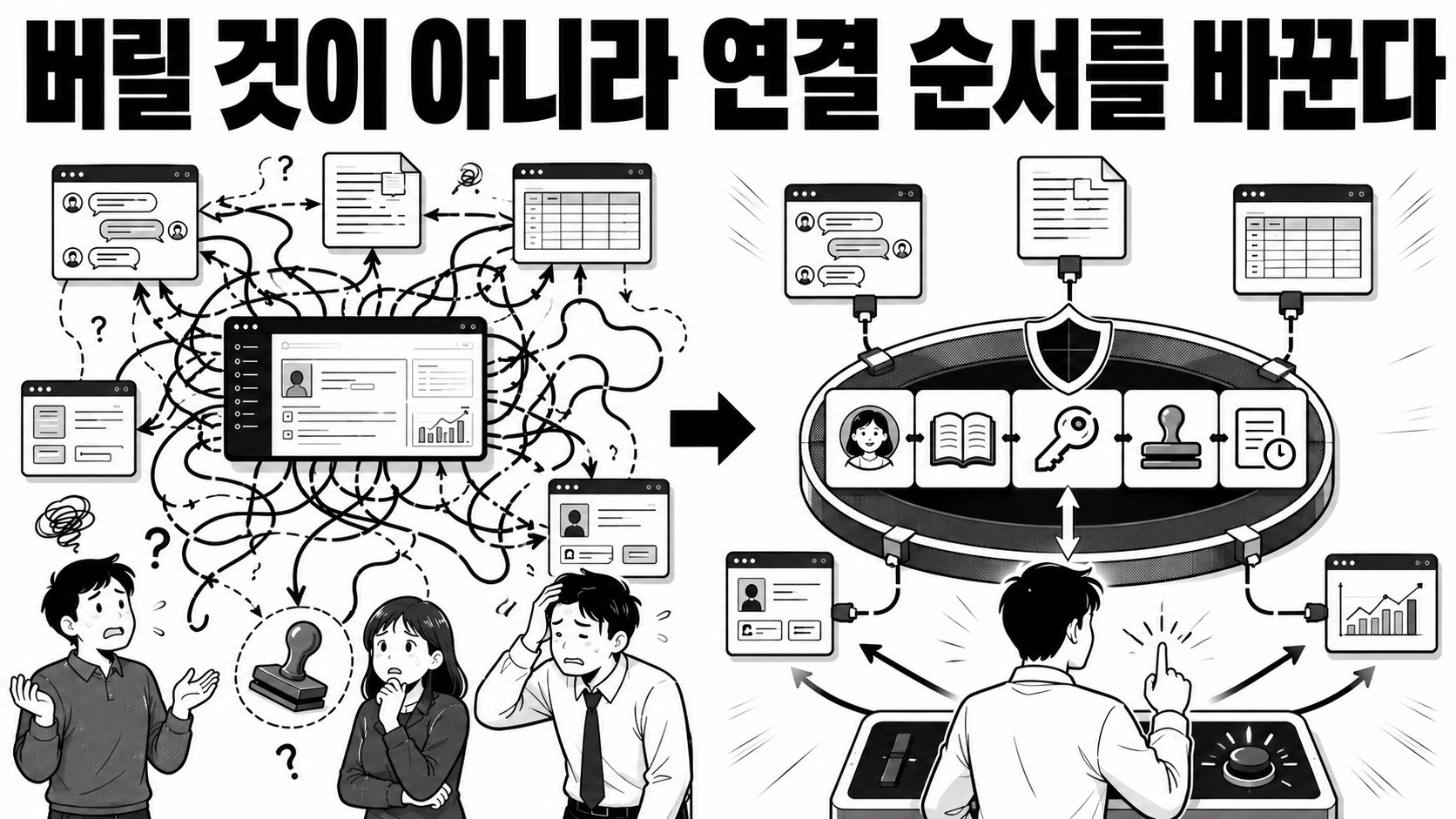
The most realistic structure has three layers.
The Borrowed Layer:Functions that the market has already solved well, such as email, calendaring, document editing, chat, and general collaboration.
The Owned Layer:Structures where our company's differentiation and accountability accumulate, such as customer data, operational status, policies, permissions, approvals, and audit trails.
The Connecting Layer:APIs and workflows that securely transmit internal judgments and states to external tools, ERP, CRM, and AI.
In this structure, Notion and Slack don't disappear. Instead, they become more convenient. People can converse and write documents in familiar interfaces, but crucial decisions are no longer buried within the flow of conversation.
What should be internalized?
If a company internalizes all tasks, it essentially becomes another software company. Trying to keep up with login, search, mobile, security, backup, incident response, and reporting can easily lead to neglecting what's truly important to customers.
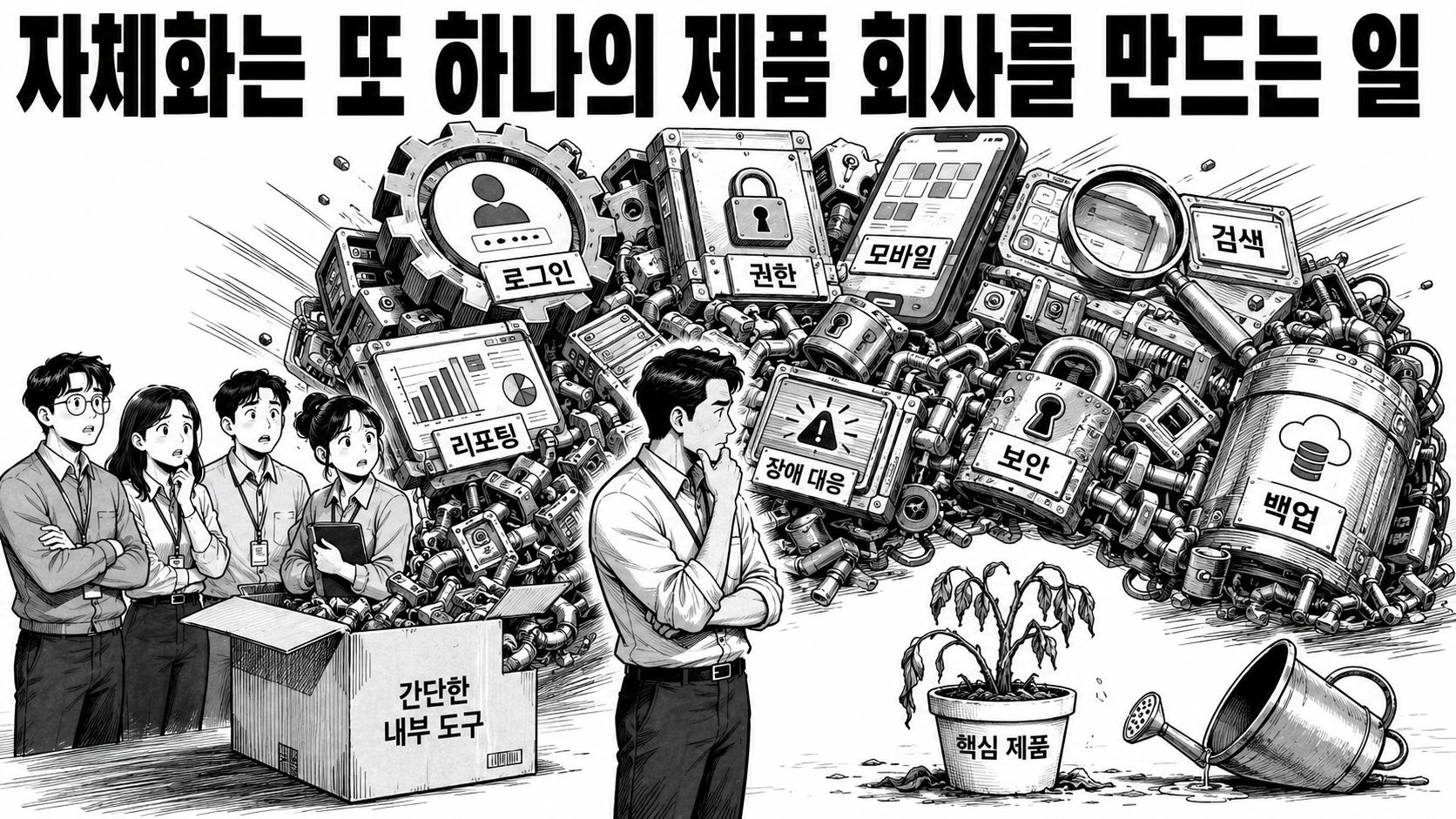
Therefore, internalization should only be considered for tasks that simultaneously answer “yes” to the following four questions.
Is this task frequently repeated, and can its rules be explained to some extent?
Are processing speed and accuracy directly linked to customer experience or competitiveness?
Are customer data, regulations, audits, and access control important?
Is there a possibility that AI might eventually handle more than just search, extending to recommendations, drafting, and execution?
If even one of the four questions is weak, it's better to use a superior SaaS or integrate lightly. Conversely, if all four questions are strong, that task is likely an operational asset of the company, not just a simple app feature.
AX is not about replacing tools; it's about reclaiming operational control.

AX is not a project to turn Notion into an in-house wiki. Nor is it a project to turn Slack into an in-house messenger.
AX is about a company redefining how it remembers its work in terms of data units, what policies it uses for judgment, how much it entrusts to AI, and which actions absolutely require human approval.
Tools can be borrowed. But core operational control—customer context, policies, permissions, approvals, and audits—should not be.
You can continue to use Notion and Slack. However, you must ensure that your company's operating system isn't trapped within them. That is the true meaning of reducing digital rent, and it's where AX begins.