Is 'Culinary Monster' in Black Chef 2 Really the Peak of Mount Stupid? (Dunning-Kruger)
Why We Fall for the Misunderstood Dunning-Kruger Effect
A culinary monster appears in Black and White Chefs Season 2.

Netflix<Black and White Chefs: Culinary War of Classes> Season 2is a show where viewers are quick to summon psychology terms.Chef Hoo Deok-juk, a master of Chinese cuisine with 57 years of experience,and a self-proclaimed genius with strong convictions, a'culinary monster'face off. Those who witness the culinary monster's attitude immediately diagnose it as the "Dunning-Kruger effect."
Culinary Monster (Silver Spoon):A young challenger who has worked in world-renowned Michelin-starred restaurants and confidently calls himself a 'genius,' armed withstrong self-assurance.is a young challenger armed with.
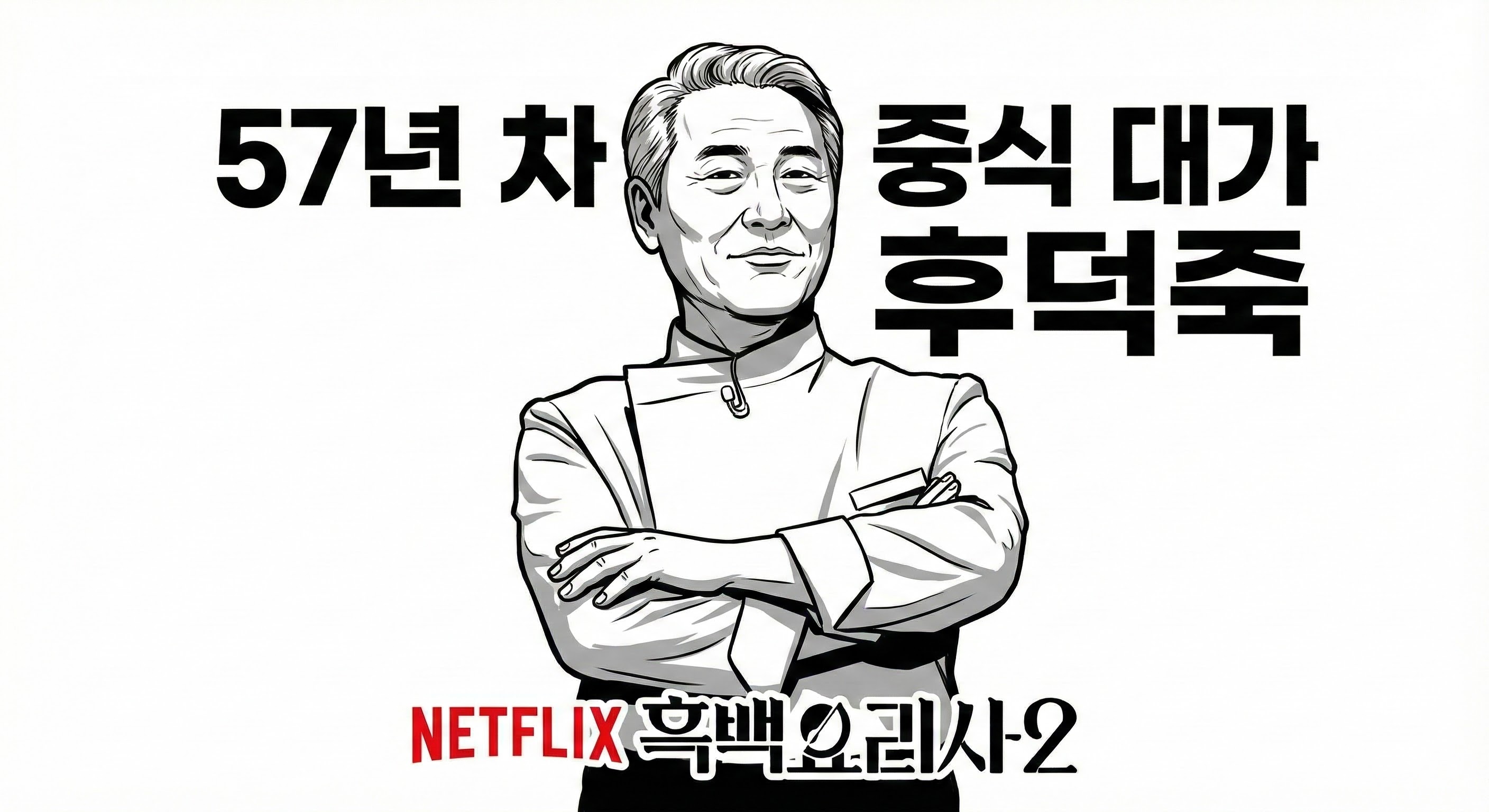
Chef Hoo Deok-juk (Gold Spoon):A legend of Korean Chinese cuisine, who led the Shilla Hotel's 'Palsun' for 40 years and introduced 'Buddha Jumps Over the Wall' for the first time in Korea, with57 years of experience.is a master.
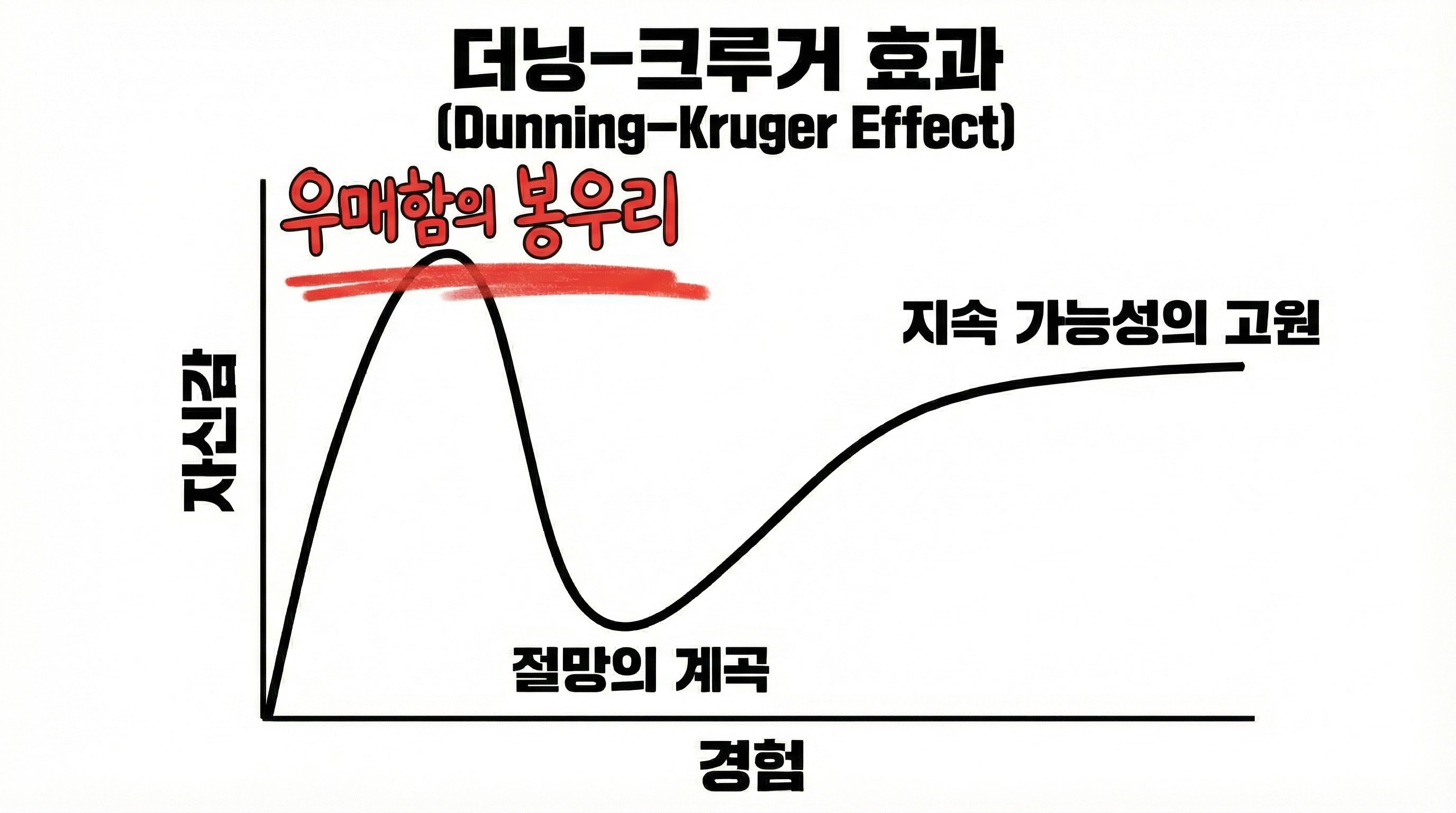
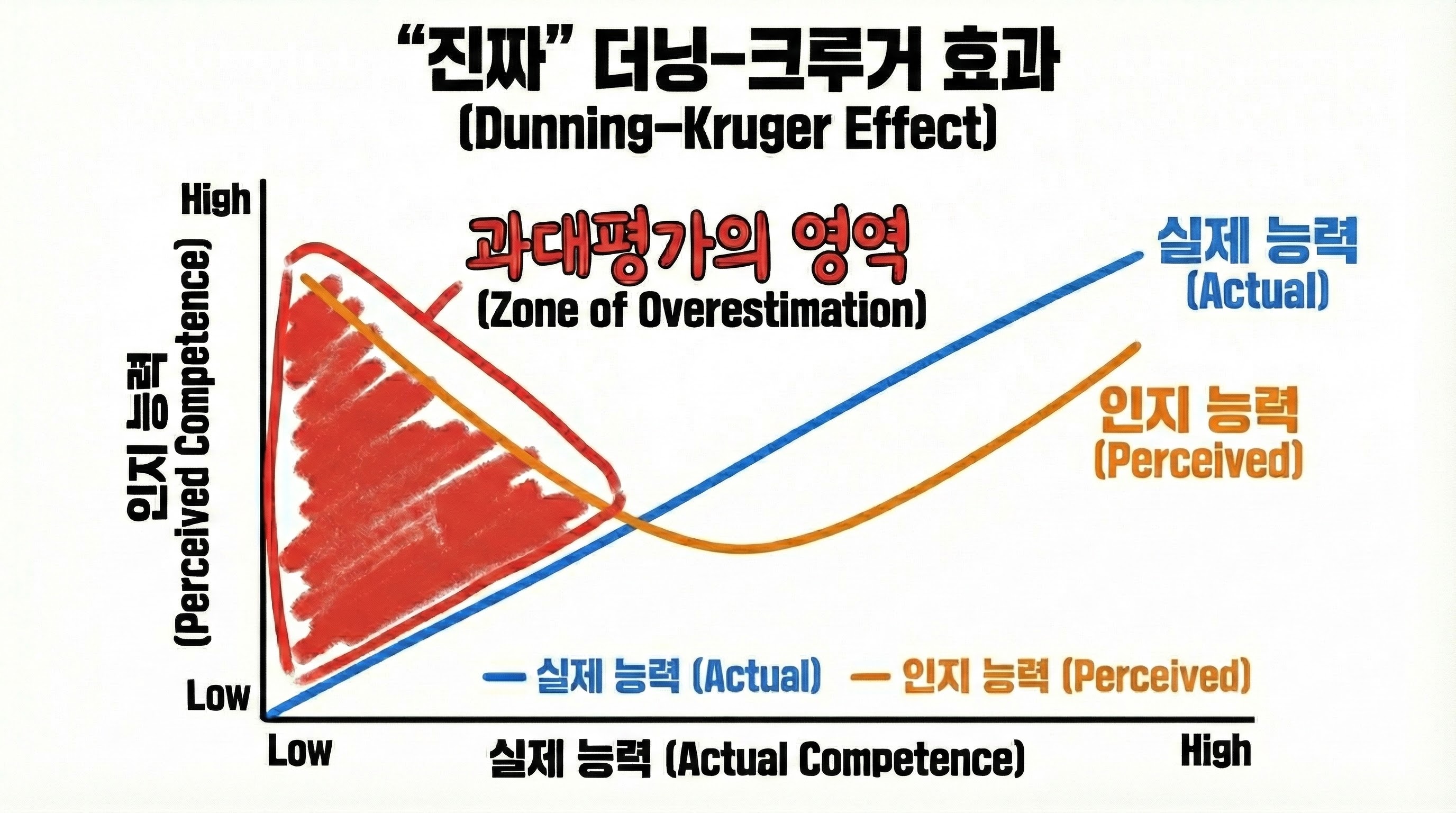
In fact, we are particularly sensitive to this contrast. When the overflowing confidence of someone who has just tasted achievement clashes with the politeness of a master who has endured many years, a familiar curve is drawn in our minds. The'peak of Mount Stupid'is reached when knowledge is shallow, followed by facing reality and falling into the'valley of despair.'That famous graph, that is.
But here's where the questions begin.
Is the graph we think of really a true depiction of the 'Dunning-Kruger effect'?If it's a different picture from reality, why are we so easily persuaded by that wrong picture?
Furthermore, this is also a question of why USLab.ai,USLab.aiwhich explores the essence of AI business and technology, has brought up culinary battles and psychological terms at this point in time. This is because generative AI is a powerful tool that pushes us faster, higher, and more precisely into a meticulously designed 'peak of Mount Stupid' than ever before.
Chapter 1. Why You Become More Humble as You Grow, According to Instructor Hyun Woo-jin: The Dunning-Kruger Effect
The anecdote that instructor Hyun Woo-jin shared while discussing the Dunning-Kruger effect shows this phenomenon in the most human way. In the early days, he had great confidence that "I'm pretty good," but as time passed and he re-watched his old lectures, he saw his shortcomings more clearly. At that moment, it wasn't 'I was mistaken,' but 'Now I'm starting to see it.'
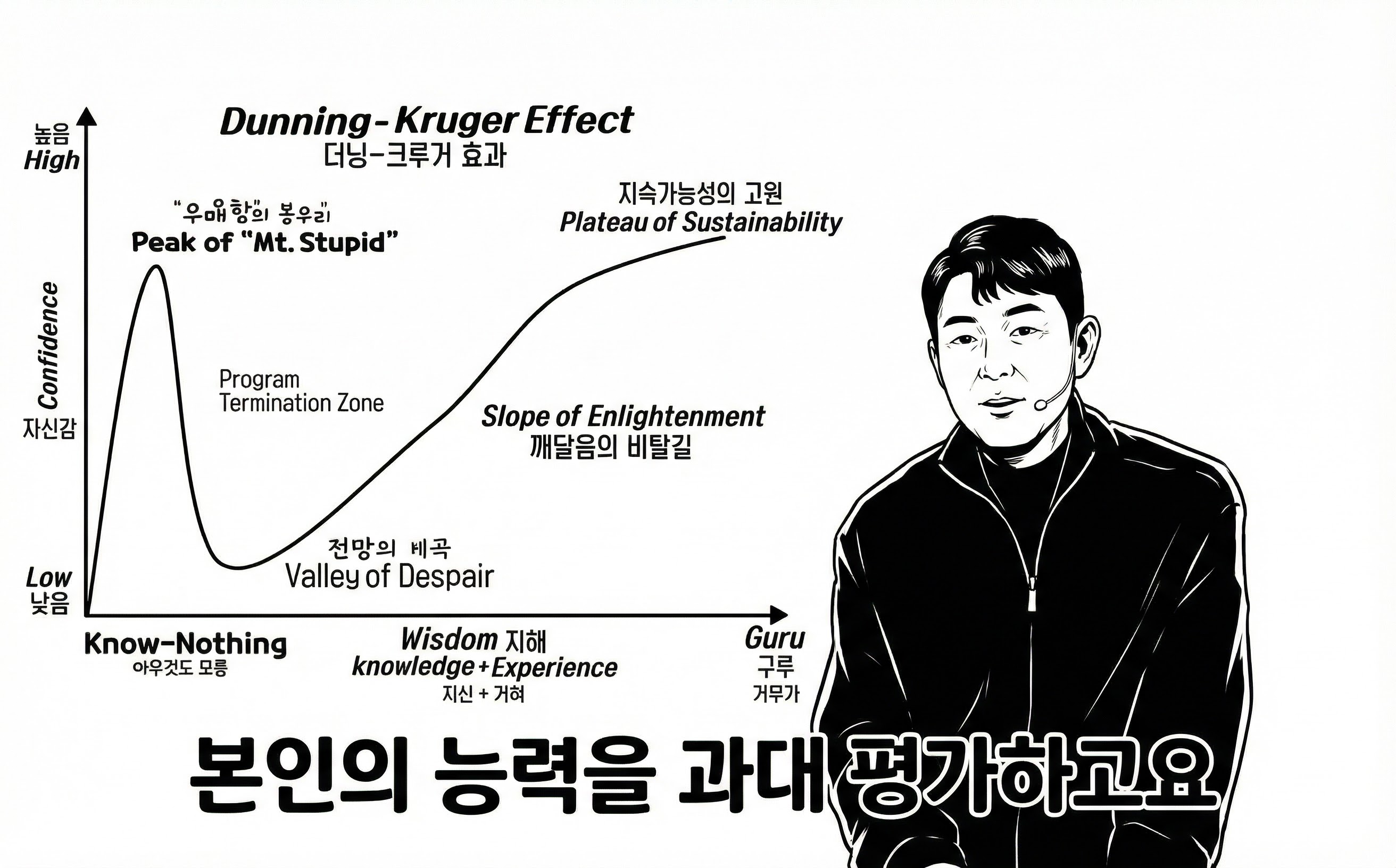
This is at the heart of Dunning-Kruger. Dunning-Kruger is not a label for evaluating others, but a warning about "why it is difficult for people to accurately see their own abilities." Dunning himself emphasizes that this effect is a story about "us," not "them."
This is also why you become more humble as you grow. There are cases where you grow because you are humble, but the opposite direction happens more often. Because you grow—because you have a baseline—the shortcomings of the past come into view, and from then on, words decrease.
Chapter 2. Plot Twist: The 'Peak of Mount Stupid' Graph Is Not in the Original Paper
Here's a twist.
The most famous 'peak-valley-slope-plateau' curve on the internet is not a graph from Dunning and Kruger's original 1999 paper. Psychologists have never drawn data that way and marked it as "Here's the peak!"
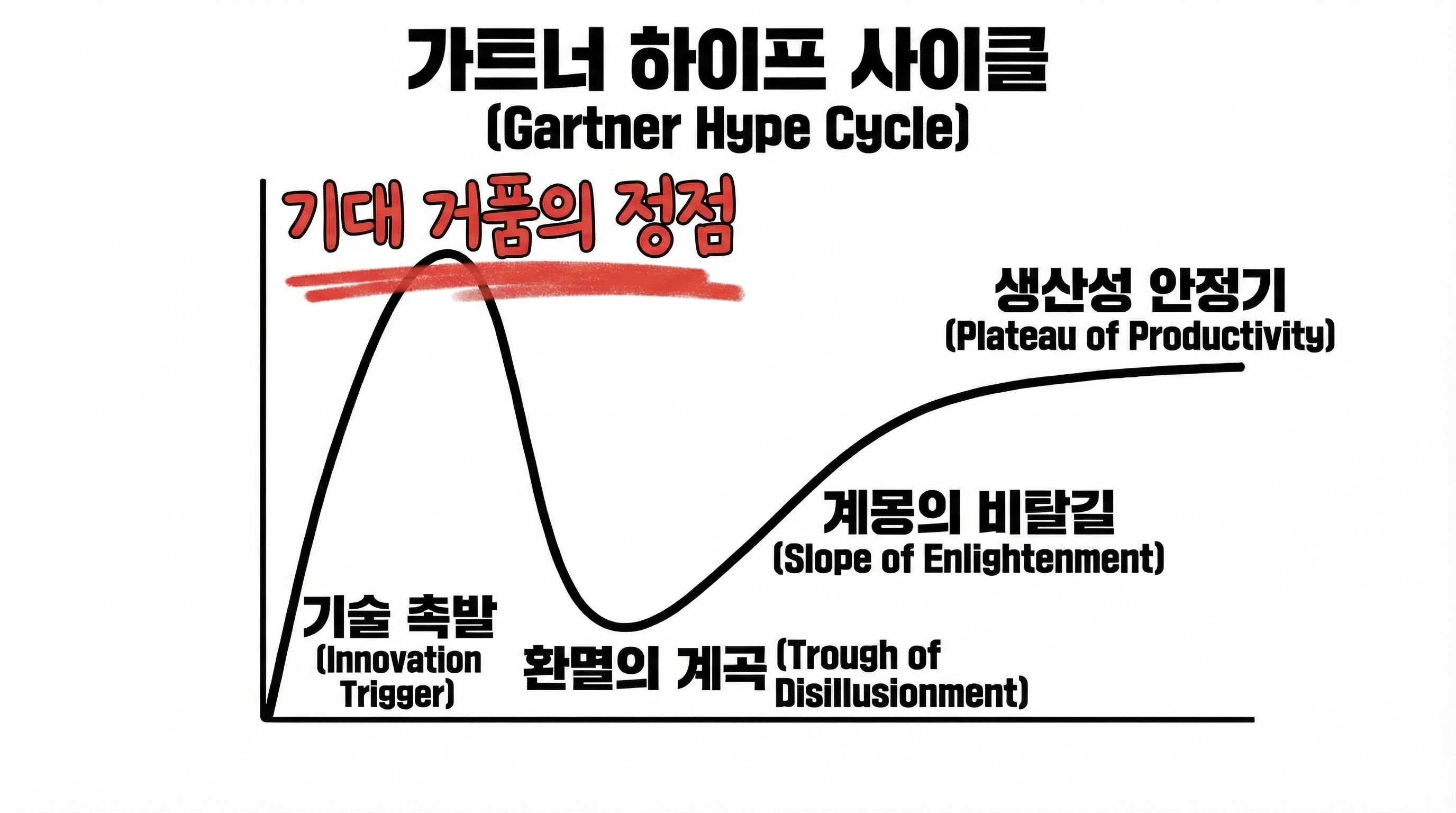
Rather, its form is surprisingly similar to the 'Gartner Hype Cycle,' which explains the process of expectations overheating and then cooling down after a new technology emerges, and then settling into reality over time. Therefore, many of the pictures that have spread as the 'Dunning-Kruger curve' often borrow the shape and just change the labels.
Nevertheless, the reason why that graph is powerful is clear. Because it becomes a story at once. When the narrative of 'arrogance → reality check → awakening → growth' is drawn before your eyes, people are drawn to the narrative before the data. That's why it becomes a graph that is "wrong but deceives better."
Chapter 3. The Real Dunning-Kruger: Not 'Arrogant Fools' but 'Failure of Self-Assessment'
The Dunning-Kruger effect was first introduced in a paper published in1999by David Dunning and Justin Kruger of Cornell University. Unlike the flashy curves we often see, the core of the original paper is much simpler.
The researchers had participants complete tasks and then asked, "What percentile do you think you are in?" As a result, it was confirmed that the lower achievers tended to have significantly misaligned self-assessments. For example, people whose actual score was in the 12th percentile estimated themselves to be around the 62nd percentile.
Here's an important correction of a misunderstanding. Dunning-Kruger is not about "beginners being more confident than experts." It's not about the size of absolute confidence, but about the accuracy of matching 'where I am,' that is, the breakdown of self-assessment correction.
Why does the error increase in lower achievers? The reason is simple. If you lack skills, you usually lack two things together:
The ability to solve problems,
The ability to recognize why I was wrong.
If you're not good, you also lack the 'standards' to judge that you're not good, so it's easy not to know that you're wrong even if you're wrong. This is the meta-cognitive trap that Dunning-Kruger talked about.
Chapter 4. We in the Age of Generative AI: The Peak Is Higher, and the Valley Is Deeper

Now, if we move the stage to generative AI, this curve becomes even more easily realized. LLMs show results too quickly. Reports are immediately organized, code runs, and explanations are plausibly completed. Then, it's easy for people to feel a mix of what they did because they 'understood' and what they did because they were 'helped.' The moment the boundaries blur, self-assessment becomes more difficult.
In addition, AI's answers are generally smooth. If the sentences are eloquent, there is an illusion that the content is also correct. And people start entrusting their thoughts. They skip verification with the thought that "AI did it, so it must be right."
Similar scenes are observed in actual studies. Using AI can improve task performance, but people were not able to judge how well they did more accurately, and rather tended to overestimate their performance.
Conclusion. So the Answer Is 'Deep Dive'

In the end, the conclusion is simple.Meta-cognition in the AI era evolves from 'Know thyself' to 'Track your ignorance.'And that tracking starts not with grand resolutions, but with three habits.
First,Verification.is. Look at the source, evidence, and counterexamples just one more time.
Second,Framing.is. Before seeking an answer, first write down "What am I really trying to decide?"
Third,Deep Dive.is. Stop summarizing and try to explain at least one core concept 'in my own words' until the end. The point where the explanation stops is the ignorance you need to track right now.
It's an era where it's easy to define people with one graph. But the moment we know that the graph is wrong, we learn something more important. Not the ability to find other people's peaks, butThe ability to recognize 'the point where conviction jumps out first' within myself.That's the most valuable skill in the AI era.
Source