The Real Reason 70,000 People Are Obsessed with 'Tag: Kyungdo' (and Context Engineering)
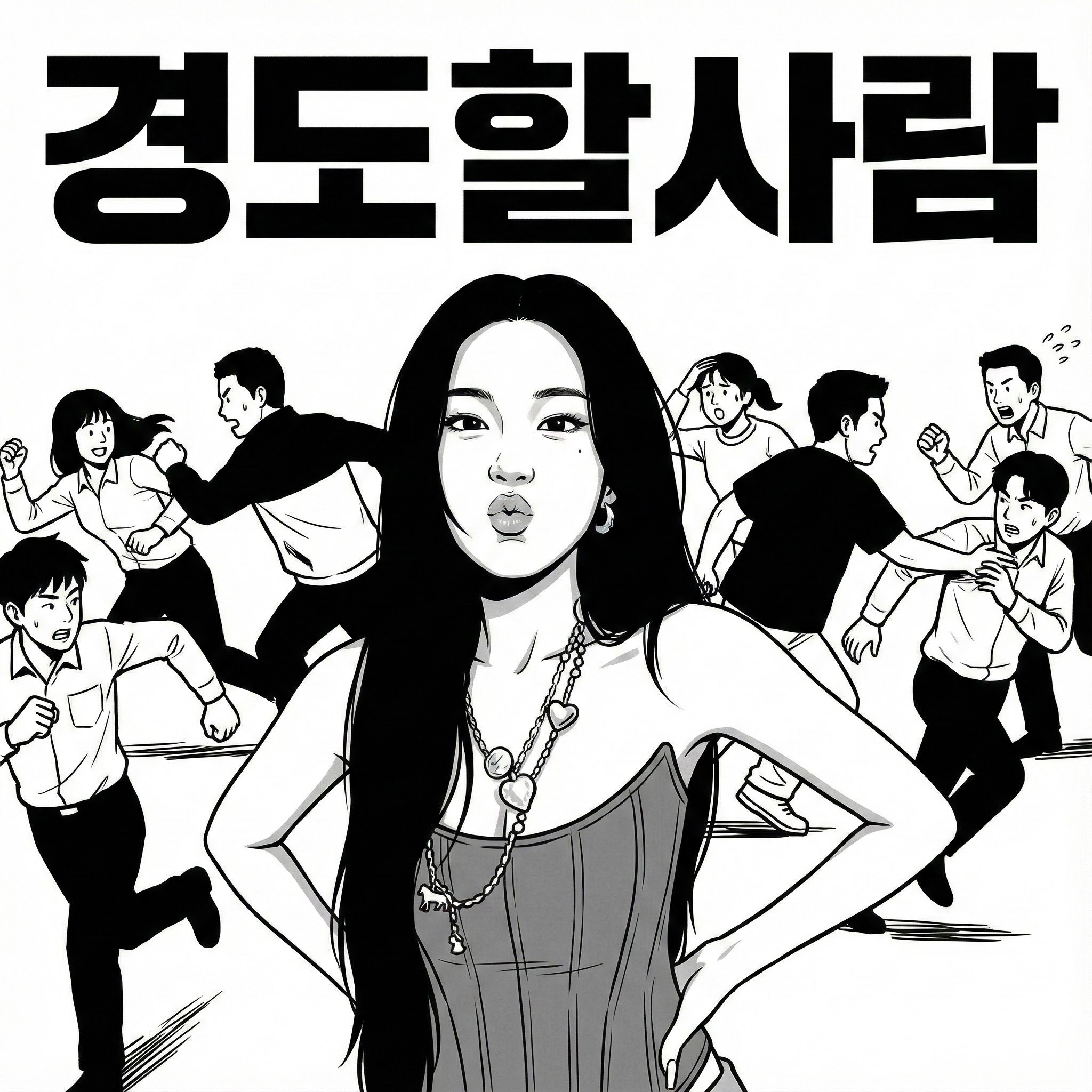
On a freezing night, young people gather in a playground in the middle of Seoul.
Even though they are armed with padded jackets and hot packs, they soon take off their coats and start running.
"Police!"
"Run away!"
What makes this scene interesting is that it's not a planned event or a shoot.
Used goods marketplace app'Karrot'They make appointments on Karrot, meet strangers for the first time, divide roles, and play tag.
The name is 'Police and Thieves', shortened toGyeongdo.
But a few days later, this neighborhood game takes an unexpected turn.
Lee Young-ji posts a line on Instagram. "Anyone want to play Gyeongdo?"

DMs flood in, a notice appears saying, "Give me half a day," and
After searching for "someone to help"... the person who appeared wasProducer Na Young-seok.

And 'Lee Young-ji's Police and Thieves' event is announced.
January 19, 2026, 100 people will be drawn. Application deadline January 9, announcement January 12.
The number of applicants isApproximately 77,900.
Here, a question begins.
70,000 people for tag?
Simply saying "it looks fun" is not enough to explain it.
The reason why USLab.ai is bringing up 'Gyeongdo' and 'cooking reviews' now is related to the same question.
Why do people move?
AndHow does intention survive?
Chapter 1. Why did 'Gyeongdo' spread so quickly: Low Tech, High Context
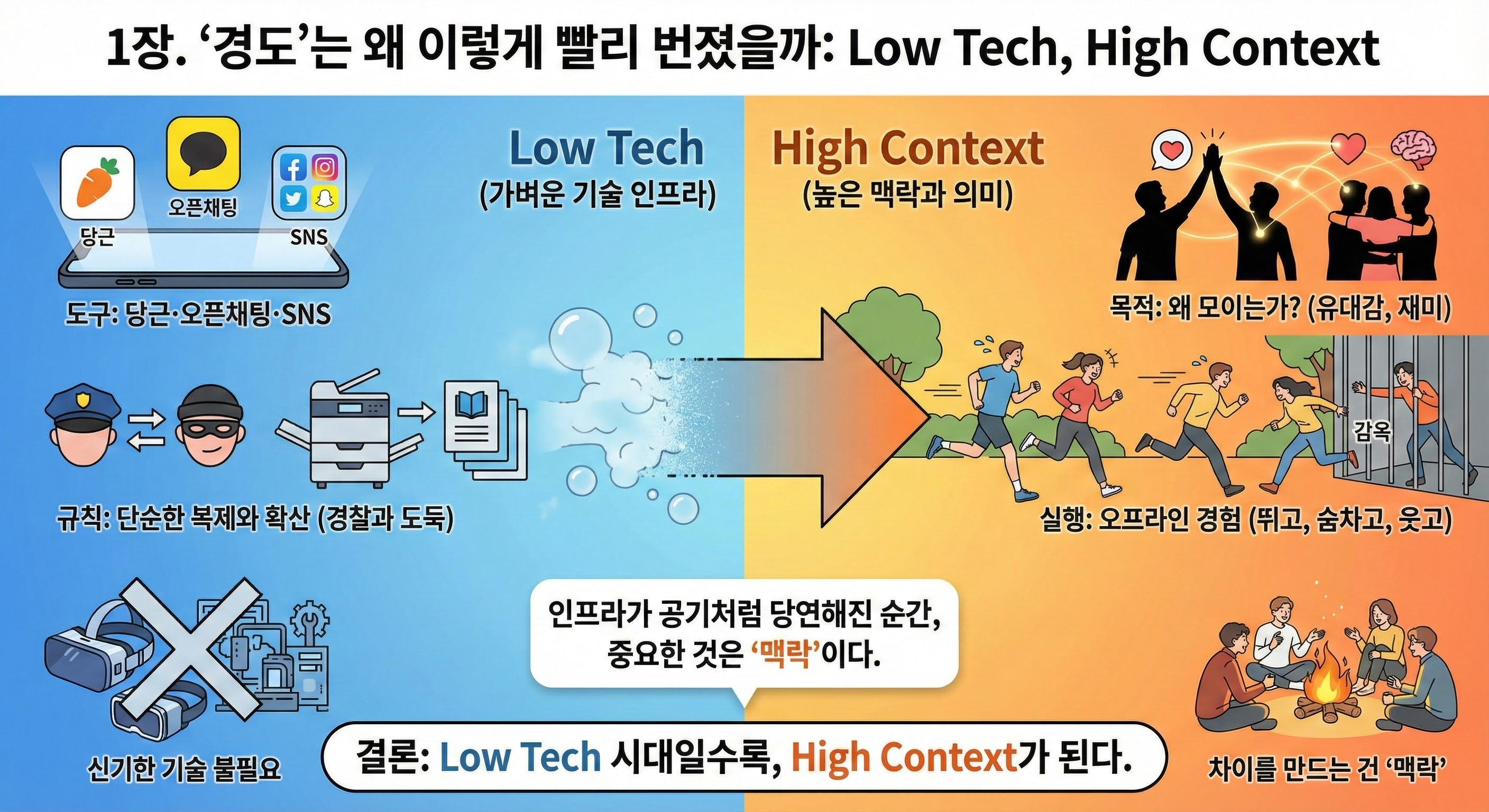
The rules of Gyeongdo are surprisingly simple.
Divide into police and thief teams, send the caught thieves to 'jail', and if a remaining thief comes into the jail and shouts "Escape!", the captured thieves are released. Add a little to the tag rules you played as a child, and it becomes a game.
The key is here.
The technology infrastructure is light (Karrot, open chat, SNS).
Execution happens offline (running, panting, laughing, sweating).
The rules can be copied by anyone (so they spread faster).
If there was a time when 'amazing technology' brought people together like Pokémon GO,
Now, on the contrary, people gather "even without amazing technology."
The moment the infrastructure becomes as natural as air, what makes the difference is not technology but
Context (why gather, what to run for)is where things are moving.
This is the first conclusion of today's article.
The more Low Tech it is, the more High Context it becomes.
Chapter 2. The 70,000 people wanted to run not for 'exercise' but for 'justification'
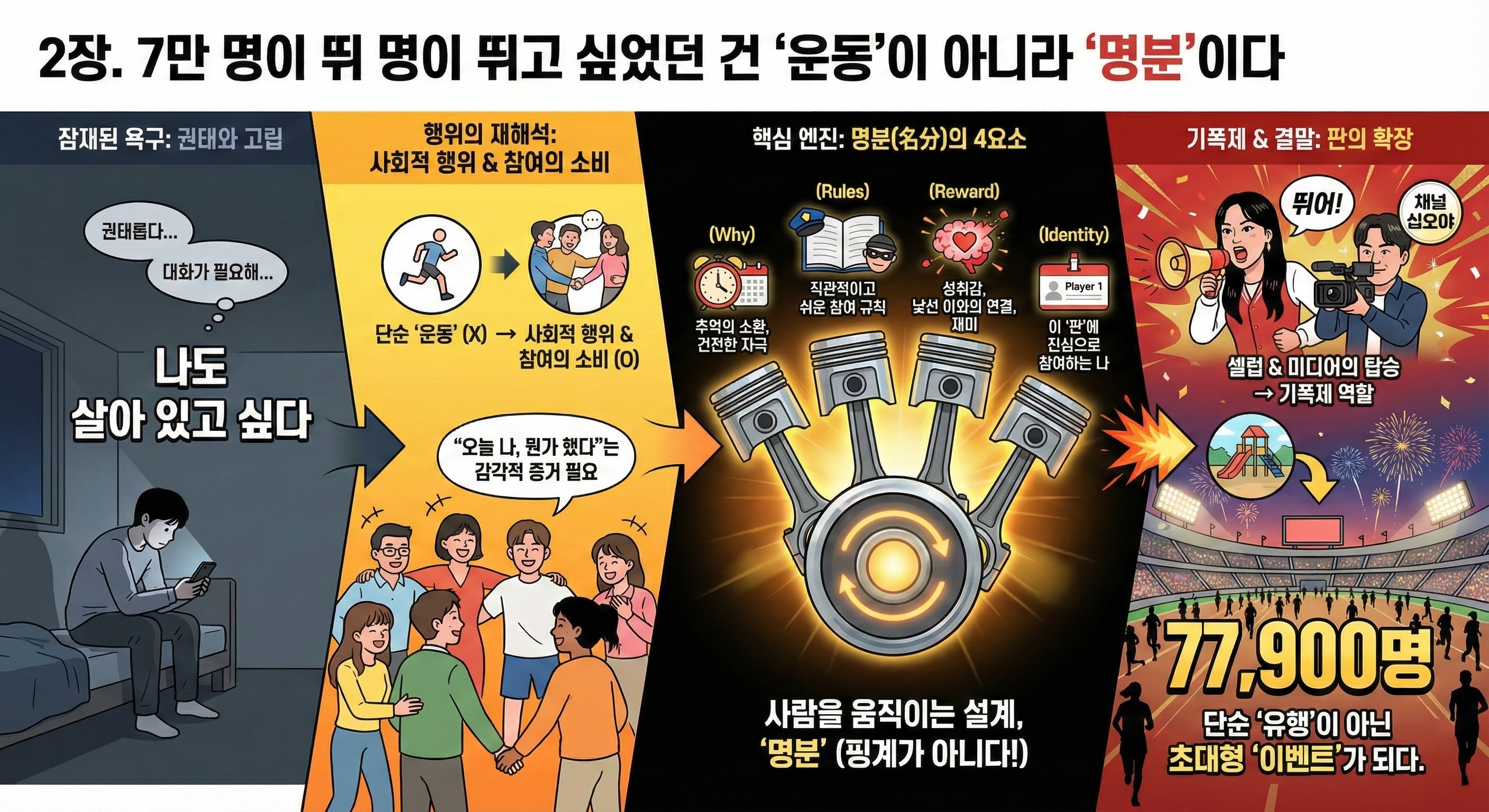
According to a field report in the Kyunghyang Shinmun, young people played tag with strangers instead of friends or lovers on Christmas night, and participants said, "The nostalgic game is a healthy stimulus."
"Life is tiring and everyday life is monotonous."
"There is no opportunity to talk to strangers."
The same words are also said.
If you translate these words into one line, it would be like this.
"I want to feel alive."
So Gyeongdo becomes a 'social act' before it is 'exercise'.
People don't buy things,Consume participationThey need a sense of "I did something today"—evidence of that.
And what moves people at this time is not function butJustification.
The justification mentioned here is not an "excuse."
Justification is a set of design elements that make participation possible.
Why: Why should I do this now?
Rules: How do I participate?
Reward: What do I get?
Identity: What kind of person do I become if I do this?
Gyeongdo matches these four quite instinctively. So it becomes a 'scene' rather than a 'gathering'.
In this state, Lee Young-ji gets on board.
And the moment producer Na Young-seok joins, it is difficult for this scene to end quietly. In fact, according to news articles, Lee Young-ji visited the Egg Is Coming headquarters,The Channel Fifteen Nights team posted a video of the situation at the time,and it is reported that after the two met and talked, they decided to hold the 'Lee Young-ji's Police and Thieves' event.
It became an 'event' rather than a 'trend'.
The number 77,900 is the signal.
Chapter 3. A sentence from Chef Ahn Seong-jae: "What is the intention of this dish?"
If we suddenly move on to cooking here, it seems like the article will jump.
But rather, this scene accurately pierces the center of today's topic.
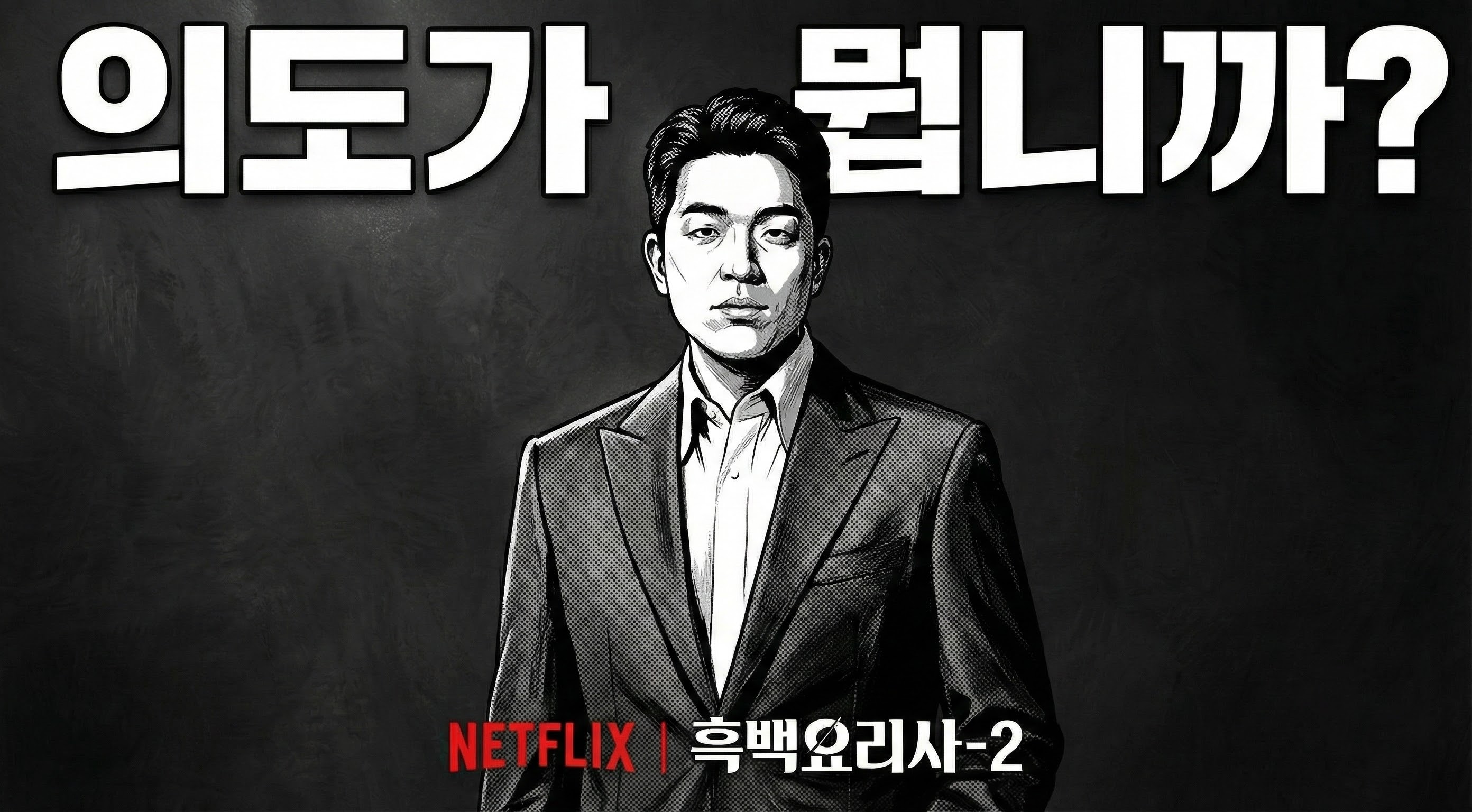
Chef Ahn Seong-jae, a judge on Netflix's 〈The Devil's Chef 2〉, asks the participants this question.
"What is the intention of this dish?"
There are many people who are good at cooking.
They grill meat well, make sauces well, and plate them nicely.
But if there is no 'intention', or if it is not conveyed in the result, that skill floats in the air.
Intention is "words" if it ends only in the head, and it becomes "design" only when it is conveyed on the plate.
If you move this question to the AI era business, it becomes like this.
Intention: What we want to do (product, function, message)
Context: A vessel (environment, basis, narrative, constraints) that makes the intention 'conveyed' to the other person
Intention is a 'seed', and context is 'soil'.
Without soil, seeds cannot sprout.
Chapter 4. Reversal: Context is not one thing — context for AI, justification for humans
Here comes the twist.
We usually say "context" in one word, but in reality, there are two things overlapping.
Context
Context needed for AI: Context (basis, constraints, memory, standards)
Context needed for humans: Justification (why, with what value, with what identity)
I put these two together and call itContext Engineering.
A technology that designs the 'delivery environment' so that intention survives as a result
And this technology is divided into two tracks.
Track A. For AI, you must design Context.
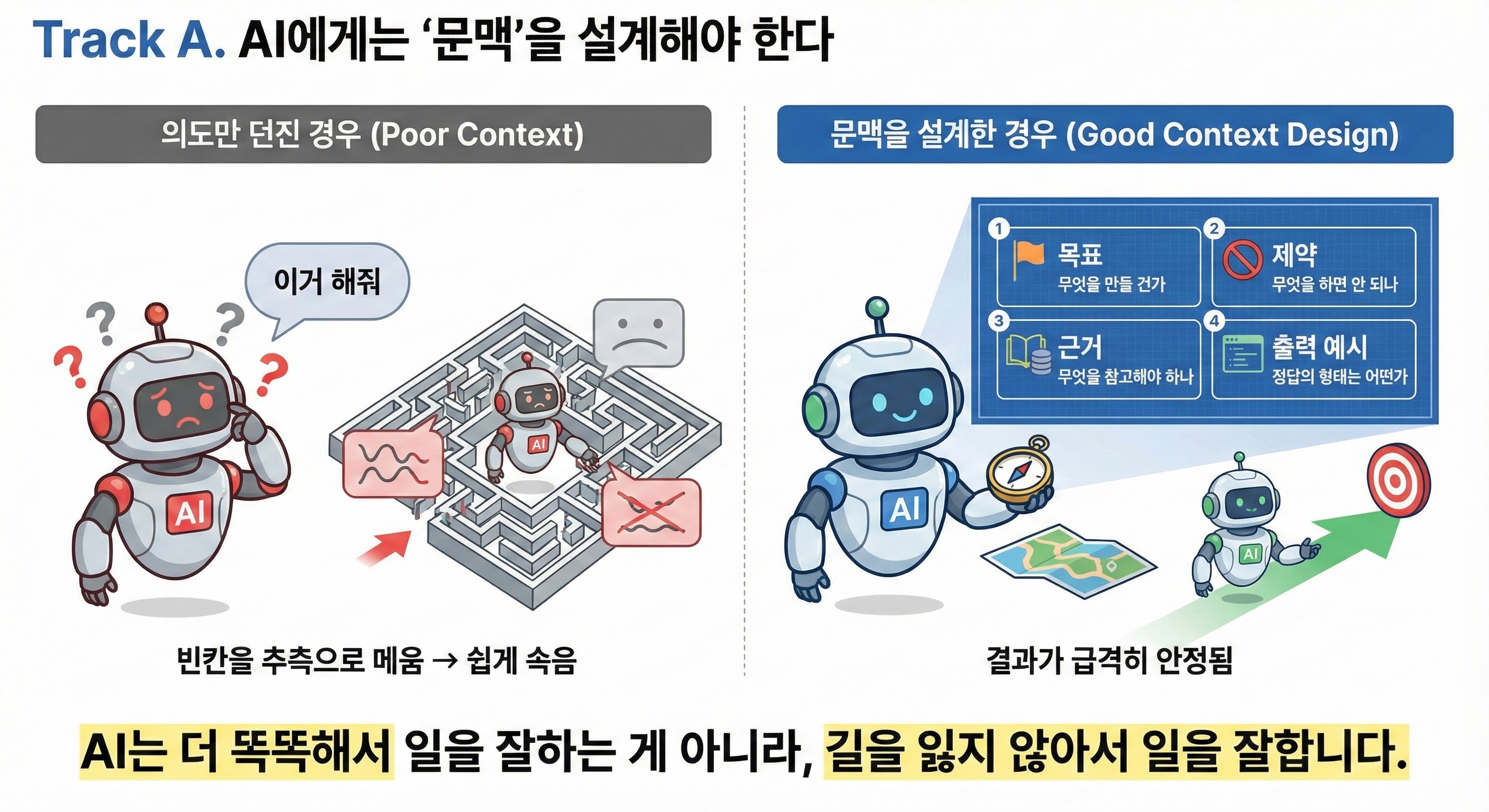
If you only throw the intention "Do this" to the AI, the AI fills in the blanks with guesses.
If the guess is smooth, we are more easily deceived.
So AI needs a 'good manual'. Usually, the results stabilize rapidly when you give the following four things.
Goal: What to create
Constraints: What not to do (prohibition/scope)
Basis: What to refer to (data/rules/policies)
Output example: What is the form of the correct answer (sample)
AI doesn't do a good job because it's smarter,It does a good job because it doesn't get lost.It does a good job because it doesn't get lost.
Track B. For humans, you must design Context (justification).
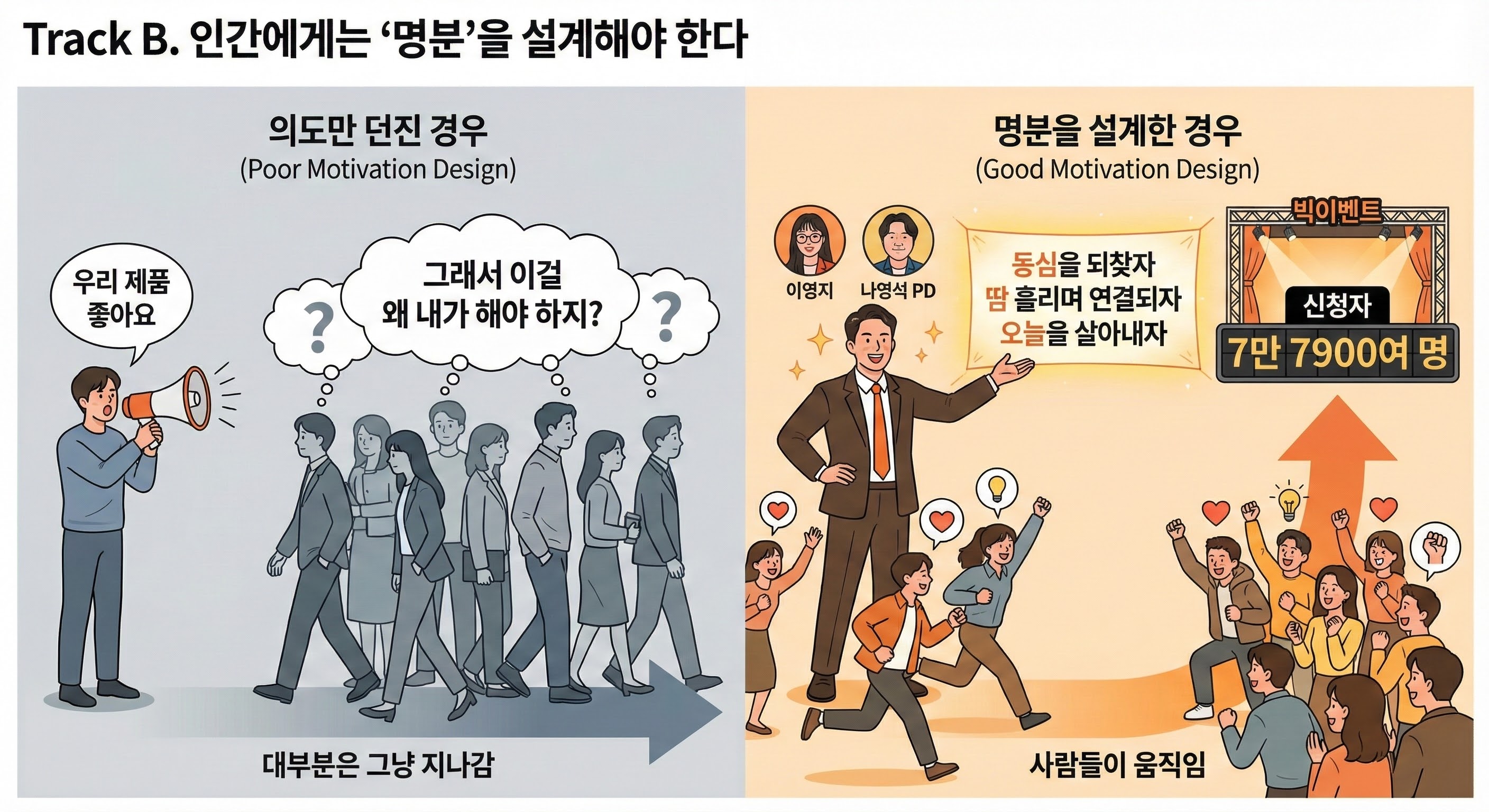
If you only throw the intention "Our product is good" to people, most people just pass by.
Because before people move with function, they first ask their own questions.
"So why should I do this?"
This is what Gyeongdo showed.
If the context is formed as 'Let's regain our childhood / Let's connect while sweating / Let's live today' rather than 'Let's play tag', people move.
And the combination of Lee Young-ji and Na Young-seok elevates that justification to a "big event." The fact that the event schedule was announced and the number of applicants increased to approximately 77,900 shows how strongly that justification worked.
Conclusion. How is your intention doing?
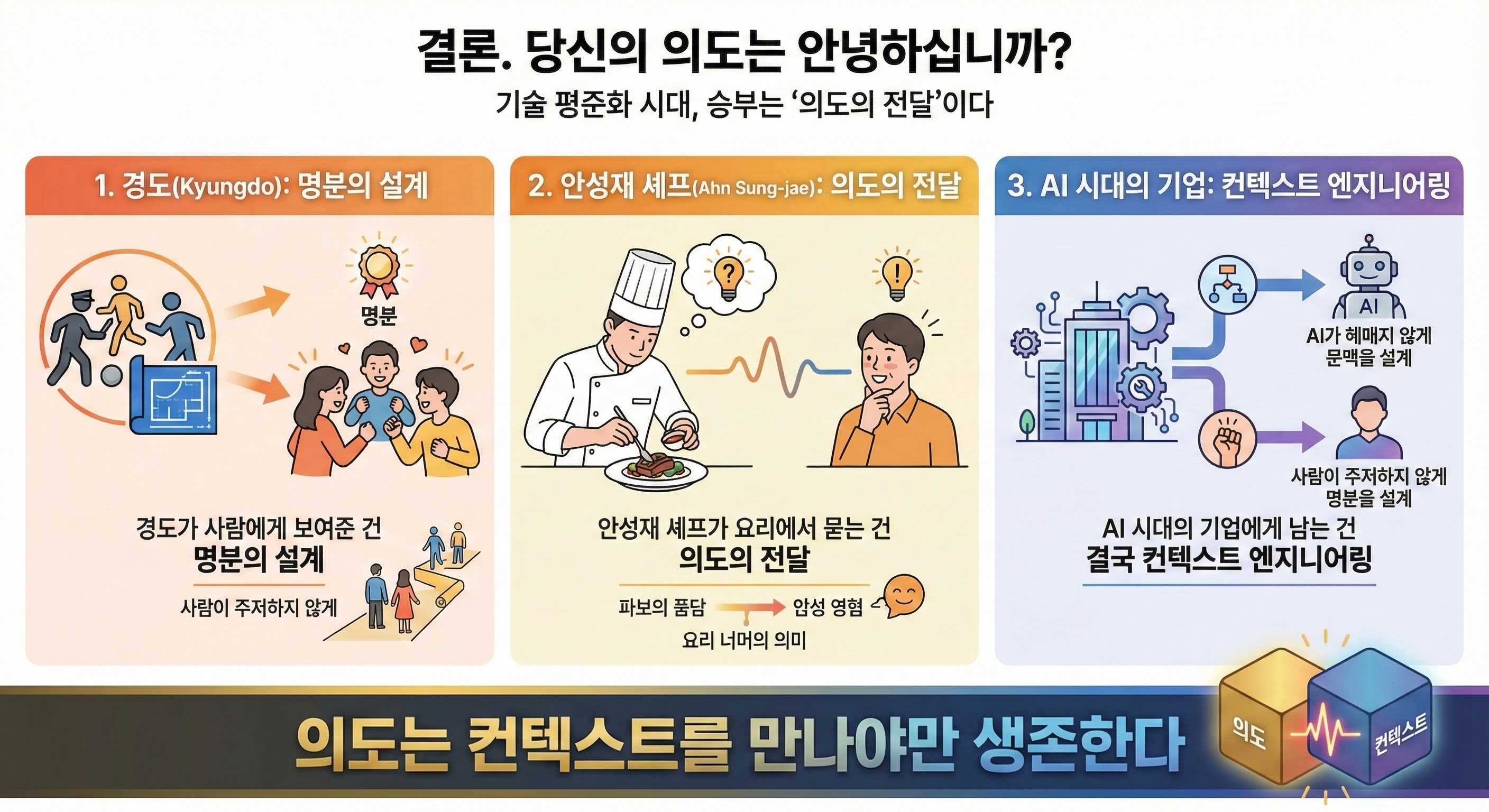
To summarize, it's simple.
Technology continues to be standardized.
Tools are getting cheaper and easier.
So the game from now on is not "what to do" butHow to convey intention.
What Gyeongdo showed people wasDesign of justificationand
What Chef Ahn Seong-jae asks in cooking isDelivery of intentionand
What ultimately remains for companies in the AI era isContext Engineering.
Design 'context' so that AI doesn't get lost,
Design 'justification' so that people don't hesitate.
Intention survives only when it meets context.
30-second checklist to use right away today
AI에게(문맥)
- 목표가 한 문장으로 써 있는가?
- 제약(금지/범위/기준)이 적혀 있는가?
- 결과물 예시가 최소 1개 있는가?

사람에게(명분)
- 고객이 “왜 지금?”에 답할 수 있는가?
- 참여하면 얻는 보상과 정체성이 보이는가?