The Rise of Doo-Jjon-Ku: An Era of Zero Technical Costs
Why did Duzzonku become a 'category' instead of a 'chain'?
— A preview of the era of zero technical cost
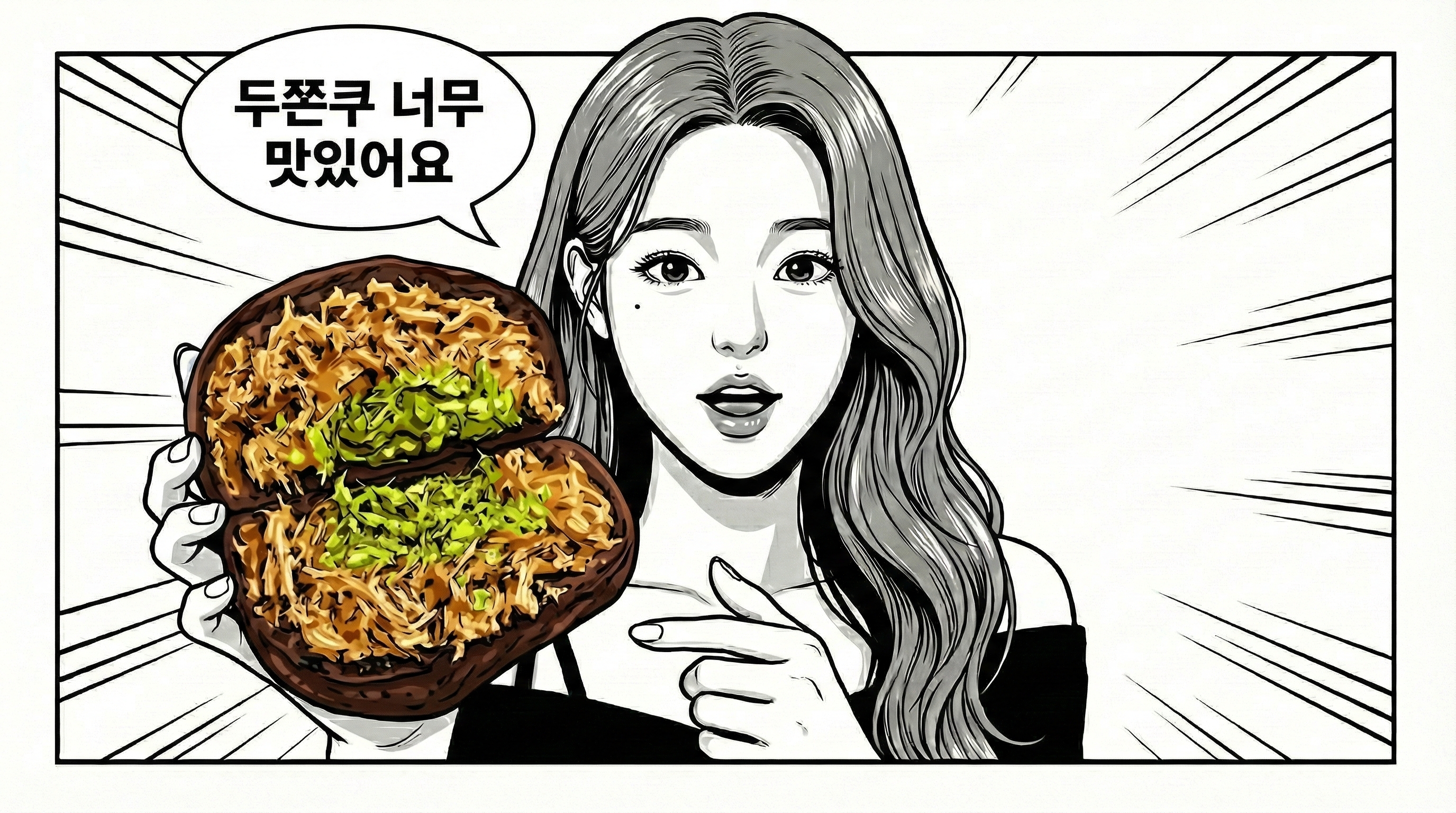
A single photo of Duzzonku posted by Jang Wonyoung on Instagram created a 'holy site'.
And a few months later, Chef Ahn Sung-jae's "not quite the right answer" Duzzonku on YouTube turned the internet upside down.
Reports even stated that the number of protest comments exceeded 10,000.
Trends usually end here.
People say things like, "That's the original place," "You have to go there to get the real thing," then someone expands it into a franchise or mass-produces it at a convenience store, and then when people get tired of it, they move on to another trend.
But Duzzonku strangely didn't end.
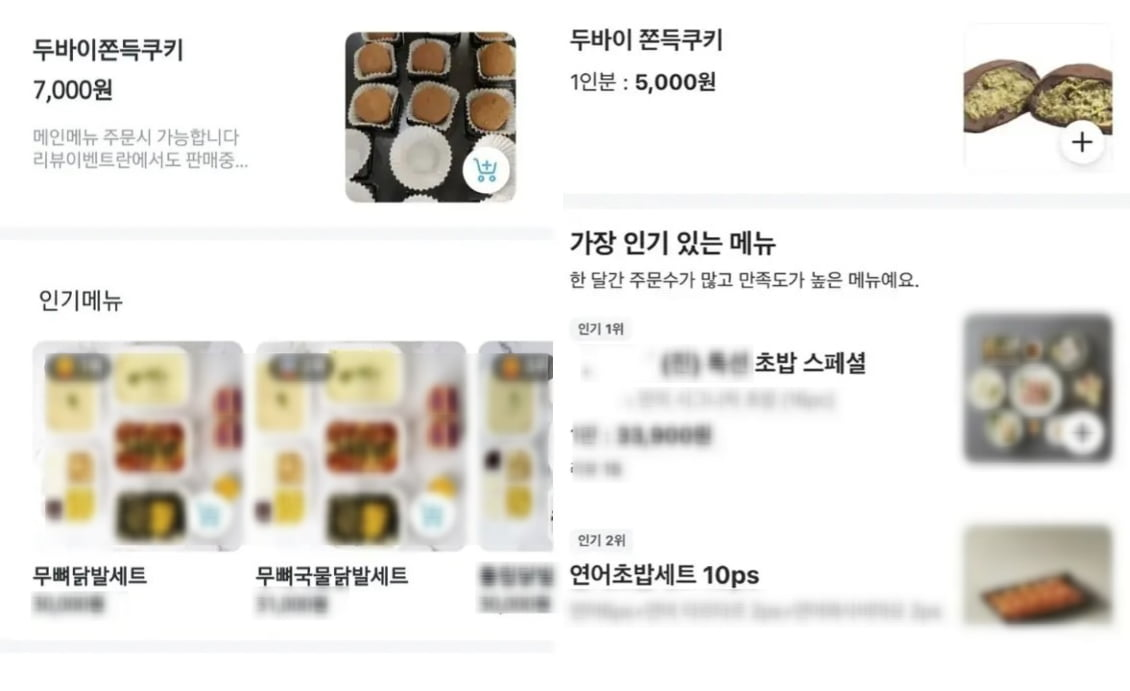
Not only in cafes,but also in regular restaurants like sushi restaurants and Korean rice soup restaurants, Duzzonku is sold as a dessert.The story spread and actually appeared in articles.
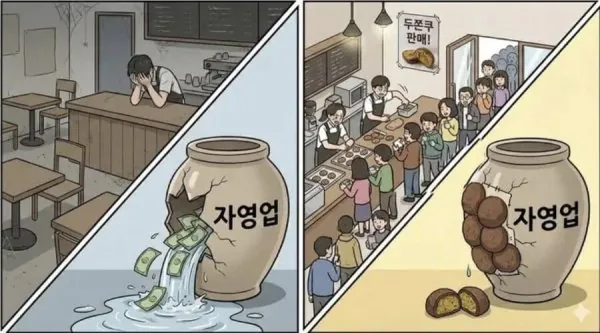
Online, a meme even circulated saying, "Duzzonku is filling the broken self-employment jar." Cafes that were going out of business suddenly had lines, creating a scene that looked like a real "lifeline" to some.

And the decisive scene.
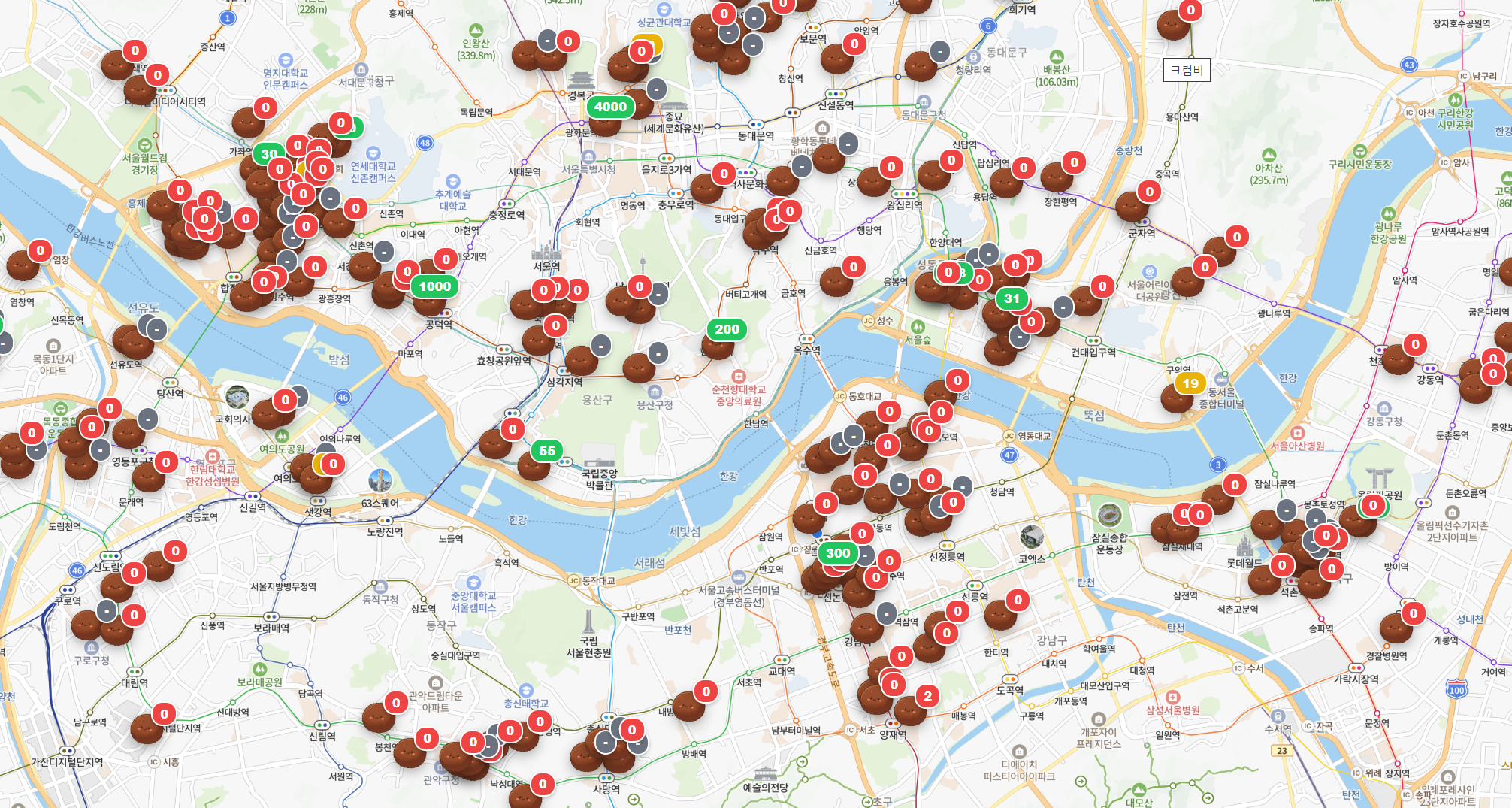
This trendcame with a 'map'.A 'Duzzonku Map' appeared, showing the location and stock of places selling Duzzonku, and store owners logged in to update their stock.Approximately 360 locations joinedit is known.
https://www.dubaicookiemap.com/
(Duzzonku Stock Notification Map)
When it gets to this point, the question changes.
Why didn't Duzzonku become a 'chain' monopolized by a specific brand?
Why did this trend become a "category" instead of a "product"?
1) Duzzonku's warm-up was longer than expected
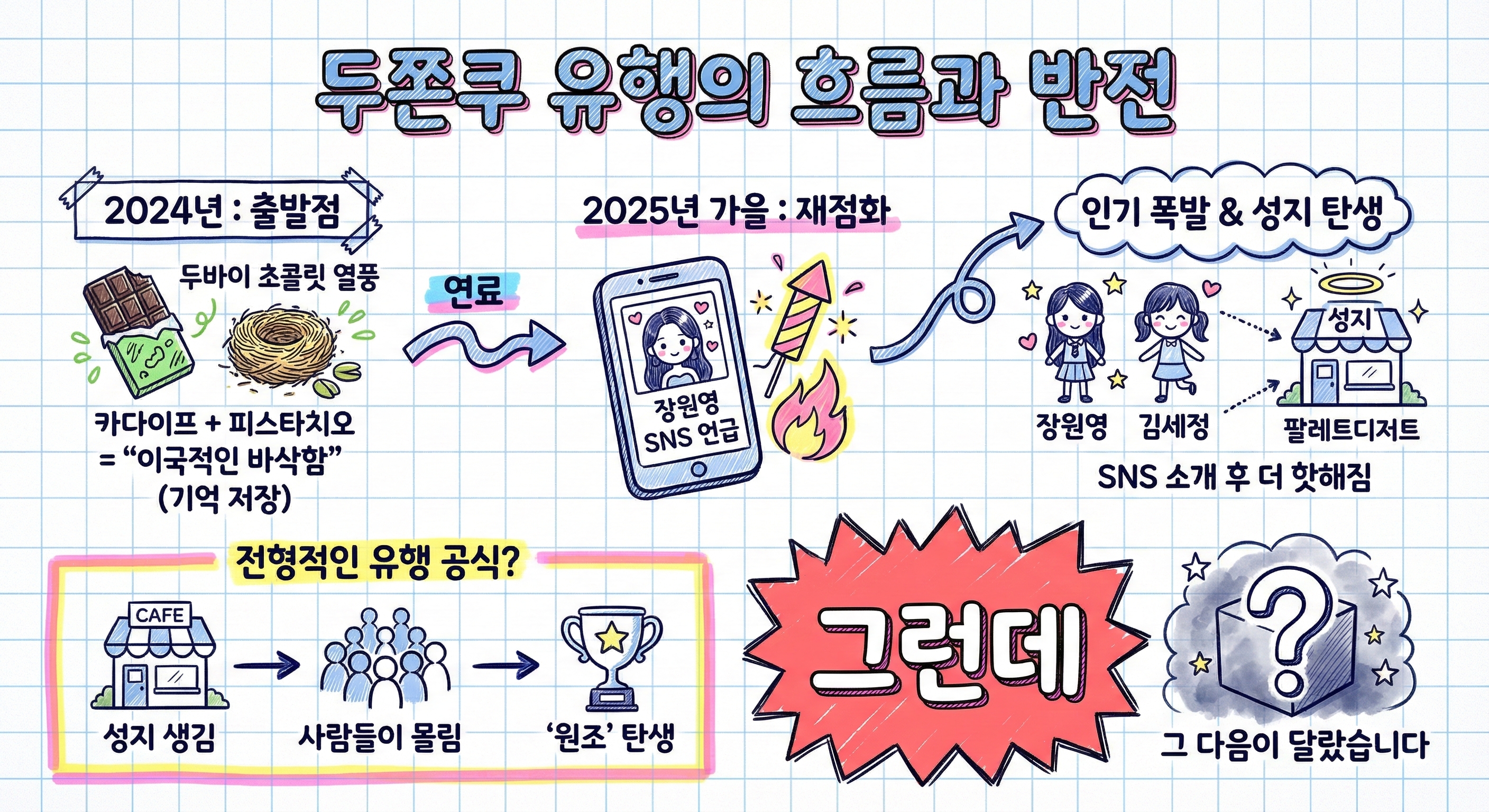
Duzzonku is not a dessert that suddenly popped up.
The starting point is the 2024Dubai Chocolatecraze. The "kadaif (thin noodles) + pistachio" combination was stored in memory as 'exotic crispiness,' and that memory became the fuel for the second wave.
Then, in the fall of 2025, Jang Wonyoung's SNS mention reignited the spark. Reports also summarize the trend as popularity growing due to Jang Wonyoung mentioning Duzzonku.
Especially,Palette Dessertis introduced as becoming even hotter after being introduced on SNS by Jang Wonyoung and Kim Sejeong, and is called a 'holy site'.
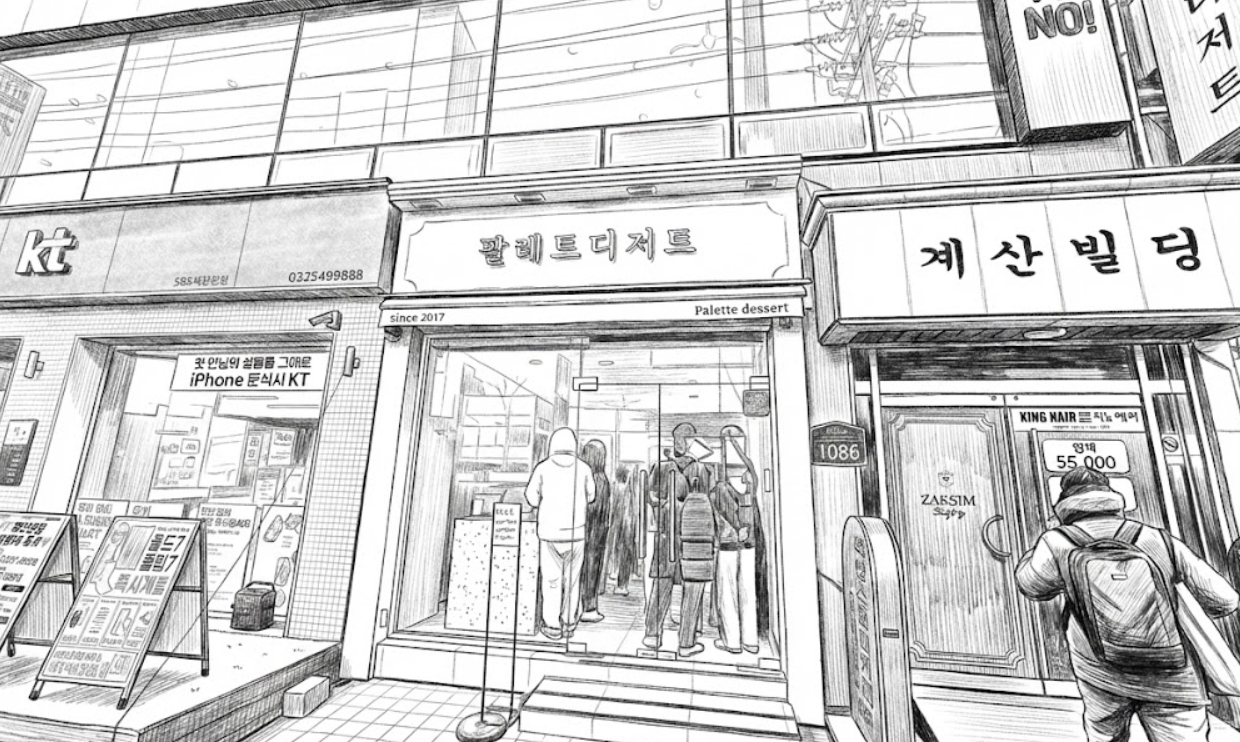
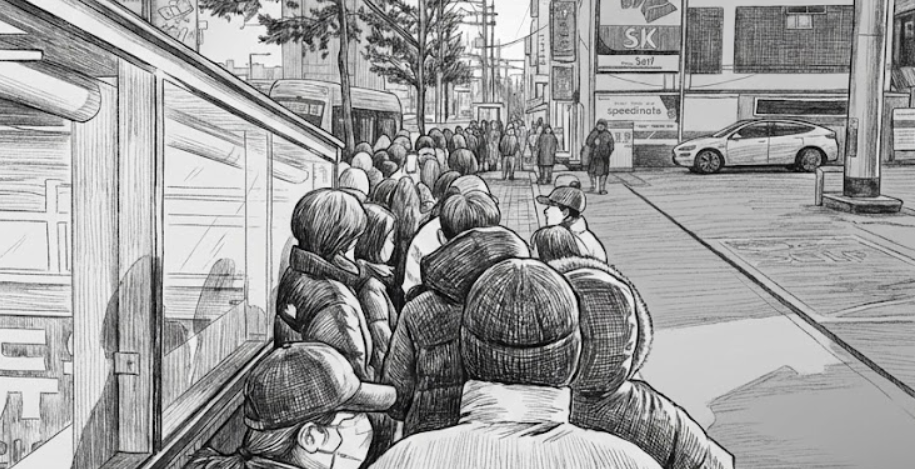
I went there today too. (1.11)
I waited for about an hour and a half, and I was shocked to see so many people in this cold weather.
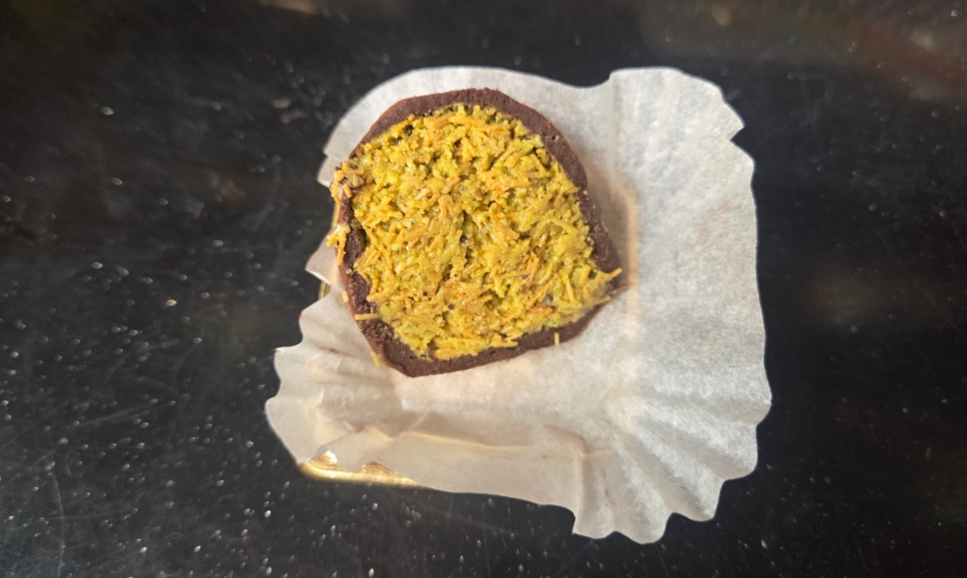
The average selling price is about 7,500 won, but Palette Dessert was selling it for 5,200 won.
It tastes good... but with this money..? I thought,
it's a taste that I'll think of again later.
I think I know why it's so popular.
Up to this point, it looks like a typical trend formula.
A holy site is created, people flock to it, and an 'original' is born….
But Duzzonku was different after that.
2) A "holy site" was created, but "market consolidation (monopoly)" did not occur
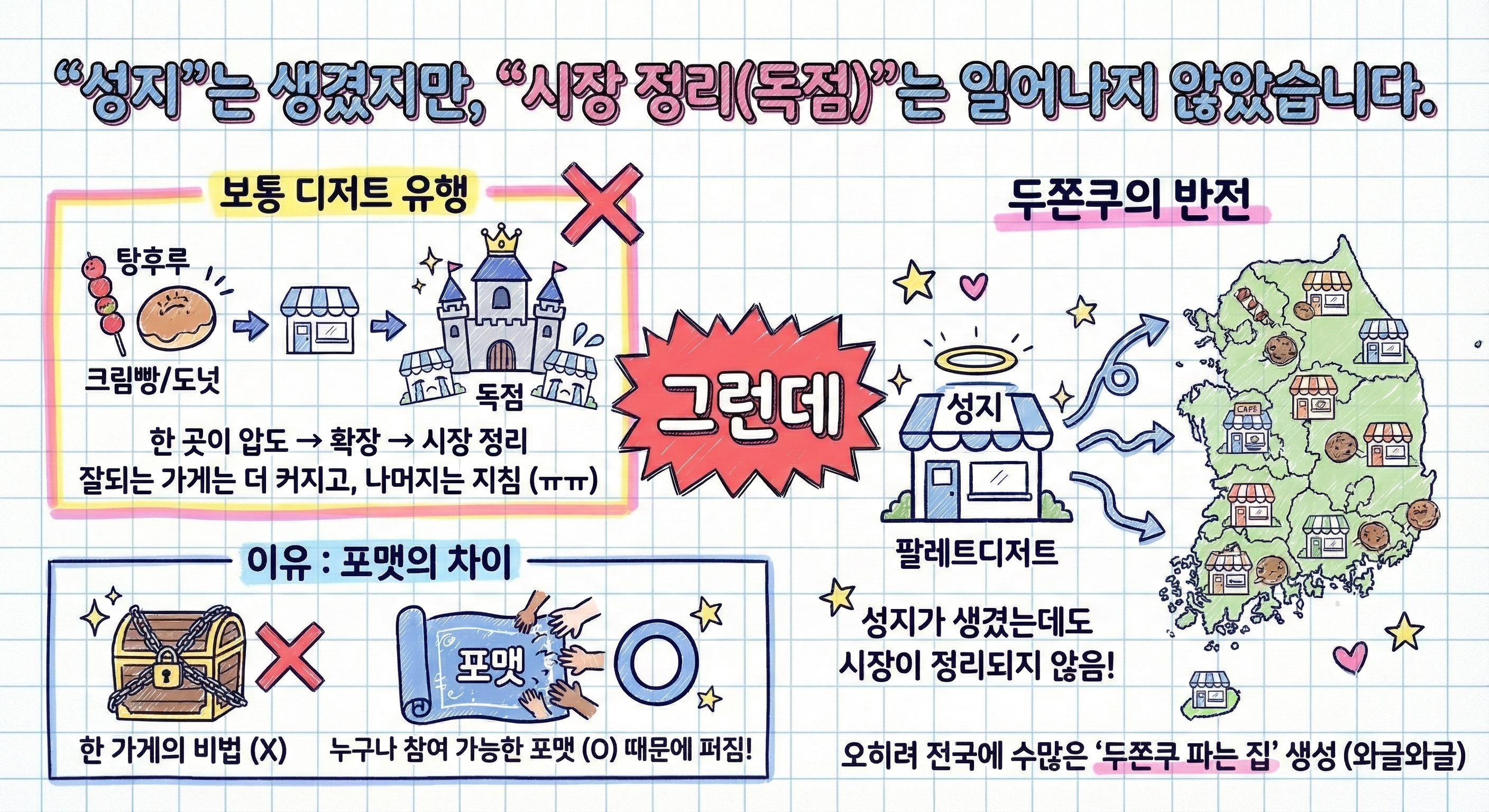
Usually, dessert trends go from "one place dominates → expansion → market consolidation."
Tanghulu did, and so did cream bread/donuts/financiers. The successful stores get bigger, and the rest get tired of following.
Duzzonku's market was not consolidated even though a holy site was created.
Rather, across the country,numerous 'Duzzonku selling places'were created.
The reason this is possible is simple.
Duzzonku spread not as 'one store's secret recipe' but as a 'format that anyone can participate in'.
3) What Ahn Sung-jae's 'failed Duzzonku' showed: Participation, not the right answer, creates spread
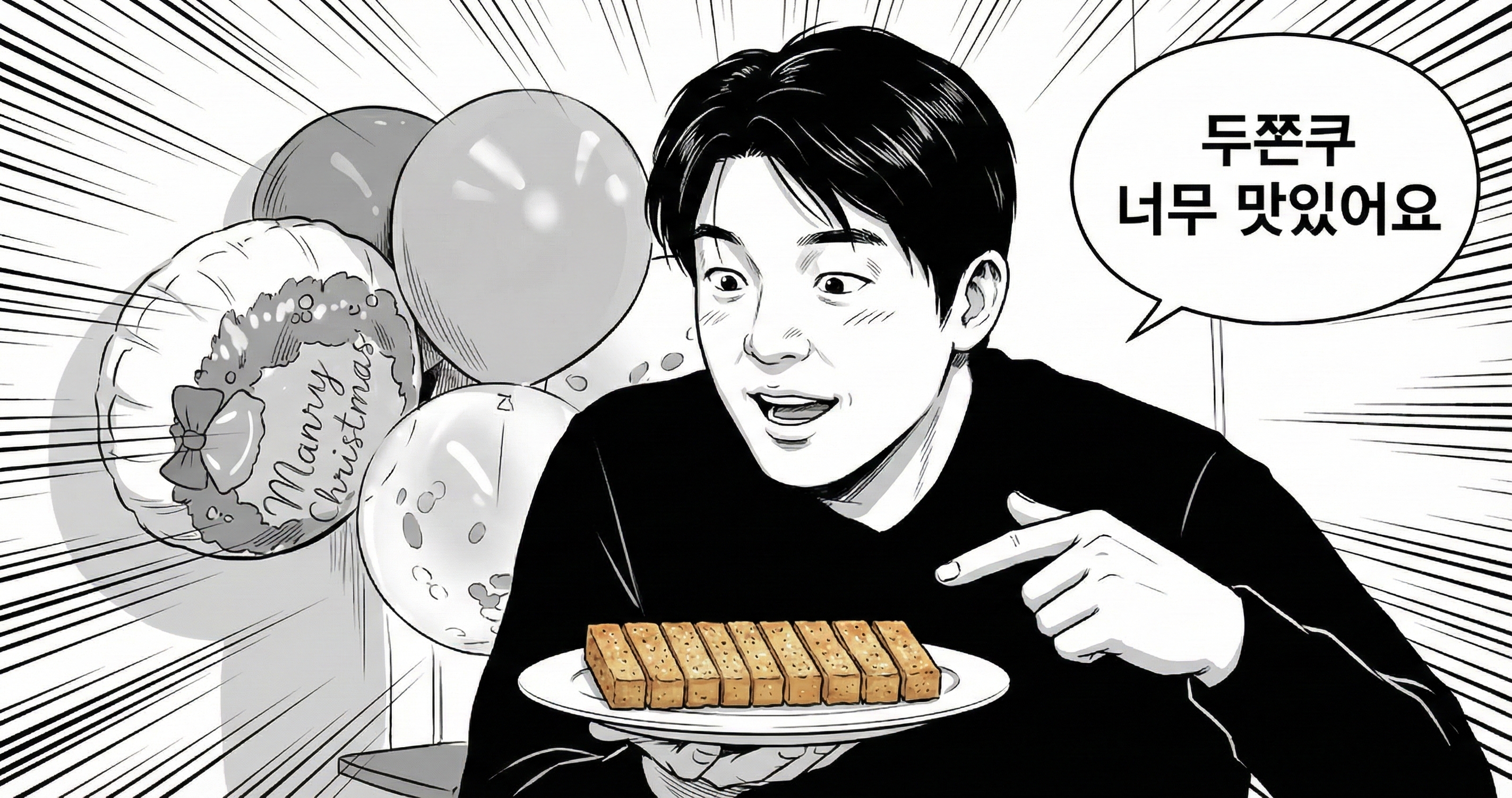
A symbolic event when explaining the explosion of Duzzonku is Chef Ahn Sung-jae's video.
According to reports, Chef Ahn Sung-jae made Duzzonku with his children, and criticism poured out online about the results,and it was reported that the number of protest comments exceeded 10,000.was reported.
The key here is not "the chef revealed the perfect recipe."
The perfect answer creates "admiration," but
a wrong answer creates "participation."
People say, "That's not Duzzonku," and at the same time, they start defining "Then what is the real Duzzonku?"
From this point on, the trend solidifies not as 'taste' but asspecifications (protocol).
4) The key to making Duzzonku a category: "Protocolization"
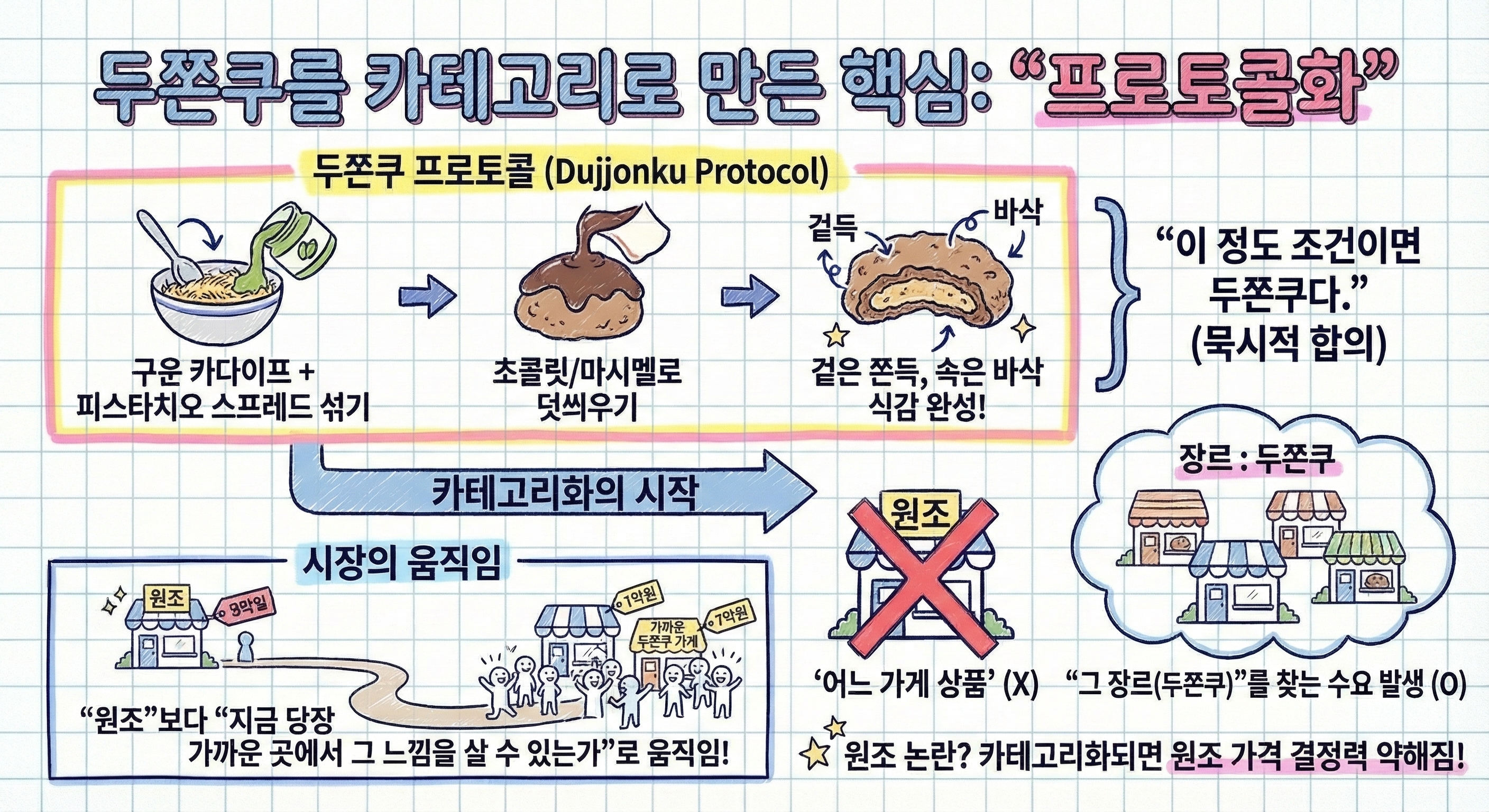
In reports, Duzzonku is described as follows.
Mix baked kadaif with pistachio spread,
and add chocolate/marshmallow
to create a dessert with achewy exterior and crispy interior.
The moment this description spreads widely, an implicit agreement arises in the market.
"If it meets these conditions, it's Duzzonku."
This is thestart of categorization.
Demand arises not for 'a certain store's product' but for
"that genre (Duzzonku),"
and any store can sell it with similar evaluations if it meets the conditions of that genre.
Even if there is an original controversy, the price determination power of the original naturally weakens as categorization progresses.
This is because the market moves by "Can I get that feeling right now from a place near me" rather than "the original."
5) So, in conclusion: Duzzonku is a preview of the 'zero technical cost' era
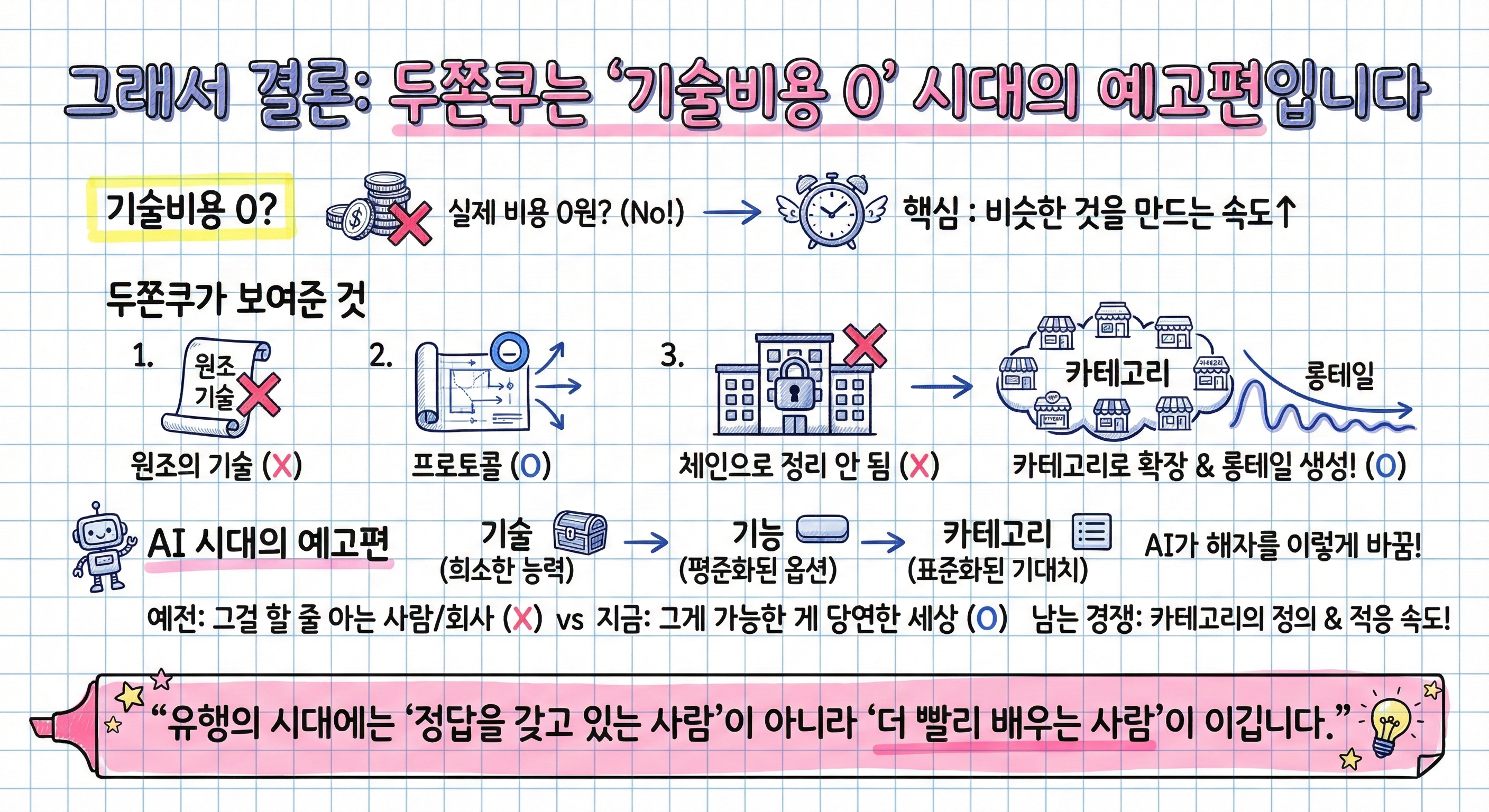
Thezero technical costmentioned here does not actually mean that the cost becomes 0 won.
The key is that "the speed at which anyone can make something similar" has increased.
Duzzonku showed the following.
If the
"protocol (specifications)" spreads, not "the original's technology,"
the market does not consolidate into a chain but
expands into a category and
creates a long tail.
The reason why this is a preview of the AI era is that AI does exactly this.
AI changes many technical moats like this.
Technology (scarce ability)→Function (standardized option)→Category (standardized expectation)
In the past, "the person/company that knows how to do that" was a moat, but
now, "a world where it is natural that it is possible" is becoming the norm,
and the remaining competition eventually moves to not "technology" butthe definition and adaptation speed of the category.
And here comes the most important sentence.
In the age of trends, not 'the person who has the right answer' but'the person who learns faster'wins.
6) The corporate solution is all about the "learning engine"
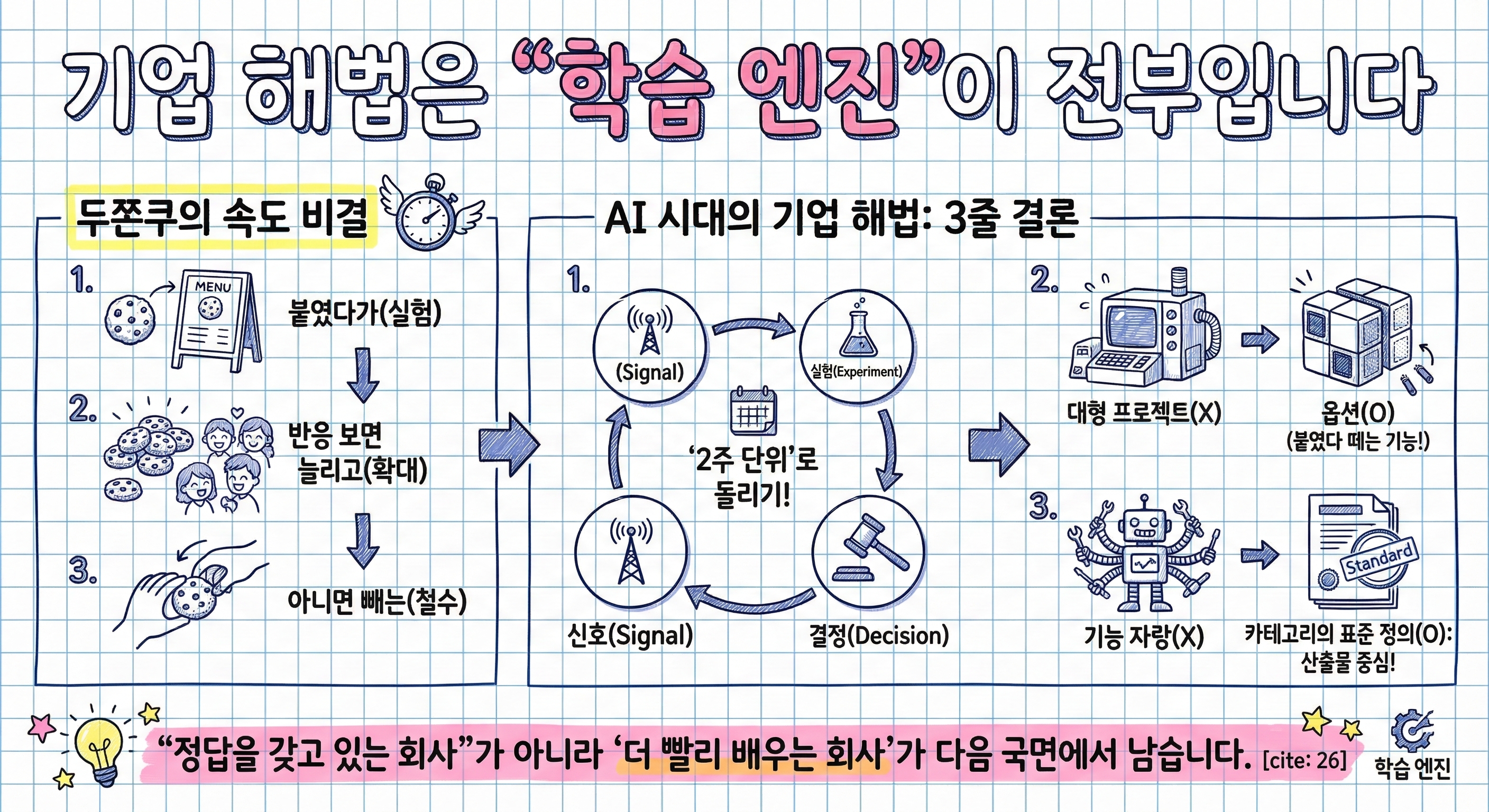
There was one reason why Duzzonku could spread across the country.
Because the speed of attaching it (experiment), increasing it if the reaction is good (expansion), or removing it if not (withdrawal)was fast.
The same goes for companies in the AI era. The conclusion is these 3 lines.
Signal → Experiment → DecisionRotate the cycle in '2-week units'.
Design AI not as a "large project" but asan option (function to attach and detach).
Rather than boasting about functions, first definethe standard of the categoryof "what deliverables this work ends with."
Not the company that gets the right answer, but thecompany that learns quicklywill remain in the next phase.
7) Personal conclusion: Define 'what I do' as a category, not a tool
There are many concerns that jobs will disappear due to AI.
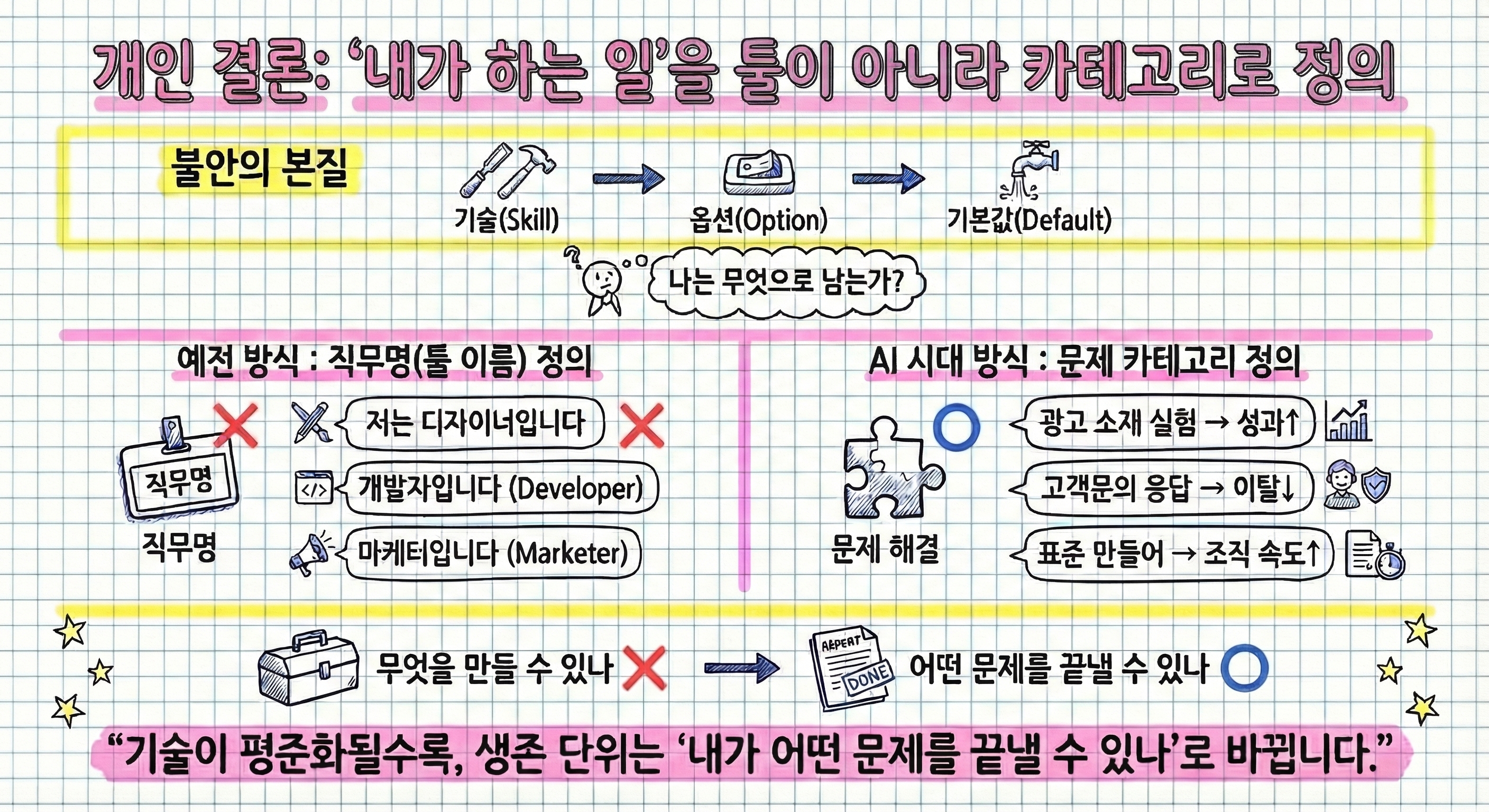
The essence of that anxiety is this.
The "technology" I used to do
becomes an "option" that anyone can do,
and if that option becomes the 'default value',
what remains of me?
Just as Duzzonku spread not as "a certain store's product" but as "the category called Duzzonku," it is now more powerful for individuals to define themselves not as "job titles" but asthe category of problems I solve.
Old method:
"I am a designer / developer / marketer."
AI era method:
"I ama person who quickly experiments with advertising creatives to improve performance.."
"I ama person who operates a customer inquiry response system to reduce churn.."
"I ama person who creates proposal/report standards to speed up the organization.."
In other words, you should define yourself not by the name of the tool but bythe work category (the name of the problem).
As technology becomes standardized, the unit of survival changes from "What can I make?" to "What problems can I solve?"
Closing: Hints from Duzzonku
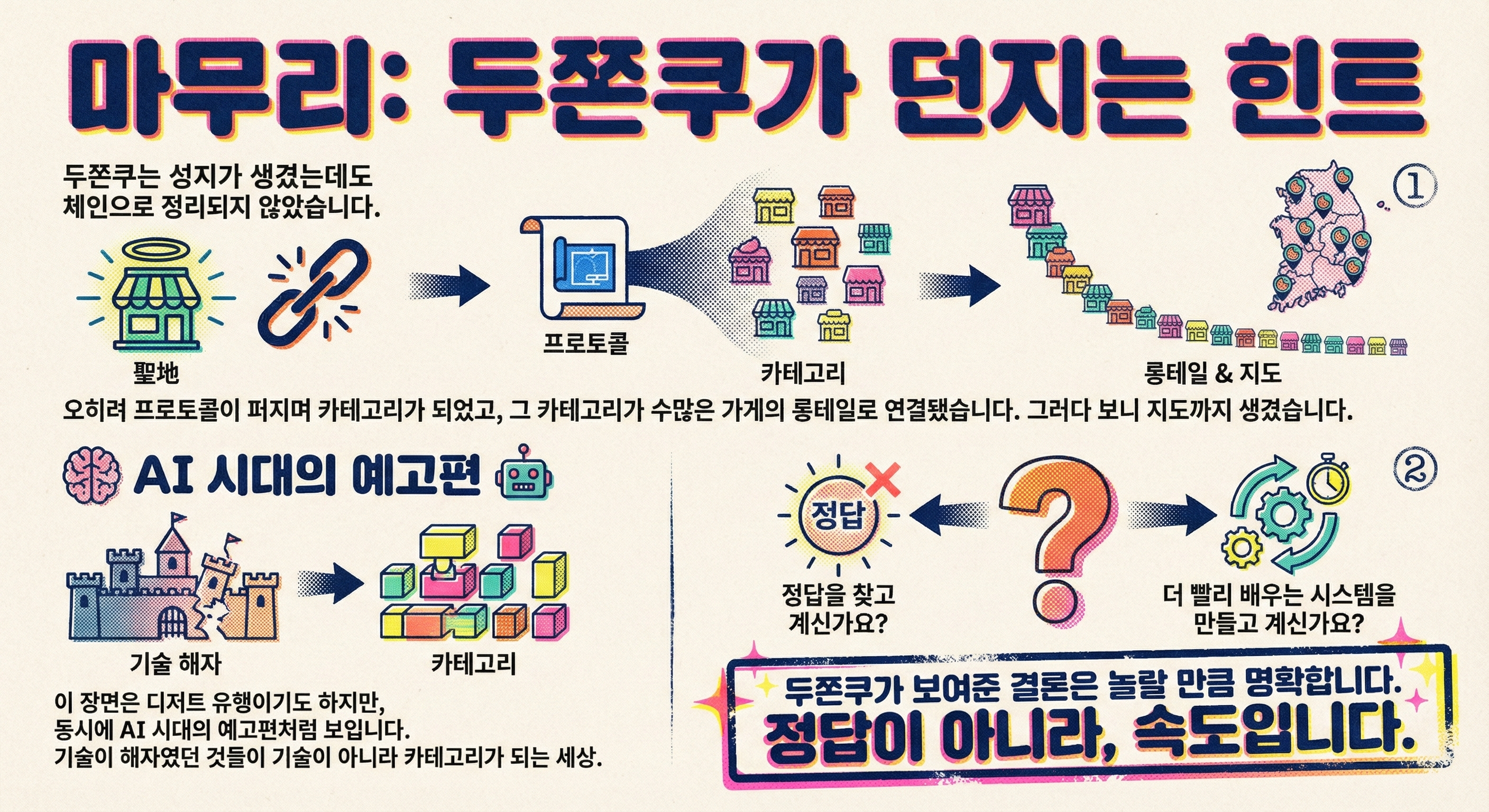
Duzzonku was not consolidated into a chain even though a holy site was created.
Rather, the protocol spread and became a category, and that category was connected to the long tail of numerous stores. Eventually, even a map was created.
This scene is reminiscent of the dessert craze, but at the same time, it feels like a preview of the AI era.
Things that used to be moats of technology are no longer technology but acategory.in a world where things become a category.
The question that remains in that world is simple.
Are you looking for the right answer, or are you building a system that learns faster?
The conclusion shown by Deux Chien Cou is surprisingly clear.
It's not the right answer, it's speed.