An intelligent door system that transforms a home's front door into a smart device. It provides keyless entry, intrusion detection, and enhances safety and convenience by understanding activities inside and outside the home using built-in sensors and AI.
HonoreeSmart Home스마트 도어홈 자동화지능형 제어에너지 효율보안 강화IoT
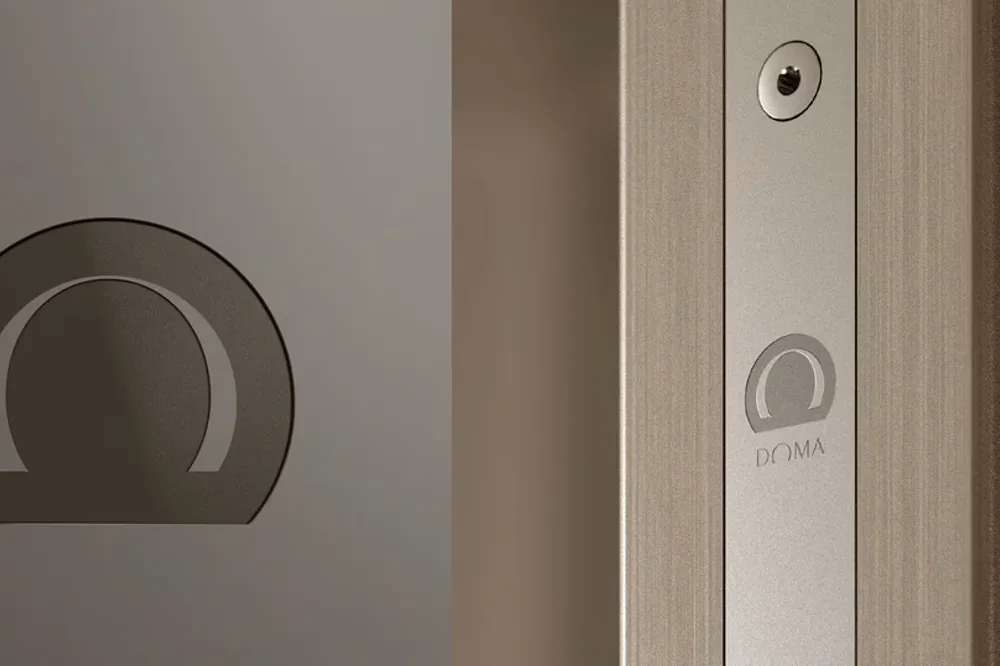
Doma Intelligent Door
58
0
Hatch
One-Line Product Definition
Problem Definition
Limitations of traditional front door management: Traditional front doors have a simple physical structure, requiring reliance on multiple individual devices such as door locks, doorbells, and CCTV. This resulted in users having to manage keys or passwords and install separate security devices, which was cumbersome. Examples include the risk of losing keys, anxiety about door security, and difficulty in responding in real-time to intrusions.
Demands of the smart home era: Although individual smart door locks or doorbell cameras have emerged, the door itself has not been intelligentized to comprehensively manage home access and security. Existing methods are limited tokeyless entryand remote verification, with limited ability to understand or automatically respond to situations around the door. Furthermore, the lack of integration and data linkage exists as multiple devices operate separately.
Key Differentiators
Front Door Integrated Smart System: Doma integrates a multi-point smart door lock, 360-degree camera and sensors, two-way intercom, and motor-driven opening/closing device into the door itself. Without the need to install multiple separate devices, a single door system performs everything from access control to security and environmental sensing.
Complete Keyless and Automatic Entry: When authorized family members or pets approach the door, it recognizes them using facial and motion recognition AI and automatically opens, while preventing unauthorized access by outsiders, fundamentally blocking the risk of intrusion. It implements true hands-free entry, allowing entry without a smartphone or even a key.
Continuous Awareness of Surroundings: Cameras and various sensors inside and outside the door detect the movement of people around the entrance and delivered items in real-time. This allows homeowners to always know who is at the door and whether a package has been placed. This AI analysis is processed locally, ensuring that personal video data does not leak externally while still providing real-time responses.
Automation of Convenience and Safety Measures: The sensor network built into the door monitors indoor air quality and temperature, taking automatic actions such as ventilation or alarms when abnormalities are detected. For example, if the door frame sensor detects a fire behind the door or indoor air pollution, it immediately alerts and responds. It also self-checks the door's condition (e.g., misalignment) and notifies the need for door maintenance, enabling proactive home management compared to traditional front doors.
Integrated Power Supply and Communication: This product has a permanent power connection to the door, eliminating the worry of battery replacement, and the entrance also serves as a smart home hub, interworking with other IoT devices in the home. In other words, the front door itself functions as a security center + control panel. This fully integrated design provides a higher level of integrated experience compared to existing partial smart door locks or CCTVs.
Key Adopters
Individual Consumers (B2C): Homeowners interested in smart homes are the primary adopters. In particular, customers living in detached houses or townhouses who are willing to invest in security and convenience are the target. It is likely to be adopted first in the affluent market or luxury home remodeling demand.
Construction and Real Estate Developers (B2B): This product can be adopted as a premium option when constructing high-end housing complexes or smart apartments. For example, developers who want to increase added value by providing it as a basic feature in new homes with a smart home concept may be interested. However, since the product is still in its early stages, it is expected to be primarily focused on the individual consumer market for the time being.
Public/Commercial Sector (B2G/B2B): It can also be used in small offices and research facilities where security is important, but it seems that the design and function are focused on home use, so it is not the main customer base. The main focus is on general consumer sales strategies rather than government procurement or B2B.
Scalability
Regional and Standard Adaptability: Housing culture and door standards vary from country to country, posing a challenge for expansion. It is likely to have been developed to fit North American standard door frames, so product lines for each standard must be increased when entering the global market. In addition, front doors must meet building regulations such as fire protection standards and thermal insulation performance, so there are hurdles to obtaining additional certifications for each country.
Smart Home Platform Integration: The entrance data and AI functions accumulated by Doma can be expanded to elderly monitoring (detection of entry patterns) and parcel delivery services (guidance when parcel carriers visit) in addition to security. In the future, the scope of application can be expanded to the entire entrance of the home by expanding the lineup to include intelligent sensors for windows or products for back doors.
Application to Other Industries: Technically, it can also be applied to smart doors in commercial buildings or hotel room entry systems. However, the B2B market already has a variety of access control solutions, and this product is specialized for residential use in terms of design, so it is expected to focus on residential niches. It has high added value in crime-vulnerable areas or countries sensitive to security, so the market can be expanded around these areas.
Environmental Factors: Since it is a front door replacement product, installation work is involved. Therefore, it may be limited to the homeowner market rather than tenants. However, if it becomes a basic option for new homes, these restrictions will be reduced. In addition, since the product involves data collection, localization that complies with personal information protection regulations is also necessary.
Judges' Evaluation
Background of CES Innovation Award: The CES judges seem to have given a high evaluation, seeing that the Doma door innovated the entire entrance of the house beyond the level of existing smart locks. It was selected as a Honoree in the smart home category for its combination of security, convenience, and design. With the evaluation that it "redefined the everyday element of the front door," it was noted as a solution that would open a new horizon for home security.
Technical Completeness: Industry experts believe that product reliability will be high due to the participation of the August·Yale team. By showcasing parts with high implementation difficulty, such as multi-point locking and AI vision, as actual prototypes, expectations are high for product completeness. On the other hand, some are cautious, saying that there are few cases of actual installation and operation in homes, so durability and the possibility of malfunction during long-term use should be monitored.
Market Expectations: It is attracting high interest in the smart home enthusiast and luxury housing market. It has also been introduced in Gadget Flow as a "game changer that fundamentally improves the front door experience." However, there are realistic criticisms that it will take time to become popular with the general public because the price is expected to be high. In addition, there is an opinion that explosive distribution like smart door locks may be difficult due to the barrier to entry of replacing the entire door. Overall, it gives a positive evaluation of the innovation of the technology concept, but there is a mixed view that marketability is limited to premium.
Analyst Insights
⚠️ Impressive technology but market uncertainty: A dramatic improvement in home security and convenience is clear, but the barrier to entry of replacing the entire front door and high initial costs may keep it in a niche market for the time being. Technological innovation is excellent, but more time and market education are needed before it can become a popular smart door standard.
The award list data is based on the official CES 2026 website, and detailed analysis content is produced by USLab.ai. For content modification requests or inquiries, please contact [email protected]. Free to use with source attribution (USLab.ai) (CC BY)
댓글 (0)
댓글을 불러오는 중...