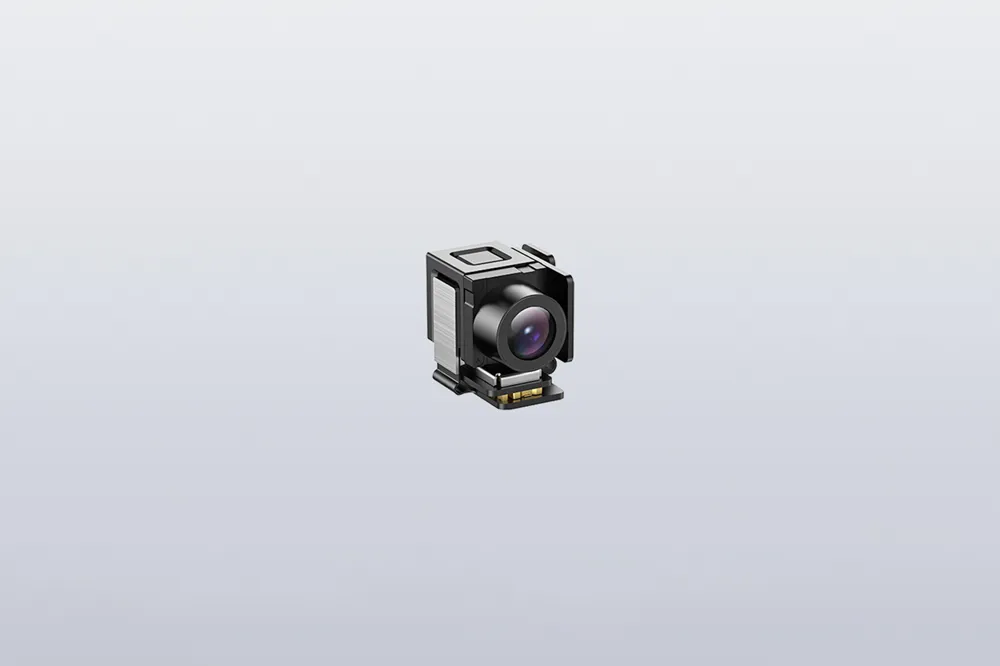
An ultra-compact full-color micro projector. It implements the world's smallest color video output module based on MicroLED microdisplay, making it a suitable light source for ultra-lightweight displays such as AR glasses.
HonoreeXR & Spatial Computing차량용 디스플레이AR 내비게이션초소형 프로젝터첨단 운전자 보조 시스템HUDMicroLED
허밍버드 Ⅱ 폴리크롬 프로젝터
26
0
JBD
One-Line Product Definition
Problem Definition
Wearable devices such as augmented reality (AR) glasses become less comfortable to wear and hinder adoption if the display volume and weight are large. Existing AR glasses have used LCoS, Micro-OLED, etc. to implement small color displays, but they have suffered from insufficient brightness, power consumption, and optical system volume issues. In particular, implementing full-color requires multiple devices, which increases the size of the device and increases heat generation. To create AR glasses as light as eyeglasses for consumer use, a dramatically miniaturized display light source is required.
Key Differentiators
The Hummingbird II projector is an ultra-compact full-color beam projector consisting of a 0.1-inch MicroLED chip and an X-Cube optical structure. With a volume of only 0.2cc and a weight of 0.5g, it is the world's smallest color projector, more than 50% smaller than the previous generation. Despite this small size, it provides 10-bit color depth, a 25° field of view, and 3 lumens of brightness, with very low power consumption of around 50mW.
By maximizing the high brightness and high efficiency characteristics of the MicroLED device itself, power consumption can be reduced compared to competing technologies at the same brightness. As a result, the display unit of AR glasses can be miniaturized to the point where it can be placed in the temples, greatly increasing the freedom of eyeglass-type design. In short, the differentiator is that the form factor has been reduced to an innovative level without sacrificing performance.
Key Adopters
AR/VR headset and smart glasses manufacturers (B2B)are key customers. For example,global electronics companies (Apple, Meta, etc.)orAR startups (Magic Leap, etc.)can purchase this module and integrate it into their devices. In addition, military/industrial HMD manufacturers also have a great need for miniaturization and weight reduction, so they are potential buyers.
As for B2C, JBD provides it to companies as a display component rather than selling it directly to consumers. In the future, automotive HUDs and finished beam projector companies may also become customers, but in the short term, XR device manufacturers are the main adopters.
Scalability
As the AR glasses market is expected to grow in the future, the demand for these components also has the potential to increase significantly. JBD is pursuing price competitiveness through MicroLED manufacturing using the CMOS process for mass production, enabling flexible expansion in response to increased demand. In addition, next-generation products with higher pixel densities, such as the Roadrunner platform on the Roadmap, are also under development, so there is a possibility of leading the market through continuous performance improvement.
However, the adoption rate of AR glasses is a variable, and short-term demand may be limited as the consumer market is not large right now. However, considering the consumer market in the medium to long term, starting with industrial and enterprise smart glasses, this projector can be expanded to all areas of XR.Micro projector utilization is also open to other fields (e.g., automotive, IoT displays), so long-term Scalability is positive.
Judges' Evaluation
Selected as an Innovation Award winner in the XR & Spatial Computing category, recognizing its technology leadership in the MicroLED field. Experts are welcoming this achievement, saying it is a "core component essential for the popularization of AR." In particular, industry officials say that Hummingbird II"solved the miniaturization problem, which was the biggest challenge for full-color AR displays."They say that the CES award has further increased JBD's technological credibility.
However, since the AR glasses market itself is still in its early stages, there is also a realistic view that "it is innovative, but the market needs to mature." Overall, technical completeness and innovation are mainly praised, but at the same time, it is observed that its true value will be demonstrated only when adoption in commercial AR products increases.
Analyst Insights
⚠️ Impressive technology but market uncertainty – It is an essential component innovation for AR devices, but commercial performance will depend on the growth rate of the XR market.
The award list data is based on the official CES 2026 website, and detailed analysis content is produced by USLab.ai. For content modification requests or inquiries, please contact [email protected]. Free to use with source attribution (USLab.ai) (CC BY)
댓글 (0)
댓글을 불러오는 중...