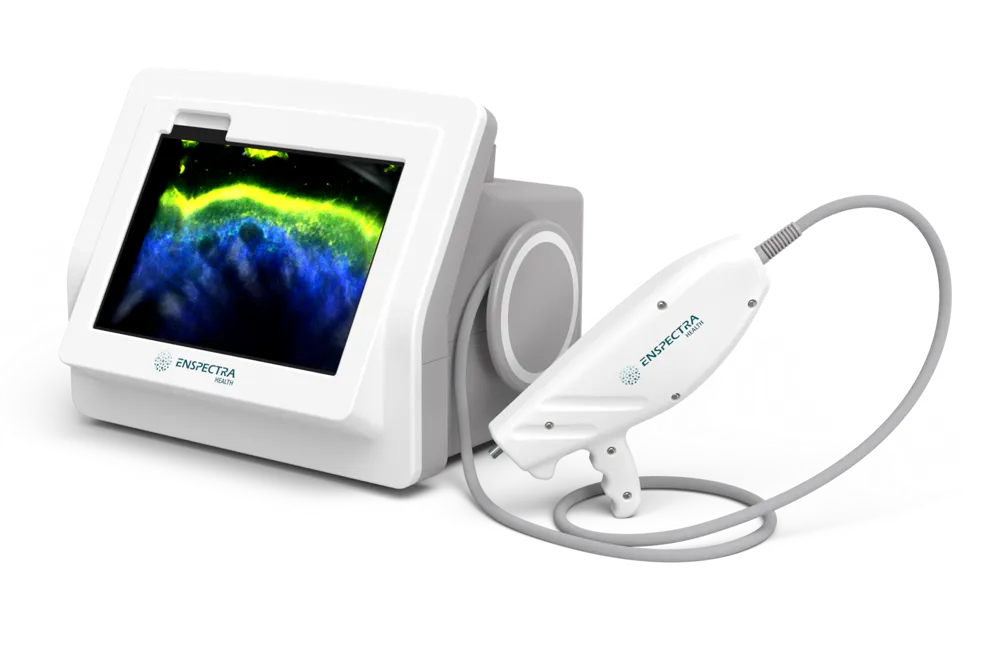
At-home AI skin analysis device – An innovative beauty tech device that allows consumers to analyze their skin condition (collagen levels, photodamage, pigmentation, etc.) at a medical grade through non-invasive skin cell diagnosis at home, and obtain customized skincare solutions tailored to their needs.
HonoreeImaging피부 분석AI머신러닝개인 맞춤형피부 측정광학 기술
앙스펙트라
4
0
L’Oréal Groupe
One-Line Product Definition
Problem Definition
Accurately diagnosing skin conditions traditionally required a biopsy accompanied by diagnosis at a dermatologist or imaging with expensive equipment. This involved significant time and cost burdens, and invasive methods (skin sample collection) posed risks of pain and infection.
From the consumer's perspective, it was difficult to objectively measure skin condition easily at home, leading to the inconvenience of repeated trial and error to find the right cosmetics for their skin.
Against this backdrop, Enspectra emerged to non-invasively implement dermatology-level precision diagnosis at home, allowing individuals to identify and address their skin problems without relying on specialized clinics.
Key Differentiators
Enspectra is the world's first non-invasive cellular imaging device that applies multiphoton laser-based cell-level skin scanning technology. It differs decisively from existing skin analysis methods in that it can deeply scan the skin layers with a laser to show collagen structure, photoaging traces, and pigmentation under the surface in real time without incising living tissue.
While general beauty scanners or UV cameras only check the skin surface, pores, or pigmentation levels, Enspectra provides histological-level information, enabling a *"digital skin biopsy"*. This allows users to scientifically measure the degree of skin aging and damage, and receive guidance on optimal customized cosmetics and care methods through L'Oréal's vast skin database and AI recommendation system.
In short, the innovation of this product is that it brings the dermatologist's microscopic diagnosis to a home device.
Key Adopters
General consumers (B2C)are the primary target. Consumers who are highly interested in beauty and pursue personalized care can purchase and use it for home use. In particular, customer groups sensitive to skin condition (e.g., customers interested in anti-aging, customers who need to manage troubled skin, etc.) are more likely to pay for it.
In addition, professional industries such as aesthetics/skin clinics (B2B) may consider adopting it for customer consultation and diagnosis, but basically, L'Oréal is targeting the general consumer beauty device market.
When the product is commercialized, it will be sold through department store beauty stores or online channels, and is expected to be marketed as *"your own dermatology diagnostic device"*.
Scalability
This technology is primarily applied to skin diagnosis, but the non-invasive laser imaging technology itself has the potential to expand into the medical field in the future. For example, it can be developed into a clinical diagnostic device for early skin cancer diagnosis or wound healing monitoring.
However, if sold for consumer use, it is highly likely that it will be limited to beauty purposes rather than health diagnosis to avoid medical device regulations. In terms of the environment, it can be used at home or in clinics without special restrictions, but regulations such as FDA approval may become an issue depending on what functions are included.
On the other hand, if combined with L'Oréal's accumulated global skin data, it is possible to accumulate data according to regional climate or race and expand personalized services in the global market.
In summary, it is currently focused on the beauty niche, but there is room to advance into the medical and healthcare areas, and it has the potential to scale up globally through L'Oréal's global distribution network.
Judges' Evaluation
It has been recognized for its technological completeness and innovation by being selected as a CES Innovation Award honoree in the Imaging category. Experts praised it as a *"home solution that can change the landscape of dermatology,"* especially for incorporating laser microscope-level precision into a consumer device.
However, it is still in the prototype stage, and there is uncertainty about the timing of commercialization and price. The market is showing great interest in line with the personalized beauty trend, but some are skeptical, asking *"How much will the average consumer really use it every day?"*
Although the technical difficulty is very high, L'Oréal's strong mid- to long-term R&D investment intentions can be seen in the fact that it also showcased other beauty devices (infrared hair styler, LED mask, etc.) at CES 2026.
Overall, it is evaluated that *"technical innovation is certain, but education and time are needed for consumer adoption,"* and it is receiving great attention in terms of innovation and potential.
Analyst Insights
🧪 R&D and concept verification stage – A technically groundbreaking solution with remarkable research results, but still in the early stages, requiring additional verification and time to establish itself in the market as a commercial product.
Demo video: AIRDIVIBER introduction video (James Dyson Award) (※ The Enspectra concept and principle are mentioned together at the beginning of the 'AIRDIVIBER' video)
The award list data is based on the official CES 2026 website, and detailed analysis content is produced by USLab.ai. For content modification requests or inquiries, please contact contact@uslab.ai. Free to use with source attribution (USLab.ai) (CC BY)
댓글 (0)
댓글을 불러오는 중...