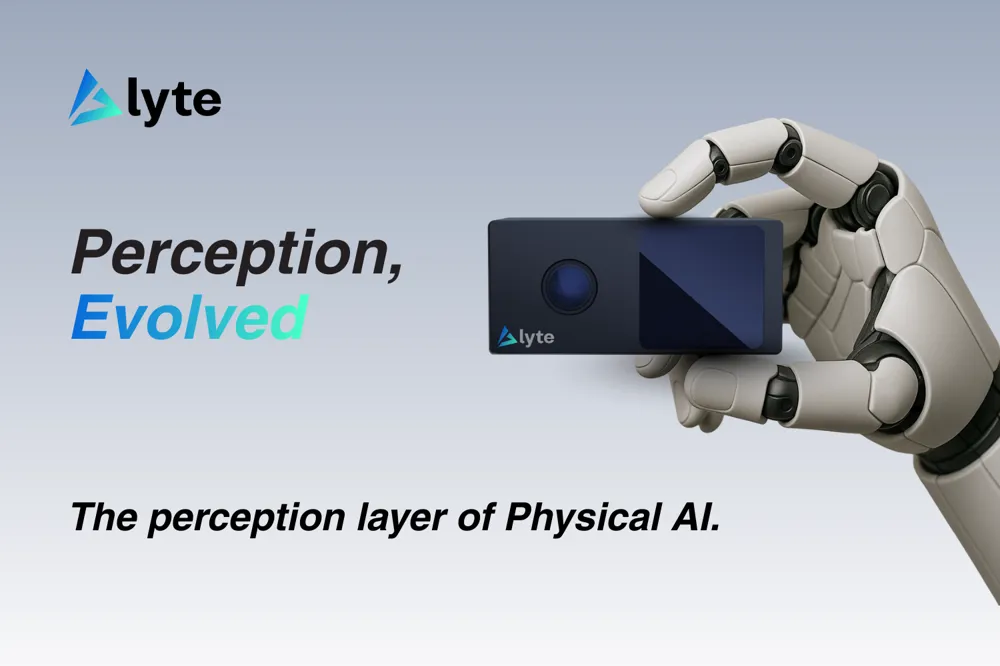
A next-generation robot perception platform for robot and autonomous driving developers, providing LiDAR+Camera+AI in a single package to solve complex sensor integration and environmental awareness problems.
HonoreeRoboticsAI 비전 분석게임 데이터 분석e스포츠실시간 분석행동 분석맞춤형 코칭
라이트비전
1
0
Lyte AI, Inc.
One-Line Product Definition
Problem Definition
When developing autonomous driving robots or vehicles, the most significant challenge lies in the Perception stage, which involves accurately recognizing the surrounding environment. Currently, manufacturers must separately procure various sensors (LiDAR, cameras, radar, etc.) and spend months to years developing sensor fusion software to combine them. Consequently, over 60% of companies, lacking specialized personnel, face difficulties in sensor integration. Furthermore, insufficient recognition performance prevents robots from operating safely in unpredictable environments (complex warehouses, road conditions, etc.), leading to delays in commercialization. In essence, a non-standardized and complex perception layer is a bottleneck in the widespread adoption of robots.
Key Differentiators
LyteVision is designed as an integrated hardware+software solution, allowing robot developers to immediately receive integrated 360° spatial scan data and video recognition data by simply mounting a single module. Using its own custom sensors anddedicated chip (SoC)ensures that sensor-specific time synchronization and distortion correction are completed at the factory, eliminating the need for individual calibration after purchasing separate components. The AI operation layer of this platform easily integrates new deep learning vision models or language models, enabling robots to immediately reflect the latest cognitive abilities. For example, with the addition of a new object recognition model, LyteVision-based robots instantly understand and respond to more objects. Thanks to this full-stack approach, robot manufacturers can significantly reduce the time and cost of sensor integration and immediately utilize a stability-verified perception system. The fact that the co-founding team consists of experts who have created technologies used in billions of devices, such as the Kinect 3D sensing, is also a factor of trust. In short, LyteVision aims to be a standard platform that gives robots human-level vision and judgment.
Key Adopters
Robot manufacturers and developers (B2B)are the primary customers. Logistics robot, service robot startups, autonomous vehicle companies, and smart factory automation companies can purchase this technology to enhance the cognitive abilities of their robots. It can also be adopted in various industrial robot fields such as military unmanned vehicles and agricultural robots. Currently, it isprovided B2B (parts/license)to businesses and is not directly sold to end consumers. From a broader perspective, as a supplier of robot technology infrastructure, the company is likely to pursue a model of partnering with major corporations in the robot field and having them adopt the platform.
Scalability
LyteVision is a general-purpose platform without specific usage restrictions, so its application range is very wide. Having already won CES awards in both Robotics and Mobility, it has been recognized not only in robots but also in the autonomous vehicle sector. While it can be applied to various robots around the world, securing production capacity and a regional technical support system are important due to its hardware nature. As it has secured a large investment, mass production and the establishment of a global support network are expected. Technically, it is continuously updated in line with AI model advancements, so it can be expanded to other physical AI fields such as smart city sensor networks or AR/VR spatial recognition in the future. However, its high initial price and the preference of large companies for in-house development may require time for it to become a standard. Nevertheless, if it becomes a standard for the cognitive layer like "Android of the robot world," it can dominate a huge market, so its potential is very high.
Judges' Evaluation
It was selected as the Best of Innovation in Robotics at CES and received rave reviews as "a new horizon for physical AI." Industry experts, mentioning the team's experience including the founder of PrimeSense, commented that "a trustworthy team is solving a real problem." The level of technical completion also appears to be beyond the prototype stage, and market confidence is high due to the news of securing over $100 million in funding. Market expectations are very encouraging, with a forecast of "standardizing the eyes and brains of robots to promote explosive growth." However, competition with large competitors (e.g., Tesla's autonomous driving vision, etc.) and product price/adoption rate are variables, so there are challenges in the commercialization process. Overall, it is evaluated as meeting or exceeding expectations rather than being overvalued, and numerous investors and partners are showing interest as a result of the CES award.
Analyst Insights
🔥 High Marketability / Business Connection Potential – As a platform that will solve the long-standing challenges of the robot industry, there is a high possibility that commercial businesses linked to major robot and autonomous driving companies will be actively pursued.
The award list data is based on the official CES 2026 website, and detailed analysis content is produced by USLab.ai. For content modification requests or inquiries, please contact contact@uslab.ai. Free to use with source attribution (USLab.ai) (CC BY)
댓글 (0)
댓글을 불러오는 중...