Mobile ultra-high pixel image sensor (200MP, 0.5㎛ pixel) – A smartphone camera sensor that implements 200 million pixels with the industry's smallest 0.5 micrometer-sized pixels, and enables bright and clear photos even in dark places by increasing sensitivity with Tetra cell technology that combines 16 pixels into one in low light.
HonoreeImaging이미지 센서모바일 이미징픽셀 비닝고해상도저조도 촬영스마트폰 카메라
ISOCELL HP5
3
0
Samsung Electronics America, Inc.
One-Line Product Definition
Problem Definition
Increasing the number of pixels to improve smartphone camera performance reduces the size of individual pixels, resulting in poor low-light performance.
In addition, there was a limit to increasing both the number of pixels and the image quality due to sensor size limitations.
Consumers want high-resolution photos in bright places and bright, clear photos in dark places, but it has been difficult to achieve both with sensor technology.
Key Differentiators
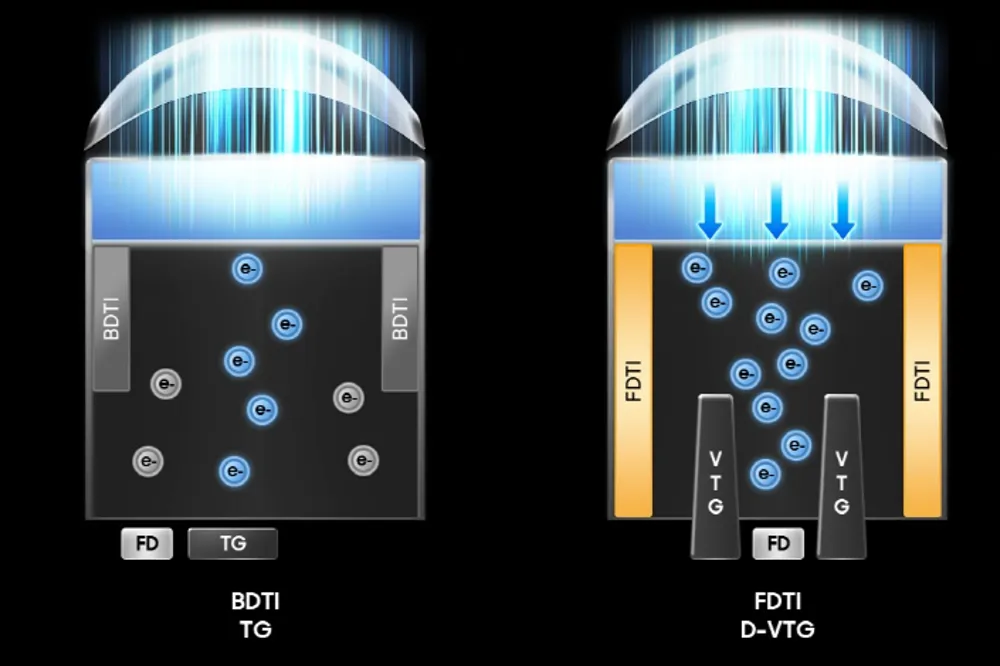
ISOCELL HP5 achieves 200MP ultra-high resolution with a 0.5㎛ pixel size, while also improving pixel binning technology to implement 16:1 Tetra cell synthesis, which utilizes 16 pixels as one in low light [97].
This effectively operates the pixel size as a 2.0㎛ 12.5 megapixel sensor in dark environments, greatly improving light sensitivity [97].
As a result, it acts as a dual-mode sensor that obtains ultra-high-resolution detail in bright daylight and bright, low-noise photos at night.
In addition, improved HDR function enables video shooting that captures both bright and dark areas simultaneously, and the sensor size is optimized to 1/1.56″ for easy installation in smartphones [98].
In short, it is a sensor that dramatically improves the balance between resolution and low-light quality.
Key Adopters
Smartphone manufacturers (B2B) are the main customers, and it is expected to be adopted by Samsung Electronics' Galaxy and Xiaomi, Oppo, and other flagship phones.
The end consumers are smartphone users worldwide.
Scalability
In addition to smartphones, it can also be applied to drones, automobiles, and other areas where small cameras require high resolution.
In particular, Samsung can present integrated solutions such as AI remaster and 8K video through the synergy of SoC's AI and sensors, making it possible to target the IoT camera market in addition to mobile.
Although 200MP is currently the highest, industry observers say that 320MP or higher may be possible in the future with this pixel technology.
Judges' Evaluation
It demonstrated technology leadership by winning the CES Innovation Award.
Experts praised it as "maximum performance with the world's smallest pixels," and sample photos released before and after CES were well-received as they proved reduced low-light noise compared to the existing 108MP.
However, some analysts commented that "pixel competition is a marketing element" and that the innovation that consumers experience depends on software tuning.
Overall, positive views on continued innovation are more prevalent than overestimation.
Analyst Insights
🔥 High marketability / Business connection possible – As a product that will continue Samsung's mobile imaging technology leadership, it is certain to be quickly adopted by major smartphones and contribute to improving shooting quality.
The award list data is based on the official CES 2026 website, and detailed analysis content is produced by USLab.ai. For content modification requests or inquiries, please contact contact@uslab.ai. Free to use with source attribution (USLab.ai) (CC BY)
댓글 (0)
댓글을 불러오는 중...