Samsung's security chip to prepare for the quantum computing era,Hardware-based Post-Quantum Cryptography (PQC)is the world's first to be equipped, providing next-generation embedded security that will not be broken even in the future.
HonoreekoCybersecurityAI 비전 센서엣지 컴퓨팅배터리 관리 시스템TRIZ-AIEV 배터리수명 예측
S3SSE2A
1
0
Samsung Electronics America, Inc.
One-Line Product Definition
Problem Definition
Quantum computers, which are expected to emerge within the next 10 years, have the potential to instantly solve existing public key cryptography algorithms such as RSA and ECC. This would threaten secure communications in all fields, including internet banking, IoT device authentication, and digital signatures.
In particular, IoT devices and smart cards that have been deployed once have a long lifespan and can be used in the field until the quantum era, but it is difficult to guarantee long-term security with existing security chips, and it is difficult to replace them later. Although post-quantum security can be partially applied with software updates alone, the software method has performance degradation and physical attack vulnerabilities. In addition, existing security chips have limitations in physical intrusion (probing, glitching, etc.), so there has been a demand for a more robust security root.
In short,"Trust foundation that withstands even after quantum"The urgency to prepare from now on has emerged in the industry.
Key Differentiators
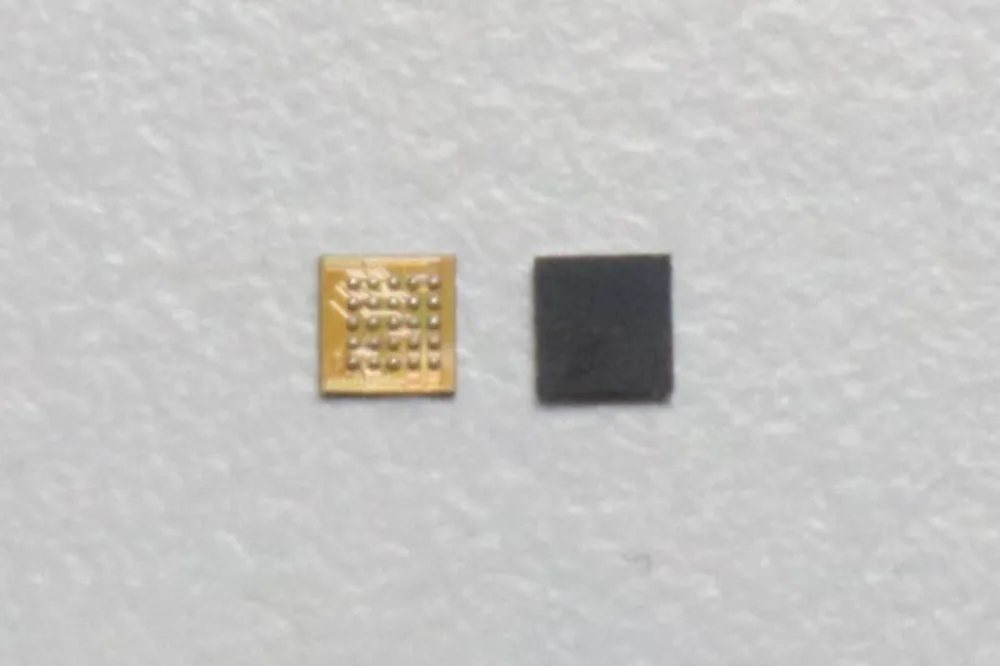
S3SSE2A is the industry's firstPost-Quantum Cryptography (PQC) at the hardware levelimplementedSecure Element (SE)It is. By embedding the next-generation public key algorithm standardized by NIST in the United States, it can replace/complement existing cryptographic communication even after quantum computers become a reality.
Since it is implemented at the circuit level rather than software, the calculation speed is fast and the risk of key theft is low, and the algorithm can be replaced by firmware upgrade in the future. In addition, it has obtained CC EAL6+ certification, and has the highest level of physical security durability among currently available commercial security chips. This means that it can withstand hacking attempts such as power analysis attacks and probing intrusions at the chip level.
S3SSE2A provides all-in-one cryptographic operation/key storage/authentication functions, so it can be easily integrated into various embedded platforms such as eSE of smartphones, security modules of IoT devices, and vehicle/industrial controllers. In particular, by supporting quantum-resistant key exchange and digital signatures, it guarantees future safety even in firmware OTA updates or device-cloud communication, for example.
In summary, it is the most advanced "post-quantum" security solution among existing security chips, and the biggest differentiation is that it provides a security root that is valid for decades to come.
Key Adopters
Since this chip itself is not a finished product but a B2B component, the main adopters are electronic device manufacturers. Typical customers include smartphone and tablet manufacturers (adopted as eSE security modules), automotive electronics companies (vehicle ECU security), and IoT device companies (smart home device authentication).
In addition, government/public organizations that require quantum security can also use this chip to create smart cards (ID cards, passports) or security tokens. The financial industry can also apply it to quantum-resistant security HSM in the future, so it can be widely used in B2B2G and B2B2B forms.
Ultimately, the final payers are companies in each industry, and consumers use products containing this chip. Currently, Samsung is likely to apply this chip to its own mobile devices first, and alsolicense/supply it to other companies in the form of a security solution (B2B).(Classification: B2B-oriented)
Scalability
Since quantum-resistant cryptography is an industry-wide issue, the application of this chip is very wide, from smartphones to automobiles to the cloud. In order to stay ahead of competition with major overseas security chip companies, Samsung is expected to quickly expand this technology into a standard platform.
For example, S3SSE2A can be applied to Galaxy phones/wearables to be released in the future and used as a marketing point, and can also enter B2B services such as KMS servers and car key management through partnerships.
In terms of regulations, each country has regulations on the export and import of encryption modules, but this chip has already received international CC certification and was developed through cooperation with the United States, making global certification easy. However, since the PQC standard is not completely fixed,flexible response (e.g. firmware update)is required when new algorithms are required in the future, but this was considered during design.
In the future, it can be derived into security USBs and hardware wallets for general consumers, and a lightweight version for smaller IoT devices will also be developed and expanded to all industries. With this award as an opportunity, Samsung is trying to expand its security IP business, and ripple effects are expected throughout the ecosystem.
Judges' Evaluation
At CES 2026, this productwon the Best of Innovation Award in the Cybersecurity categoryand became a hot topic. The judges praised it as a *"pioneering solution for the quantum era"*, and highly praised the technology of implementing PQC at the hardware level and the high security certification grade. With the analogy of *"future safe"*, it is evaluated that Samsung's semiconductor capabilities have led to innovation in the security field.
Technology media alsointroduced this chip as a "game changer in post-quantum security"and quoted the content announced with partners such as Thales, saying that it is *"a key move that changes the landscape of IoT security"*. Market expectations are also very high as it is 1-2 years ahead of other companies by putting PQC, which was difficult to implement, into a commercial chip.
On the other hand, some mention that the timing of the realization of the quantum computing threat is uncertain, and it remains to be seen how quickly device manufacturers around the world will adopt this technology. In addition, the performance impact due to the increased computational load of the PQC algorithm is also a point to be observed in the future.
Overall,it is evaluated as "an innovation that overturns the opinion that it is too early and came out at the right timing"and is accepted as a somewhat preemptive investment rather than an underestimation.
Analyst Insights
🔥 High marketability / Business connection possible – Quantum security is a real problem that is not far off, and S3SSE2A is a product that proactively solves this problem, so there is a definite global demand. Combined with Samsung's ecosystem, it is highly likely to be adopted in various devices, and it is expected to achieve great business results by preempting the security industry standard.
The award list data is based on the official CES 2026 website, and detailed analysis content is produced by USLab.ai. For content modification requests or inquiries, please contact contact@uslab.ai. Free to use with source attribution (USLab.ai) (CC BY)
댓글 (0)
댓글을 불러오는 중...