Back to list
404 / 452
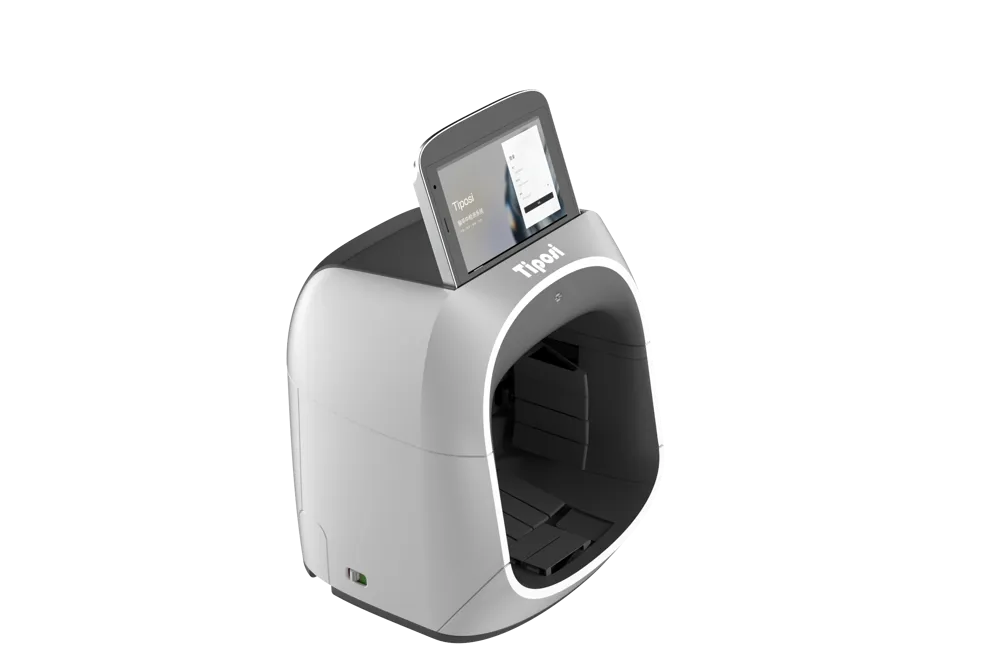
Tiposi MWI 뇌 스캐너
HonoreekoArtificial Intelligence뇌파 분석인공지능의료기기비침습적정신 건강뇌 질환 진단

Tiposi MWI 뇌 스캐너

2
0

Tiposi

One-Line Product Definition

A portable brain imaging device combining Microwave Imaging (MWI) and AI. The 8kg lightweight prototype acquires internal brain images within 3 minutes, providing a safe, radiation-free, on-site brain scanner that doesn't require cooling or a shielded room [91][92].

##

Problem Definition

Diagnosing conditions like cerebral hemorrhage and stroke requires large equipment such as CT or MRI, making timely examination difficult outside of hospitals. Patients in emergency situations or remote areas had to be transported to large medical facilities – essentially being told to "come to the machine" [93] – sometimes missing the golden time for treatment.

Existing equipment is large, expensive, and requires expert operation, limiting its adoption rate.

##

Key Differentiators

Tiposi's MWI brain scanner uses microwaves to scan the distribution of brain tissue and fluids. Unlike X-rays, it does not use ionizing radiation, making it safe for repeated use, and it operates on low power, eliminating the need for helium cooling or special shielded rooms [92][94].

A single person can carry and move the 8kg compact device to obtain brain images right in the ambulance or next to a hospital bed [95]. AI algorithms correct and analyze low-resolution microwave data to derive clinically meaningful brain images and abnormal patterns (such as bleeding location), and automatic correction and calibration functions allow users to operate the device even without being specialized radiology technicians [96][97].

In other words, it enables "brain examination anytime, anywhere in 3 minutes," revolutionizing emergency care and early diagnosis.
Key Adopters

This is a B2B medical device primarily targeting emergency medical services (ambulances), military medical officers, and small to medium-sized hospital emergency rooms. It can also be included in brain disease rehabilitation centers or remote healthcare kits, potentially evolving into a B2B2C home-use product.

##

Scalability

Currently in the clinical validation stage as a prototype, it is expected to be widely used in areas with low medical accessibility or emergency sites worldwide if successful.

In addition to early detection of cerebral hemorrhage, it has the potential to expand into a real-time brain monitoring device through fusion with EEG measurements. While acquiring approvals from each country is a challenge, it is likely to receive support through innovative medical fast tracks, etc.

##

Judges' Evaluation

Dubbed a "paradigm shift in brain imaging," it was selected as an Honoree in the AI category at CES [98][91]. The video of demonstrating the 17-pound device became a hot topic [93], and medical professionals reacted with comments such as "portabilizing brain imaging is like the holy grail."

However, as it is still a prototype, there is cautious opinion that additional verification is needed regarding the level of image resolution and diagnostic accuracy. Overall, while giving high scores for the idea and implementation, attention is also being paid to the challenges remaining until commercialization.

Analyst Insights

🧪 R&D and concept verification stage (very promising, but still at the prototype level, with a long way to go including clinical trials and regulatory approvals)

The award list data is based on the official CES 2026 website, and detailed analysis content is produced by USLab.ai. For content modification requests or inquiries, please contact contact@uslab.ai. Free to use with source attribution (USLab.ai) (CC BY)

댓글 (0)

댓글을 불러오는 중...