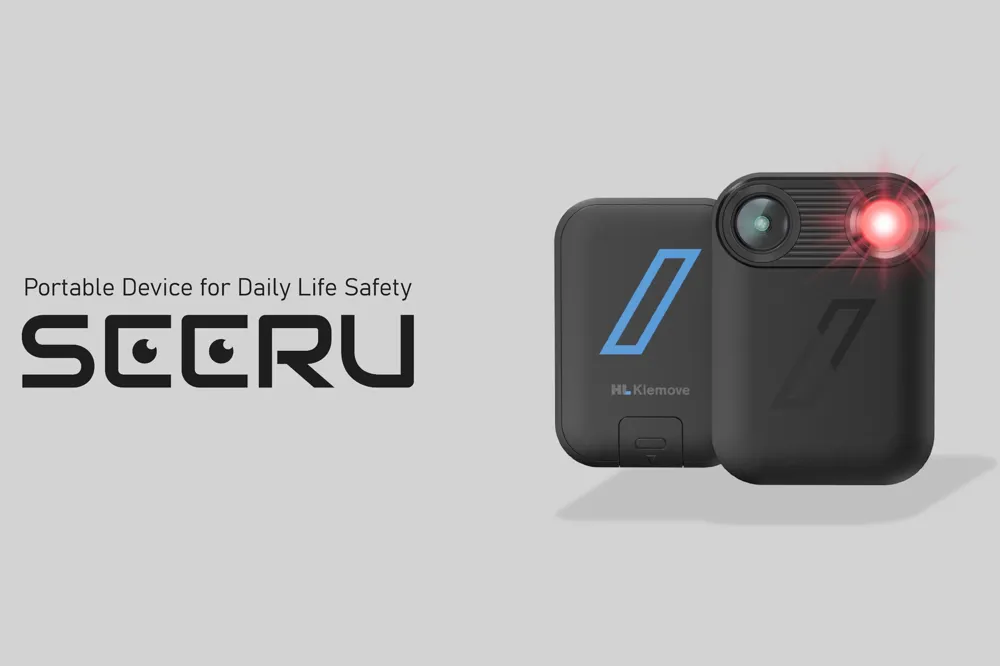
A compact, integrated safety device attached to the rear of bicycles, electric wheelchairs, etc., that detects approaching hazards from behind and alerts the user with sound, vibration, and light. It is a "See Rear for You" solution designed to protect the elderly and hearing-impaired in particular.
Best of InnovationkoMobile Devices온디바이스AI무선 기술게이밍 플랫폼반도체 에칭저지연e스포츠
씨루(SEERU)
17
0
HL Klemove
One-Line Product Definition
Problem Definition
Bicycle users, electric wheelchair users, etc.Personal Mobility Vehicle (PMU) usershave difficulty recognizing vehicles or obstacles approaching from behind in a timely manner. It is difficult to turn their heads to check behind them frequently, and even with side mirrors, there are blind spots. In particular, elderly people with hearing impairments or those with mobility issues often miss hazards approaching from behind, leading to collisions.
Existing bicycle rear radars (e.g., Garmin Varia) have limited warning methods and are mainly targeted at young cyclists, so there is a lack of solutions specifically tailored for vulnerable road users.
Key Differentiators
The integration of radar, camera, and tail light functions into one unit is remarkable. The SEERU device is mounted on the rear of a bicycle/wheelchair to sense 360° behind it, and analyzes the speed and distance information of approaching objects using a radar+camera fusion algorithm to determine real-time threats.
When a hazard is detected, it provides a user-customizedtriple warning (speaker voice/warning sound, vibration alert, LED flashing)to ensure immediate recognition. For example, the hearing-impaired mode can be set to focus on vibration + light, while the visually impaired mode can be set to focus on sound. In addition, it normally functions as a smart tail light to increase nighttime visibility and protect the user from vehicles.
This multi-sensor fusion approach greatly improves rear visibility, allowing users to reduce the cognitive load of looking back and focus on driving forward. In particular, it is differentiated from competing products by its low operational complexity (automatic operation once installed), light weight, and vehicle/pedestrian identification AI, which are useful for the elderly, improving both safety and convenience.
Key Adopters
General bicycle users, electric wheelchair users, etc.Individual consumers (B2C)are the end users. However, due to the nature of the product, it is more likely to be supplied as an option throughpartnerships with bicycle manufacturers or medical device companies (B2B2C).For example, an electric wheelchair company may install SEERU as standard equipment, or a high-end electric bicycle brand may provide it as a bundle.
In addition, a model can be considered in which distributors of elderly welfare products or insurance companies purchase and distribute the device for customer safety on a B2B basis. Initially, the strategy seems to be to target a niche market of bicycle commuters and elderly/disabled people with a high awareness of safety, and then gradually expand to B2B.
Scalability
There is similar demand worldwide due to the increase in personal mobility and the aging population, making global expansion possible. However, in terms of regulatory standards, it is necessary to satisfy the radio wave certification (radar) and road traffic laws (tail light requirements, etc.) of each country. This can be technically adjusted, so it is not a major barrier to entry.
Application expansions include rear safety devices for motorcycles and sensors for kickboards, which have a wide range of related markets. As a technology transfer product from a vehicle ADAS specialist company like HL Klemove, there is also the potential for future development in connection with smart city infrastructure such as car-bicycle communication (V2X). Overall, it can grow into a pillar of mobility safety, but popularization will require raising consumer awareness and lowering prices.
Judges' Evaluation
It received great attention as a technology to protect vulnerable road users by winning the Innovation Award in the Mobile Device Accessories category at CES 2026. The concept of "a helper that looks behind you" was evaluated as senior-friendly innovation, and it is said to have been selected as a product to watch this year in Assistive Tech-related media.
The level of technical completeness is said to be high based on HL Mando's vehicle radar technology, and in the actual demonstration, it immediately warned with sound and vibration when a car approached quickly, gaining positive responses from visitors.
However, it is still in the pre-mass production stage as aProof of Conceptand there is a cautious view in the market that "the idea is excellent, but the actual product launch and distribution remain to be seen." Pricing and distribution strategies, as well as the acceptance of additional equipment by bicycle users, are cited as success factors. Overall, the evaluation at CES is positive, but market verification is a future task.
Analyst Insights
🧪 R&D and concept verification stage (a high-potential innovative prototype based on the technology of a large company, but still requires verification in the actual market before commercialization)
The award list data is based on the official CES 2026 website, and detailed analysis content is produced by USLab.ai. For content modification requests or inquiries, please contact contact@uslab.ai. Free to use with source attribution (USLab.ai) (CC BY)
댓글 (0)
댓글을 불러오는 중...