Automotive safety software that uses in-vehicle sensors to predict and control tire damage, road conditions, and emergencies in real time.
HonoreeProducts in Support of Human Security for AllAI 예측차량 제어 시스템자율 주행ADAS미래 모빌리티딥러닝
MiCOSA HyperPrediction
4
0
HL Mando
One-Line Product Definition
Problem Definition
In the event of a sudden situation such as tire damage or road slippage while driving, it was difficult for drivers or transportation companies to prevent accidents. Existing systems are limited to tire pressure warnings.
The system's reaction speed is slow or limited in the event of a sudden accident, and the function of sharing road hazard information to prevent accidents is also insufficient. As a result, there is a constant risk of leading to major accidents.
Key Differentiators
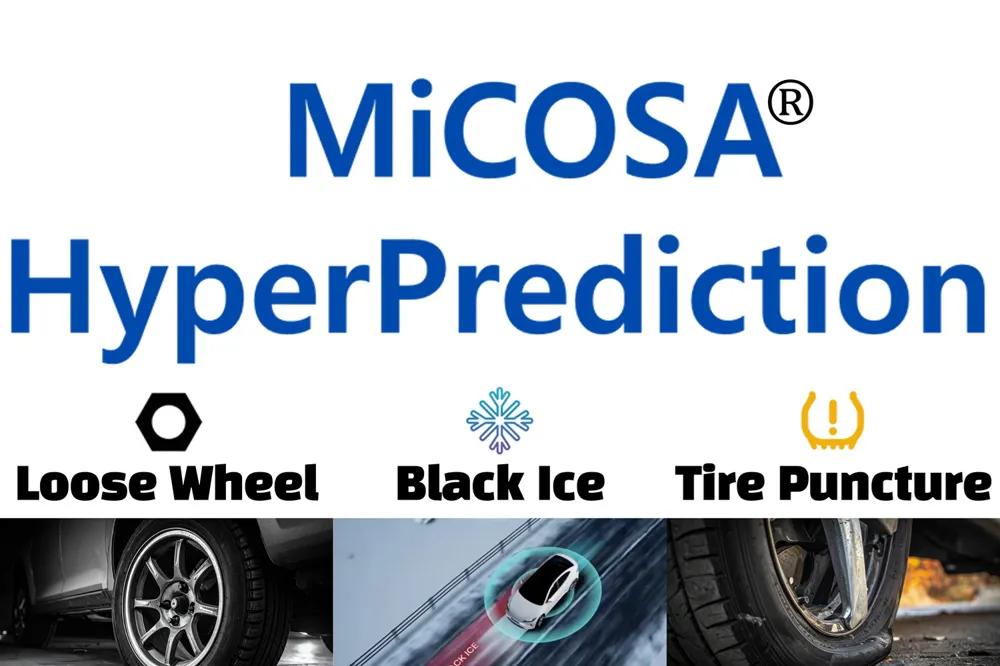
MiCOSA HyperPrediction predicts tire and road conditions through in-vehicle sensors (tire pressure, speed, etc.) and base station connections, and takes action before abnormal situations occur. For example, if a tire burst is detected, the vehicle is stabilized by steering and brake control, and real-time warning messages are sent to nearby vehicles in hazardous areas.
Cloud-based risk sharing enables cooperation between vehicles and is provided as a software update without separate hardware. It is differentiated by active control measures and V2X-type risk notification, rather than just the existing ADAS warning level.
Key Adopters
The main customers are automobile manufacturers (OEMs) and companies (B2B) such as commercial vehicle and bus operators. As an in-vehicle solution, adoption is expected through automobile companies and government (road safety agencies) purchases (B2G) rather than direct consumer purchases (B2C). It can also be included in local governments or public institutions' traffic safety projects.
Scalability
Since it is a software solution, it has high global scalability. However, it must comply with vehicle safety regulations and certifications (e.g., US NHTSA, European NCAP) and vehicle communication standards (5G, C-V2X) in each country.
It can be applied to various vehicle types with low platform dependency, and can be expanded in combination with autonomous vehicles or smart city transportation infrastructure. However, the implementation time may vary depending on the communication infrastructure construction status and regulations in each region.
Judges' Evaluation
It was praised for its high level of technical completeness, as it was introduced as a CES award winner. HL Mando is a mid-sized company in the automotive parts sector and has been recognized for its technology in ADAS and autonomous driving.
Although it can be seen as an early stage of commercialization, product strategies linked to the group-level roadmap (robot business, etc.) are noteworthy. The transportation and logistics industries have high expectations for it as a safety tool, but verification of actual effectiveness (test driving, data analysis, etc.) is necessary. Currently, it is demonstration-oriented, but market demand is expected to be high if it is linked to road infrastructure.
Analyst Insights
🔥 High market potential. As there is a high demand for enhanced vehicle safety, ML-based prediction systems are expected to have business opportunities in the commercial vehicle and autonomous driving fields. However, the effect must be proven through actual vehicle verification.
The award list data is based on the official CES 2026 website, and detailed analysis content is produced by USLab.ai. For content modification requests or inquiries, please contact contact@uslab.ai. Free to use with source attribution (USLab.ai) (CC BY)
댓글 (0)
댓글을 불러오는 중...