For content creators and security personnel, this is a portable copyright authentication device that hides a cryptographic key generated from a palm vein pattern within the content, proving who created it and when, making forgery or alteration impossible.
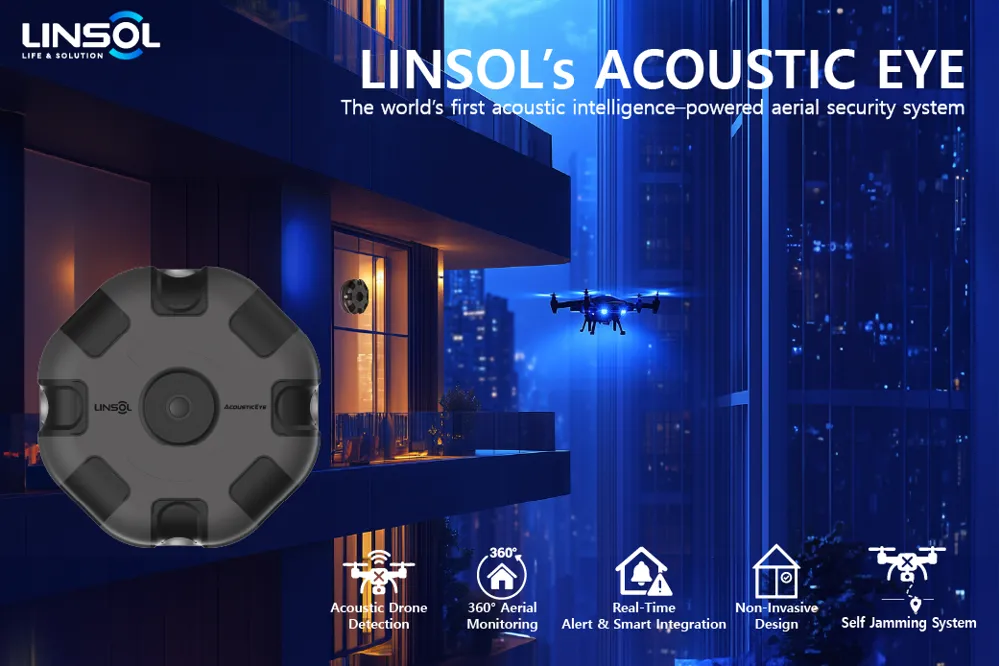
HonoreeSmart Home음향 분석인공지능이상 음원 감지스마트홈 보안사고 예방긴급 구조
어쿠스틱 아이
1
0
LINSOL
One-Line Product Definition
Problem Definition
In the digital content era, proving who created the original and preventing forgeries or deepfakes is a significant challenge. Existing methods use watermarks or central certificates to identify the author, but these are easily copied or forged, and certificates are vulnerable to hacking.
Particularly for videos and documents, verifying authenticity after the fact is difficult, leading to increased damage from fake news and Deepfake videos. Additionally, in video production, creators find it difficult to leave evidence to assert their rights to the content, leading to potential legal disputes.
AuthEnTHICator aims to solve these problems by imprinting the creator's 'identity stamp' at the moment of content creation, preventing any subsequent alteration or denial.
Key Differentiators
This product takes a unique approach by using palm vein patterns instead of fingerprints or irises. An FPGA-based dongle reads the vein arrangements of both hands using an infrared multi-spectrum sensor, generating a unique cryptographic key each time [21].
The biometric information is only used on the device and is not stored, eliminating the risk of leakage. The generated key is volatile and for one-time use [21][22]. This key instantly inserts invisible signature data into the content (video or document), and the corresponding hash value is recorded on the Polkadot blockchain, serving as a decentralized certificate of the time and author [23].
As a result, the creator's 'vein signature' is hidden within the content file itself. In future authenticity checks, comparing it with the blockchain record proves who created it and when, without forgery or alteration [23]. Unlike existing 2FA or signature procedures, it operates completely offline (no network required), and its design uses quantum-computer-safe encryption, which is also a strength [24].
In summary, this is the world's first real-time portable copyright authentication solution that uses a part of the creator's body as a 'key' to apply a digital authentication lock to the content.
Key Benefits
The primary customers are companies or creators who produce video and digital content. For example, video production companies, news agencies, and creator productions can sign copies of content as soon as they are created to secure evidence in case of illegal distribution or Deepfake controversies.
Potential applications also include document authentication in the legal field (notaries, lawyers) and ensuring the integrity of medical images in the medical field [25]. It can also be considered for B2G/B2B use when government agencies or research institutes authenticate important data.
Ultimately, individual content creators (B2C) can also carry and use one to protect their work, but the initial market is expected to be B2B for companies/institutions.
Scalability
Since the basic concept is digital identity verification/copyright protection, it can be used across industries. In addition to content, product extensions are possible for login security (palm vein FIDO2 key), financial transaction authorization, etc. [26].
In the global market, there are few regional restrictions as it can be used anywhere if the blockchain infrastructure is shared. However, user education and trust formation are needed for the unfamiliar method of palm vein recognition, and the distribution of hardware devices is a prerequisite.
Also, collaboration with large platforms (e.g., Adobe Content Authenticity Initiative, etc.) may be important to become an industry standard. Currently, it is focused on the creator niche market, but in the long term, it has huge market potential if it expands into the areas of cybersecurity and digital identity authentication governance.
Judges' Evaluation
The CES judges noted this product as an innovative idea in an era plagued by deepfakes. It was positively evaluated as a "potential next-generation security key" for combining biometrics and blockchain and was awarded the Innovation Award [22].
There was feedback that the concept of "individuals being able to protect their digital sovereignty without storing biometric information" has high technical completeness. However, as an early solution with no market validation, there were some reactions at the CES exhibition site such as "interesting, but who would actually use it?"
Some argue that "the idea is excellent, but practicality remains to be seen" as there are remaining tasks such as changing the perception of the content creator community and standardization, which means there is a long way to go before commercialization. Overall, the technical concept itself is well-received, but the marketability is questioned.
Analyst Insights
⚠️ Impressive technology but market uncertainty – A solution to solve the content trust problem with the innovative technology of palm vein encryption, but it is unclear whether it will become mainstream in the short term due to high barriers to changing user habits and forming an ecosystem [22].
The award list data is based on the official CES 2026 website, and detailed analysis content is produced by USLab.ai. For content modification requests or inquiries, please contact contact@uslab.ai. Free to use with source attribution (USLab.ai) (CC BY)
댓글 (0)
댓글을 불러오는 중...