A digital therapy platform that combines neuroscience, motion capture, and virtual reality games to provide immersive rehabilitation training for patients with conditions such as stroke.
HonoreeDigital HealthAI 헬스케어IoT 의료디지털 치료제원격 환자 모니터링개인 맞춤형 치료텔레헬스
뉴로애니메이션 테라피
1
0
NeuroAnimation
One-Line Product Definition
Problem Definition
Existing rehabilitation therapy for patients with neurological damage, such as stroke, mainly involves repetitive practice of arm and leg movements, which makes it difficult to motivate patients and lacks enjoyment. In addition, the therapeutic effect appears slowly, or the therapy focuses on uniform exercises, which has limitations in optimizing brain recovery for each individual.
Existing rehabilitation tools only track movements and do not actively stimulate the brain, which limits the speed of recovery. In particular, the existing methods do not adequately address the problem of patients losing interest and having difficulty receiving consistent treatment, as well as secondary problems such as cognitive decline or depression.
Key Differentiators
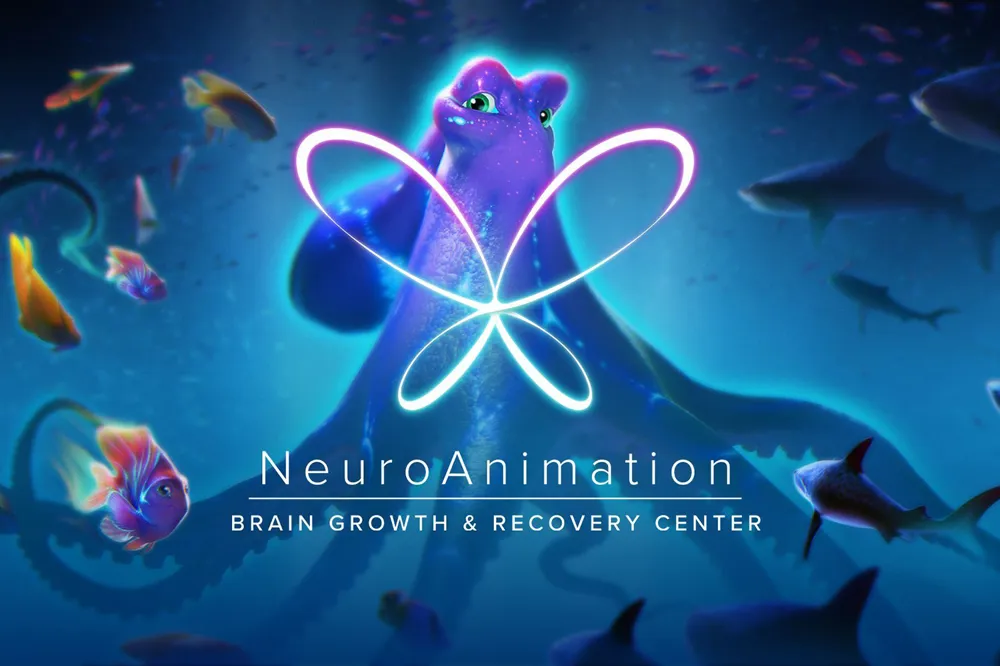
Neuroanimation Therapy allows patients to directly control vivid avatar animals in VR with arm and hand movements, making rehabilitation exercises like a game. Real-time motion capture reflects the patient's movements in high quality in a virtual environment, and customized virtual scenarios are provided to increase fun and immersion.
This platform is designed not only to measure simple movements but also to increase blood flow and activity in specific areas of the brain topromote neuroplasticityand has demonstrated clinical improvements in processing speed, executive function, and motor coordination. The therapeutic effect is remarkable, with 100% of patients reporting significant improvement (according to the company's own report), and it is the only solution that allows safe sensory and cognitive integration training of the whole body in a virtual environment.
In a word,it is evaluated as having "sublimated the game into a clinical intervention."is being evaluated.
Key Adopters
The main customers are medical institutions (B2B) such as rehabilitation hospitals, physical therapy clinics, and neurology specialist hospitals.medical institutions (B2B)These institutions introduce the neuroanimation system (including hardware VR equipment) and use it for patient rehabilitation programs.
It can also be introduced in elderly care facilities or community rehabilitation centers for the purpose of promoting brain health. Since professional supervision is required for individuals to purchase VR devices and use them at home, it will be provided as a B2B model for professional therapists rather than B2C.
There is also the possibility of being incorporated into the public healthcare system (B2G) in the form of insurance coverage or remote rehabilitation services in the future.public healthcare system (B2G)There is also the possibility of being incorporated into the.
Scalability
Currently, the focus is on improving sequelae of stroke and cognitive and motor decline in the elderly, but it can be applied to various neurological diseases such as traumatic brain injury, Parkinson's disease, and early dementia.
Although it started in the United States, there is room to enter the global rehabilitation market as telemedicine and VR become more widespread. However, there is a challenge in that it may be classified as a medical practice, so it is necessary to secure medical regulations and clinical trial certifications in each country.
Technically, there is great potential for development into AI customized treatment through data accumulation, and if a lightweight version for home use is released, it can be expanded to the home rehabilitation field. Overall, it is a solution that can grow in the trend of infrastructureization of digital healthcare.
Judges' Evaluation
Having received the Innovation Award (Honoree) in the Digital Health category at CES 2026,it was introduced as a "leader in the field of neuroplasticity"and was praised as the first platform to precisely stimulate specific brain regions, unlike traditional rehabilitation tools.
Clinical studies show improvement in objective indicators such as processing speed, executive function improvement, and motor recovery, so experts have high expectations. However, there are cautious views on the part that the degree of improvement felt by patients is introduced as 100%, such as questions about the sample size or objectivity.
The level of technical completeness is quite high, but opinions are divided on how long it will take to commercialize, considering the conservative adoption rate of the medical community. There are also analyzes that it is undervalued compared to its potential rather than overvalued, and there are many views that the marketability will be greatly opened if regulatory approval is secured as a digital treatment.
Analyst Insights
⚠️ Impressive technology but market uncertainty – Clinical efficacy and innovation are excellent, but wider commercialization will take more time due to barriers to adoption in the medical field and insurance/certification issues.
The award list data is based on the official CES 2026 website, and detailed analysis content is produced by USLab.ai. For content modification requests or inquiries, please contact contact@uslab.ai. Free to use with source attribution (USLab.ai) (CC BY)
댓글 (0)
댓글을 불러오는 중...