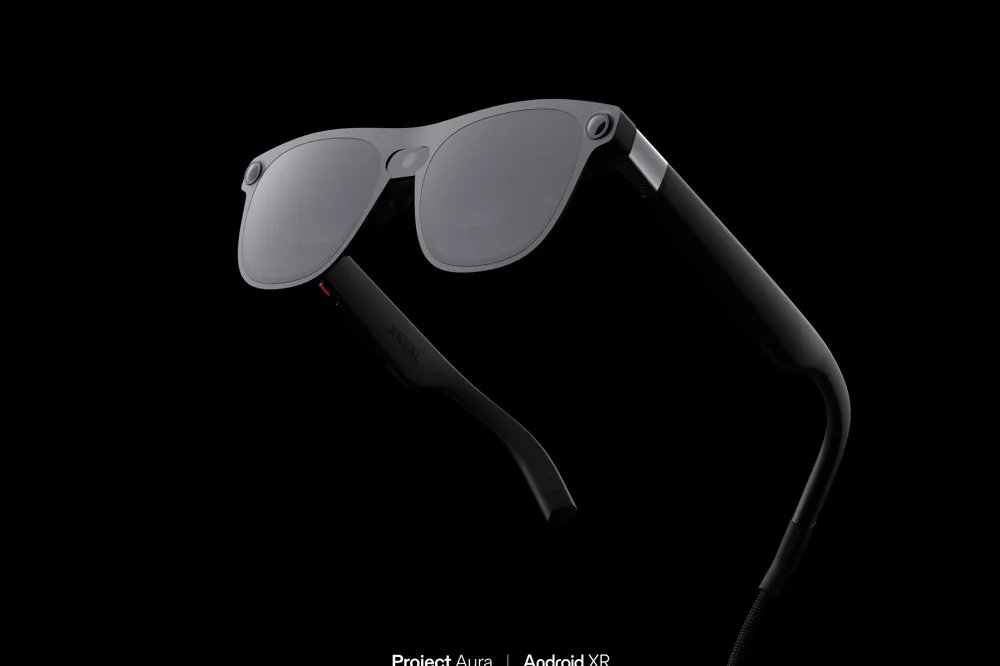
The first prototype headset for the Android XR platform – a see-through AR/VR hybrid device developed in collaboration with Google and Qualcomm, featuring an immersive display with a 70-degree field of view and the AI assistant Gemini to deliver a next-generation mobile XR experience.
HonoreeXR & Spatial ComputingAR뷰티테크개인 맞춤형피부 분석디지털 뷰티혼합 현실
XREAL Project Aura
14
0
XREAL
One-Line Product Definition
Problem Definition
Existing AR glasses have a narrow field of view (FOV) and limited content, making them unattractive for general consumers. VR headsets, while offering excellent immersion, are difficult to use in everyday life due to external isolation, and remain niche gaming devices.
Additionally, each manufacturer had to build its own OS or ecosystem, and with the exception of Apple's Vision Pro, there was no integrated platform, leading to a lack of content.
In short, there was a need for an XR device with a wide field of view and rich apps, but there was no suitable standard device in the Android camp.
Key Differentiators
Project Aura is the first reference XR headset based on Google's publicly available Android XR OS. With its optical see-through design, it overlays virtual information onto a 70° wide FOV view of the real world, and can also be switched to a highly immersive VR mode (field of view occlusion) when needed.
In a lightweight tether form, it connects to a smartphone to share computational load, keeping the device itself light while leveraging the performance of the mobile processor (Snapdragon XR2).
In particular, the collaboration between Google and Qualcomm enables deep integration with Android phones, creating an ecosystem where existing Android apps can run naturally in the XR environment, or XR-specific apps from the Play Store can be developed. XREAL has significantly reduced the weight with its accumulated ultra-lightweight optical technology, and there is an onboard AI assistant called Gemini AI that allows you to control the XR environment with voice and gestures.
This is an open ecosystem model that rivals Apple's Vision Pro, and its decisive differentiation is that it provides an XR experience with a low barrier to entry for hundreds of millions of users familiar with Android. In addition, familiar apps such as Google Maps and YouTube can be used in XR, and graphics are excellent thanks to Qualcomm chipset optimization.
Key Adopters
Initially, XR developers, early adopters, and tech enthusiasts will be the primary purchasers.
From a B2B perspective, several manufacturers (OEMs) are expected to utilize this reference, so it can be used in industrial sites, education, and healthcare.
Project Aura itself is a kind of developer kit, so the final consumer version will be released under the XREAL or partner brand. At that time, high-end Android phone users are potential customers, as well as gamers who want to enjoy AR/VR content and movie enthusiasts.
Scalability
Project Aura is the starting point for the expansion of the Android XR ecosystem, so several hardware partners (e.g., Samsung, Lenovo, etc.) will release products based on this specification in the future. Therefore, hardware diversity will be secured, and the Android developer community is expected to join, leading to the growth of the app ecosystem.
XREAL will compete with a much lower price point than Vision Pro, and Google is actively supporting it, so OS support will continue.
There are no specific regulatory barriers, but the social acceptability of AR glasses (wearing them in public places, etc.) is a variable in their spread. From a technical perspective, it will evolve into a completely wireless form in the future, and the fashionability of AR glasses will also be improved, bringing them one step closer to popularization.
Judges' Evaluation
It received significant attention as an Innovation Award winner in the XR & Spatial Computing category at CES 2026. Industry evaluations see it as "the full-fledged opening of Android XR," and many have taken it as a signal that the mobile industry will be upended.
Media outlets such as 9to5Google expressed positive opinions on the collaboration between Google and Qualcomm, saying "Google has finally put the XR puzzle together," and reporters who actually used Aura wrote reviews saying "The field of view is wide open, which is different from existing AR glasses." Of course, there were also criticisms that "It still feels like a prototype, and achieving the level of perfection of Apple is a future task."
However, there are high expectations as a countermeasure to Apple's dominance from a strategic perspective, and investors responded favorably, calling it "Vision Pro of the Android camp." On the contrary, general consumers' reactions were novel, but at the level of "I don't understand how to use it yet," and the importance of securing content was mentioned.
Overall, it was one of the most talked-about products at CES in terms of technical completeness and collaboration, and Project Aura is at the center of the evaluation that "CES 2026 is a turning point in the popularization of XR."
Analyst Insights
🧪 R&D and concept verification stage – Although the technical and strategic significance is very high, it is still at the level of a developer kit and is being released to the market, so it is a stage that requires verification through the formation of a content ecosystem and consumer feedback. Whether it will be successfully commercialized remains to be seen in the next 1-2 years.
The award list data is based on the official CES 2026 website, and detailed analysis content is produced by USLab.ai. For content modification requests or inquiries, please contact contact@uslab.ai. Free to use with source attribution (USLab.ai) (CC BY)
댓글 (0)
댓글을 불러오는 중...